

Polished Concrete for UK Homes: Design Guide 2026
- info089907
- 2 days ago
- 11 min read
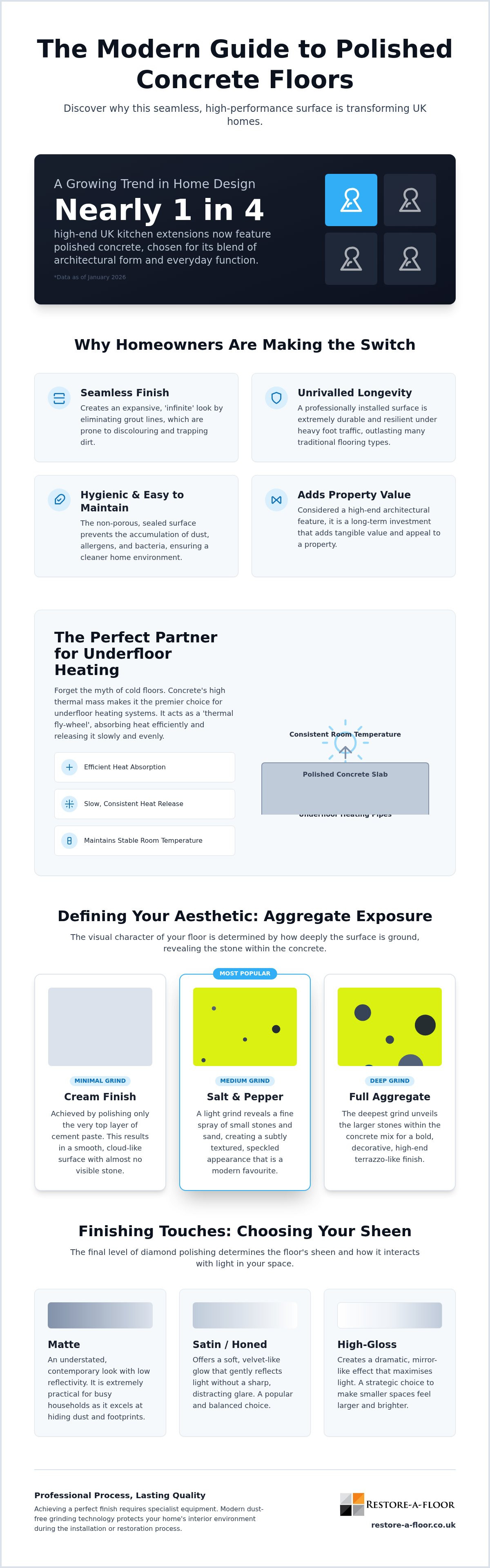
Nearly one in four high-end UK kitchen extensions now feature polished concrete kitchen floors UK over traditional tiling as of January 2026. It's a significant shift that reflects a growing desire for seamless, architectural surfaces that prioritise both form and function. You might feel a lingering hesitation about the material's suitability for a domestic setting, perhaps worrying that the surface will feel cold during a British winter or that the finish might eventually succumb to unsightly cracks. These concerns are entirely valid, particularly when you're faced with complex decisions regarding "salt and pepper" grinds versus full aggregate exposure.
This guide promises to transform your home with stunning design examples and meticulous technical advice, demonstrating how concrete acts as a high-performance thermal asset when paired with modern underfloor heating. We'll provide the clarity required to achieve a bespoke, durable finish that remains easy to clean whilst maintaining its high-end appeal. We will explore everything from the latest "greige" colour pigments to essential maintenance tips, ensuring you have a professional roadmap for a successful 2026 renovation.
Table of Contents
The Rise of Polished Concrete for Residential Homes in the UK
The perception of concrete has shifted dramatically across the United Kingdom. Once relegated to industrial warehouses and car parks, this versatile material now defines the aesthetic of high-end Cardiff and Bristol kitchen extensions. It's essential to understand What is Polished Concrete? in a residential context. It is not merely a "grey floor" or a raw slab. Instead, it represents a meticulous, multi-stage mechanical process involving industrial diamonds and chemical densifiers that refine the surface into a dense, light-reflective masterpiece. This craftsmanship is why polished concrete kitchen floors UK have become a hallmark of modern interior design.
Many homeowners initially worry that concrete feels cold or unfinished. This is a common misconception. When properly sealed and polished, the surface feels silky and sophisticated. More importantly, concrete possesses incredible thermal mass. Unlike thin laminate or ceramic tiles, a concrete slab acts as a heat battery. It absorbs warmth from the sun or underfloor heating and releases it slowly over several hours, maintaining a consistent ambient temperature throughout the home.
Why Homeowners are Choosing Concrete Over Traditional Flooring
The primary draw for polished concrete kitchen floors UK is the entirely seamless finish. Traditional tiles require grout lines that inevitably discolour and trap dirt. Concrete eliminates these visual breaks, creating an expansive, "infinite" look that makes open-plan living areas feel significantly larger. Homeowners often choose this path for several reasons:
Unrivalled Longevity: While carpets wear thin and wood floors scratch, a professionally polished concrete surface remains durable under heavy foot traffic.
Hygienic Surface: The lack of grout lines prevents the accumulation of allergens and bacteria, making it easier to maintain a sterile environment.
Property Value: It's a long-term investment that adds tangible value to a property, signalling a commitment to high-end architectural quality.
Integrating Concrete into Different Property Styles
Concrete is surprisingly adaptable. In modern extensions, it facilitates a "broken-plan" layout, often flowing from the kitchen directly onto an outdoor terrace. This blurs the boundary between indoor and outdoor spaces. For Victorian and Edwardian homes, a sleek concrete floor provides a striking contemporary contrast against ornate period cornicing and original fireplaces. In rural barn conversions, the material complements natural stone walls and exposed timber beams, grounding the rustic architecture with a clean, minimalist base that doesn't compete with the original features.
Defining Your Aesthetic: Finish Levels and Aggregate Exposure
The visual character of polished concrete kitchen floors UK isn't a happy accident. It's the result of precise mechanical intervention. Every project begins with a decision on aggregate exposure, which refers to how much of the internal stone and sand becomes visible. This aesthetic is controlled by how deeply a specialist grinds into the surface of the concrete slab during the initial processing stages.
A "Cream" finish is the most subtle and technically demanding option. It involves polishing only the very top layer of the cement paste, resulting in a smooth, cloud-like surface with minimal stone exposure. It feels organic, soft, and exceptionally consistent. In contrast, the "Salt and Pepper" look is achieved by grinding slightly deeper into the slab. This reveals a fine spray of small stones and sand, creating a textured, speckled appearance that remains a favourite in modern British renovations. For those seeking a bold, decorative statement, "Full Aggregate" exposure involves the deepest grind. This unveils the larger stones within the mix, resulting in a high-end, terrazzo-like finish that showcases the geological makeup of the floor.
The Role of Shine: Matte, Satin, and High-Gloss
The level of grit refinement determines the final sheen and how the room interacts with light. Matte finishes offer a contemporary, understated look. They are particularly practical for busy households as they excel at hiding dust, pet hair, and footprints. Satin, or honed, finishes provide a soft, velvet-like glow that reflects light without a sharp, distracting glare. High-gloss finishes create a mirror-like effect. This is a strategic choice for smaller galley kitchens, as the reflective surface bounces light to make the space feel significantly more expansive.
Choosing the Right Colour and Mix
The base colour of your floor is influenced by the specific sands and cements used across the country. Standard grey cements provide a classic industrial feel, whilst white cements offer a brighter, more gallery-like base. You can also introduce bespoke pigments to the wet mix to align the floor with your interior palette. Because concrete uses local materials, the stones revealed during grinding are unique to your region, ensuring no two floors are ever identical.
Achieving these meticulous results requires a partner who understands the nuance of the material. You can consult with a specialist to determine which exposure level best suits your home's natural light and architectural style.
Room-by-Room Design Examples: From Kitchens to Bathrooms
The kitchen serves as the ultimate proving ground for architectural materials. In modern British homes, polished concrete kitchen floors UK are chosen because they withstand the unique pressures of a culinary environment. They don't just look impressive; they're resilient against high temperatures, heavy dropped pans, and the inevitable spills of a busy family life. Unlike porous stone or wood, a densified concrete surface provides a robust barrier that doesn't trap odours or harbour bacteria.
The Ultimate Kitchen Floor: Durability Meets Style
Concrete's versatility allows it to anchor diverse interior styles with ease. It provides a crisp, industrial foundation for minimalist, handle-less cabinetry, yet it works equally well alongside rustic oak islands and traditional farmhouse features. To achieve this level of precision, it's vital to follow a structured approach, as detailed in our guide to Expert Concrete Floor Grinding and Polishing. This ensures the surface is correctly treated to resist staining from acidic ingredients like lemon juice or red wine, which are common hazards in any active kitchen.
The utility of concrete extends well beyond the cooking area. Hallways in UK households endure constant foot traffic, often bringing in moisture and grit from the outdoors. A polished surface in these high-traffic zones is almost indestructible. It won't fray like carpet or warp like timber, making it a pragmatic choice for the primary thoroughfares of a home. We're also seeing a surge in Bristol and Swansea renovations where the concrete floor flows seamlessly from the kitchen out onto a matching patio. This creates a powerful visual connection to the garden, effectively extending the living space during the summer months.
Concrete in Bathrooms and Wet Rooms
Many homeowners are surprised to learn that concrete is an exceptional material for bathrooms. The key lies in the professional sealing process. By applying specialised anti-slip sealers, we create a surface that's safe for wet feet whilst remaining entirely grout-free. This lack of grout is a significant hygiene advantage in humid environments, as there's nowhere for mould or mildew to take root. When finished in soft grey tones with a matte texture, the result is a serene, spa-like aesthetic that feels both modern and timeless. It's a sophisticated alternative to traditional tiling that simplifies your cleaning routine significantly.
Practical Considerations: Underfloor Heating and Retrofitting
The common concern regarding the temperature of polished concrete kitchen floors UK is often misplaced. While raw concrete is naturally cool to the touch, its high density makes it the most efficient partner for modern wet underfloor heating (UFH) systems. Unlike timber or laminate, which act as insulators and slow down heat transfer, concrete possesses high thermal conductivity. This allows your living space to reach the desired temperature faster and with less energy expenditure.
Maximising Energy Efficiency with Concrete
The secret to concrete's performance lies in the "thermal fly-wheel" effect. Because the material is so dense, it acts as a giant thermal battery. It absorbs heat from the UFH pipes and retains it long after the boiler has switched off, slowly radiating warmth back into the room. This consistent heat release prevents the common "cold feet" complaint and helps to lower energy bills by reducing the frequency of heating cycles. It's a strategic choice for the British climate, where maintaining a stable ambient temperature is essential during the damp winter months. By utilising the entire floor as a radiator, you create a comfortable, dust-free heating environment that traditional radiators simply cannot match.
The Retrofitting Process: Polishing Existing Slabs
A frequent question from homeowners in Swansea or Cardiff involves whether an existing slab can be polished during a renovation. The answer depends on the condition and age of the concrete. A successful retrofit requires a comprehensive site survey to evaluate the slab for structural cracks, previous contaminants like oil or bitumen, and "soft" concrete that might not respond well to diamond grinding. Generally, the slab needs to be structurally sound and of a sufficient grade to achieve a high-end finish.
If your original floor isn't suitable for deep grinding, modern overlays or microcement can provide a similar aesthetic. However, for those with a viable existing slab, polishing is an incredibly sustainable and cost-effective route. It's important to understand the financial implications of these choices early in your project. You can find detailed guidance in our breakdown of the Cost of Polished Concrete Floor Cardiff to help you plan your budget accurately. If you're ready to assess your home's potential, you should book a professional site survey to ensure your existing slab meets the technical requirements for a premium polished finish.
Choosing a Local Specialist for Your Residential Project
Selecting the right partner is the most critical decision in your renovation journey. While many contractors can handle industrial warehouses, polished concrete kitchen floors UK require a specialist who understands the delicate balance of domestic aesthetics and daily functionality. A residential project demands an eye for detail that goes beyond mere durability; it requires a commitment to precision and a respect for the existing home environment. You need a team that treats your kitchen extension with the same care as a high-end gallery.
One of the most significant concerns for homeowners is the mess associated with grinding. We address this through our advanced "Dust-Free" technology. This isn't just about convenience; it's about protecting your air quality and ensuring that your newly renovated space remains pristine. By using high-performance vacuums attached directly to our grinding equipment, we capture particles at the source. This allow us to work in lived-in homes across Swansea, Cardiff, and Bristol without the traditional upheaval associated with floor restoration.
Local expertise is invaluable for site visits and accurate quotations. Having a team that understands the regional variations in concrete mixes ensures that your floor's unique character is brought to the fore. We don't just provide a service; we act as a trusted advisor, guiding you through the technical journey from the initial consultation to the final handover and beyond with long-term maintenance advice.
The Restore-A-Floor Bespoke Approach
Our process is methodical and thorough. We begin with meticulous sub-floor preparation, ensuring the base is perfectly primed for refinement. With over 20 years of industry experience, we've developed a workflow that guarantees a finish that stands the test of time. We utilise premium-grade sealers specifically chosen for their resistance to common UK household stains. Whether it's a spilled cup of tea, a coffee ring, or a splash of red wine, our surfaces are engineered to remain impeccable. We organise every stage of the project, from the initial grind to the final buff, to ensure a seamless experience for the homeowner.
Next Steps for Your Flooring Project
Transforming your home starts with a clear understanding of the possibilities. Before our team arrives, we'll guide you on how to prepare your space, ensuring a efficient installation. If you're ready to elevate your interior with a durable, high-end surface, the first step is a professional assessment. We invite you to Contact Restore-A-Floor today for your bespoke concrete consultation and request a free, no-obligation quotation online. Our experts are ready to help you realise the full potential of your living space.
Begin Your Flooring Transformation with Architectural Precision
Polished concrete has evolved from an industrial necessity into a premier residential asset. By choosing polished concrete kitchen floors UK, you're investing in a surface that combines unparalleled thermal efficiency with a bespoke, architectural aesthetic. Whether you prefer a minimal cream finish or a high-exposure aggregate look, the result is a seamless and hygienic environment that adapts to any property style whilst providing a durable foundation for modern living.
Success depends on meticulous preparation and technical mastery. With over 20 years of bespoke flooring expertise, Restore-A-Floor provides the precision required to deliver a flawless result. Our specialist dust-free grinding technology ensures your home remains clean throughout the process, while our local presence in Swansea, Cardiff, and Bristol allows for personal, expert guidance. We're committed to high standards and craftsmanship that stands the test of time.
It's time to move beyond traditional tiling and embrace the future of British home design. You can request your free polished concrete quotation from Restore-A-Floor to start your project today. We look forward to helping you create a durable, high-end floor that reflects your unique vision and specific lifestyle requirements.
Frequently Asked Questions
Is polished concrete flooring too slippery for a family kitchen?
No, provided it is treated with the correct anti-slip sealers. Many people assume the high-gloss look means a lack of grip, but professional densifiers and sealants are engineered to meet UK building regulations for slip resistance. In a busy family kitchen, we often recommend a satin or matte finish. These options provide excellent traction even when the surface is slightly damp, making them safe for children and pets.
Will my polished concrete floor crack over time?
Concrete is a natural material that can develop hairline fissures, but professional installation minimises this risk significantly. We use strategic expansion joints and high-grade reinforcement to manage the slab's natural movement. If you're installing polished concrete kitchen floors UK over underfloor heating, we follow a strict curing and commissioning protocol. This ensures the slab settles gradually, which prevents structural cracks from appearing as the temperature fluctuates during winter.
How do I clean and maintain a polished concrete floor in a residential setting?
Maintenance is remarkably simple and involves regular sweeping followed by damp mopping with a pH-neutral cleaner. You should avoid harsh acidic chemicals like bleach or vinegar, as these can etch the polished surface over time. For high-traffic areas, a professional buff every few years will restore the original lustre. We also recommend wiping up spills like red wine or lemon juice promptly to protect the integrity of the sealer.
Can you install polished concrete in an upstairs room or bathroom?
Yes, though weight and structural support are primary considerations for upper floors. A standard concrete slab is heavy, so an architect must verify that the joists can handle the load. In bathrooms, polished concrete is an excellent choice for creating a grout-free wet room. If weight is a concern, we often suggest microcement as a lightweight alternative that provides an identical aesthetic without the heavy structural requirements of a full slab.
Is polished concrete more expensive than high-end floor tiles?
The initial cost is often comparable to premium stone or porcelain tiles once you factor in professional installation and grouting. While the upfront investment for a new pour is significant, the long-term value is superior because concrete doesn't require replacement. It's a "forever floor" that increases property value. Polishing an existing slab is frequently a more cost-effective route for those renovating older homes in Swansea, Cardiff, or Bristol.
How long does the grinding and polishing process typically take?
A typical residential project usually takes between five to seven working days to complete. This timeline depends on the size of the area and the desired level of aggregate exposure. New pours require an additional curing period of approximately 28 days before the mechanical polishing can begin. We use dust-free technology to ensure the process is efficient and doesn't contaminate the rest of your living space whilst we work.
Can I choose a specific colour for my residential concrete floor?
You have a wide range of customisation options through integral pigments and different cement types. Whilst classic grey remains a favourite, we can introduce earthy "greige" tones, warm terracottas, or even crisp whites to match your interior design. The final hue is also influenced by the local sands and stones used in the mix, ensuring that your polished concrete kitchen floors UK have a unique, regional character.
Does polished concrete work with electric underfloor heating mats?
It's possible, though wet underfloor heating systems are generally more efficient for thick concrete slabs. Electric mats are typically embedded within a levelling compound or a thinner screed before the polishing process begins. Because concrete has excellent thermal conductivity, it will still distribute the heat effectively. You must ensure the heating system is compatible with the specific thickness of your concrete to avoid any thermal stress or bonding issues.


Comments