

Slate Floor Cleaning and Restoration in Swansea, with Costs and Sealing
Photographs can make a quotation for slate floor cleaning and restoration in Swansea easier to start, but they may not show every detail that affects the work. Clear images can help describe the floor’s layout and visible condition; the extent of staining, worn finish or previous treatment can influence the restoration needed.
It’s sensible to understand the process and likely cost before arranging work. This guide explains what affects slate floor cleaning and restoration in Swansea, how photographs can support a quotation, and what professional slate cleaning may involve. It also covers when stone or tiled floors may benefit from sealing, so you can weigh up the options and factors that shape a suitable finish.
Table of Contents
How much does stone floor restoration cost in Swansea?
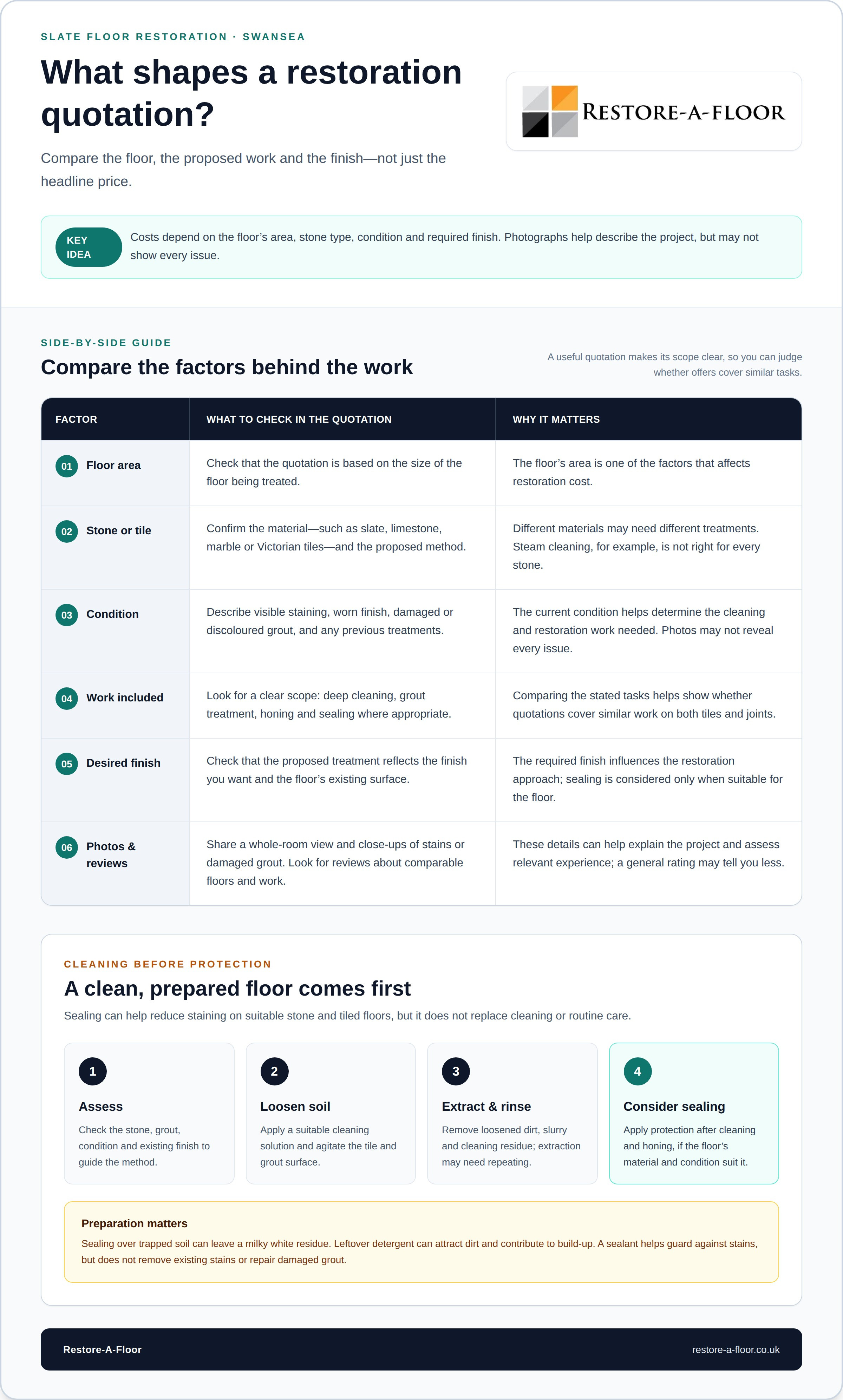
Restoration costs depend on the floor’s area, stone type, condition and required finish. Photographs can help explain the work needed for a quotation, although they may not reveal every issue on the floor.
Comparing restoration quotes and reviews
Compare quotations by their stated scope, including deep cleaning, grout treatment, honing and sealing. The method should suit the floor: slate, limestone, marble and Victorian tiles may need different treatments. Photos of the whole room and close-ups of stains or damaged grout help show the floor’s condition. Reviews are most useful when they describe comparable stone or tiled floors and the work carried out, rather than giving only a general rating. These details help you judge whether quotations cover similar tasks.
Cleaning and restoring grout
Deep grout cleaning targets soil lodged in joints, where routine surface cleaning may leave discolouration. A professional can apply a suitable cleaning solution, agitate the grout and tile surface, then extract loosened dirt. The grout’s condition matters: cleaning removes embedded soil, while restoration may also improve its appearance as part of the floor treatment. Compare both in the quotation so the scope covers the joints as well as the tiles.
For hard floors, a rotary machine with brushes agitates tiles and grout, loosening grime before extraction with a wet and dry vacuum. As demonstrated by specialist hard floor teams like The Rutland Cleaning Company, combining mechanical agitation with thorough extraction helps remove ground-in dirt safely. During a Swansea quarry-tile restoration, cleaning solution was left to soak for about ten minutes before agitation. Steam cleaning may suit tile and grout when the surface can withstand heat and moisture, but it is not right for every stone. The material and its condition should guide the method.
There’s no single cleaning and resealing schedule for every slate floor. Foot traffic, visible soil and the condition of the protective finish all affect when professional attention may be appropriate. A quotation can set out the work needed for the floor’s current condition.
Do you seal stone floors after cleaning?
Sealing can help protect suitable stone floors from stains, but it should follow thorough cleaning. Natural stone and tiles can be porous, allowing dirt and grime to settle into the surface. Sealing over trapped soil risks leaving a milky white residue beneath the finish, so preparation matters as much as the protective product.
Professionals first assess the stone, grout and existing finish. They choose a suitable cleaning solution, agitate the surface to loosen embedded dirt, then extract the soil with a wet and dry vacuum. Extraction may need repeating until the floor is stripped and clean. Visible mould or mildew needs careful assessment because the method must suit both the stone and the affected area.
Old wax, sealers and detergent residues can interfere with a clean finish. On travertine in Swansea, a coarse 400-grit burnishing pad was used to strip old sealer and dirt. The appropriate approach depends on the material and existing treatment. Excess detergent also needs removing, as residue left on the floor can attract dirt and contribute to build-up.
After cleaning or honing, professionals rinse the floor with clean water and extract the remaining slurry or residue using a wet and dry vacuum. If honing powder has been used, rinsing and extraction remove it before further treatment. This leaves the surface ready for assessment, instead of sealing over residues that could affect its appearance.
A protective sealant is applied after cleaning and honing where appropriate. It can help reduce staining, although sealing doesn’t replace routine care or correct damaged grout. The floor’s porosity, finish and condition guide whether sealing is suitable. For tiled surfaces needing a considered clean and finish, Tiled Floor Restoration & Cleaning is a relevant next step.
Protective sealant for tiled floors
A suitable protective sealant can help reduce staining on stone and tiled floors. Its role depends on the tile surface, its condition and the finish required.
Sealant application
Where appropriate, sealing follows cleaning and honing. The surface needs proper preparation: dirt trapped beneath sealant can leave a milky white residue on natural stone and tiles. A professional considers the tile material and existing finish before applying a protective sealant. This tailored approach helps protect the floor without concealing soil or residue beneath the surface.
Travertine shows why preparation and timing matter. In a Swansea restoration, the floor’s final burnishing stage took place on the second day, using four pads. Spray burnishing used only a small amount of water, leaving the floor dry enough to seal shortly afterwards. This example shows how the final surface treatment follows the restoration process, rather than being applied before the floor is ready.
Stain protection from sealants
Natural stone and tiles can have porous surfaces that allow dirt, grime and residues to seep in. A protective sealant helps guard stone against stains by limiting how readily spills and soil mark the surface. It does not remove existing stains, replace proper cleaning or make maintenance unnecessary. Its value is in adding protection after the floor has been cleaned and prepared.
Sealing over contamination can undermine the finish. Dirt trapped beneath sealant may appear as a milky white residue, while leftover detergent can attract dirt and contribute to build-up. Professionals remove cleaning residues before applying protection. For a tiled floor, the decision should reflect its material, surface condition and desired appearance, rather than treating sealing as an automatic final step.
Aftercare still matters. Promptly removing spills and using suitable routine cleaning helps preserve the treated appearance; abrasive soil or detergent residue can affect how clean the floor looks. A professional restoration assessment considers whether sealing suits the tile and whether cleaning or honing should come first. This makes the protective finish part of a considered process, not a substitute for preparing the floor properly.
Slate floor cleaning and restoration
In Swansea, professional stone and tiled-floor restoration includes slate cleaning and restoration. The process should match the slate’s condition, grout and desired colour and finish.
Protecting stone and grout during restoration
Slate can be cleaned and restored while protecting the stone and grout when the method suits the surface. A professional applies a suitable cleaning solution to one section, leaves it for a few minutes, then agitates and extracts loosened soil. For minor stubborn staining or etching, honing powder may be used carefully to disrupt the tile surface. The grout’s condition also guides the approach.
Restoration may change the floor’s appearance by removing embedded soil and old residues, revealing the slate’s existing colour more clearly. A professional assesses the surface before deciding whether cleaning alone is suitable or honing is needed. The aim is to address the visible problem without using an unnecessarily aggressive treatment.
Risks of DIY slate cleaning
DIY cleaning can cause problems if a product or abrasive method is unsuitable for the slate. Excessive abrasion may alter the surface, while cleaning residue can attract dirt or become trapped beneath a later sealant. Honing powder deliberately disrupts the tile surface, so it requires careful control rather than guesswork.
Some restoration methods used on other hard floors aren’t automatically suitable for slate. For example, a 200-grit diamond burnishing pad was used on Victorian tiles in Swansea, followed by a 400-grit pad. Those details illustrate how treatment is selected for a particular floor, not a slate-cleaning recipe.
Professionals may use polishing powder when a polished finish is required; otherwise, they can buff tiles with stone soap. The right choice depends on the slate’s condition and the appearance you want. A tailored process also considers grout and any existing treatment, rather than relying on one method for every floor.
For advice on a suitable restoration approach, arrange professional slate floor restoration.
Restore-A-Floor: Tiled Floor Restoration & Cleaning
Restore-A-Floor provides Tiled Floor Restoration & Cleaning for slate and other tiled floors that need professional attention. Choose this service when embedded dirt, discoloured grout or a worn finish needs more than routine cleaning, or when you’re considering whether restoration and sealing suit your floor.
Photographs of the whole floor and close-ups of problem areas can show its visible condition when you request a quotation. The proposed work can reflect the tile surface, grout and finish you want, rather than rely on a standard approach. Details about staining, previous treatments and areas of concern help explain the job.
For a slate floor in Swansea, contact Restore-A-Floor to discuss restoration and cleaning.
Plan a finish that suits your slate
For slate floor cleaning and restoration in Swansea, turn your priorities into a clear scope of work. Consider the appearance you want, the areas that concern you and whether you’re seeking a refreshed surface or more extensive restoration. These details help make the discussion about your floor and its treatment more useful.
Restore-A-Floor also offers Wood Floor Sanding & Refinishing, Concrete Floor Polishing and Parquet Floor Supply & Installation. Each service addresses a different flooring need, while tiled-floor work focuses on restoring and cleaning stone and tile surfaces.
If you’re ready to discuss your slate floor and request a tailored quotation, contact Restore-A-Floor for a quotation. A considered plan is a positive first step towards a floor that feels cared for and suits your home.
Frequently Asked Questions
Can I get a quotation from photographs?
Yes, photographs can support a quotation by showing the floor’s layout and visible condition. Include clear images of the whole area, close-ups of staining or damaged grout, and any sections with a noticeably different finish. Restore-A-Floor offers a free online quotation and responds within one working day. The quotation covers the requested work, with project-specific inclusions set out in the quote.
How long will the work take?
The schedule depends on the work required for your floor. The area, slate condition, preparation, cleaning and any finishing stages all shape the programme. A floor needing more than cleaning, for example, will require a different work plan. The quotation can describe the agreed scope and how the project will be organised.
Will polishing make my floor slippery?
Polishing does not automatically mean a floor will feel slippery, because the result depends on the finish and surface. Water, cleaning residue or tracked-in soil can also affect how a floor feels underfoot. If slip resistance concerns you, mention it when discussing the finish you want. This helps shape an approach suited to the room’s use and the slate’s condition.
What does professional slate floor cleaning and restoration in Swansea include?
Professional work is tailored to the slate and the result required. It may involve assessing the surface and grout, cleaning away soil, and considering whether further restoration or a protective treatment is appropriate. A floor with visible residue, for example, may need a different scope from one where the main concern is a dull finish. The quotation sets out the work requested for your project.
How much does slate floor cleaning and restoration cost in Swansea?
There is no single price for every slate floor. The cost depends on the project and is provided after a quotation request. The floor’s area, condition, staining, grout and required treatment all influence the scope. Describing the surface and visible issues helps establish what the quotation should cover, so you can review the proposed work rather than rely on a general figure.
How do Swansea slate floor restoration prices vary by floor size and condition?
Size affects how much floor needs treating, while condition affects the work involved. A larger area may require more cleaning and finishing; uneven wear, staining or grout concerns may call for different treatments. Two slate floors of similar size can therefore have different scopes. The quotation reflects the specific floor and requested finish, rather than applying a standard rate based on size alone.

Comments