

Residential Tile Floor Cleaning in Haverfordwest
A fixed timetable won’t suit every tiled floor. Clean tiles and grout routinely, then consider a deeper clean when dirt remains after ordinary mopping or grout looks persistently dark. For residential tile floor cleaning in Haverfordwest, the right frequency depends on foot traffic, spills and grout condition. A kitchen or hallway may need attention sooner than a less-used bathroom.
A thorough mop may not restore the original finish because embedded soil can remain in grout lines and textured surfaces. The right approach depends on the tile material, its condition and any previous treatments. Sealing may help protect suitable surfaces, but it isn’t automatically needed after cleaning.
This guide explains how to care for tile and grout between professional cleans, when restoration may help, and what to consider before sealing floors in kitchens, hallways and bathrooms. It also covers what professional cleaning involves and how to recognise when routine care is no longer enough.
Table of Contents
Why do you need professional tile and stone cleaning or restoration?
Routine mopping removes surface dirt, but soil can lodge in grout lines and textured tiles. A specialist can assess the material, grout condition and existing finish before choosing a suitable technique. Marble, for example, needs a cleaning method suited to the stone, not simply the routine used for ceramic tile. Professional cleaning can help when repeated household care leaves visible grime or uneven colouring. It can improve grout darkened by dirt, but won’t repair cracked or missing grout, or chipped and broken tiles.
There’s no single recommended interval for every home in Haverfordwest. Plan professional cleaning around foot traffic, spills, surface texture and how quickly soil returns. A busy kitchen or entrance may need attention sooner than a lightly used room. Between professional visits, sweep or vacuum loose grit and follow a suitable routine-cleaning method to prevent abrasive dirt building up. Consider a deeper clean when grout remains dark despite ordinary care, or the floor looks dull despite regular maintenance.
When choosing a tile floor cleaning company near Haverfordwest, look for reviews that specifically describe tile, grout and stone work. Feedback about a similar floor, such as marble or textured porcelain, is more relevant than general comments about cleaning.
Businesses face different cleaning demands: entrances, staff areas and customer routes can collect soil throughout the day. A shop entrance, office corridor or reception may need a plan based on footfall and tile type. A professional assessment can identify high-use areas, stubborn grout staining and damage before work begins. This distinction matters: cleaning treats soil, while damaged grout or tiles need repair.
A professional quote should reflect the work required, not just the room name. The cost depends on the individual project. Factors include floor area, tile and grout type, soiling, access and any previous coatings. Describe the rooms and visible issues clearly, then request a quote that sets out the proposed cleaning work. This helps you understand which techniques suit the floor before work begins.
How frequently should I have my tile and grout cleaned?
There’s no fixed professional-cleaning interval that suits every Haverfordwest home. Instead, note when grout first looks dull, when usual cleaning no longer improves its appearance, and how quickly the change returns. Keep a simple floor-care record: write down the room, the visible issue and the date. Comparing notes over time gives you a practical basis for planning the next deep clean, rather than relying on a calendar chosen for another household.
Keep track of care products, too. Record the cleaner used on each surface, especially if your home has different materials. Travertine and limestone need care suited to their surfaces, so noting the product and any change in appearance can help you avoid repeating an unsuitable approach. A photograph taken in similar lighting can also make gradual changes easier to spot.
For a postcode check around Haverfordwest, use the full postcode rather than the town name alone. Compare it with the stated service-area boundaries, since a listing that names Haverfordwest may not cover every nearby address. For a property outside town, check the postcode against the mapped boundary and read the coverage wording carefully. This is particularly useful in rural areas, where nearby addresses can fall under different local labels.
West Wales and North West Wales aren’t interchangeable descriptions. Haverfordwest is in Pembrokeshire, in West Wales; a reference to North West service areas doesn’t establish coverage in Pembrokeshire. Likewise, a broad West Wales label may not clarify whether a particular postcode is included. Treat the exact postcode and stated boundary as the practical details, rather than assuming coverage from a regional heading.

Tile and stone restoration, polishing and protective sealing
Restoration choices depend on the material, grout, existing finish and floor condition. The right sequence can clean, refine or protect suitable surfaces without treating every tile alike.
Restoration and polishing options
Tile and stone restoration addresses more than loose surface dirt. A professional assessment identifies the material, finish and visible wear before selecting a suitable cleaning or polishing approach. Porcelain, for example, shouldn’t automatically receive the same treatment as natural stone. Polishing may improve the appearance of suitable stone, while cleaning focuses on removing soil. Look for a treatment plan that distinguishes these aims and identifies damage that needs repair.
Stripping and sealing treatments
Stripping removes an existing coating or residue if it affects the floor’s appearance or prevents suitable treatment. It isn’t a default step: the surface and coating determine whether stripping is appropriate. After cleaning and preparation, sealing may be considered for compatible tile or grout. Ask what the treatment covers, including whether old coatings are removed, how the surface is prepared and which finish is intended.
When protective sealing may suit
Sealing may suit grout or certain natural stone surfaces when their condition, finish and use make added protection appropriate. A kitchen floor exposed to frequent spills has different demands from a lightly used room. Sealing isn’t automatically required after every clean, and it won’t repair cracks or missing grout. The decision should account for the material, existing finish and how the area is used.
Cleaning methods for home floors
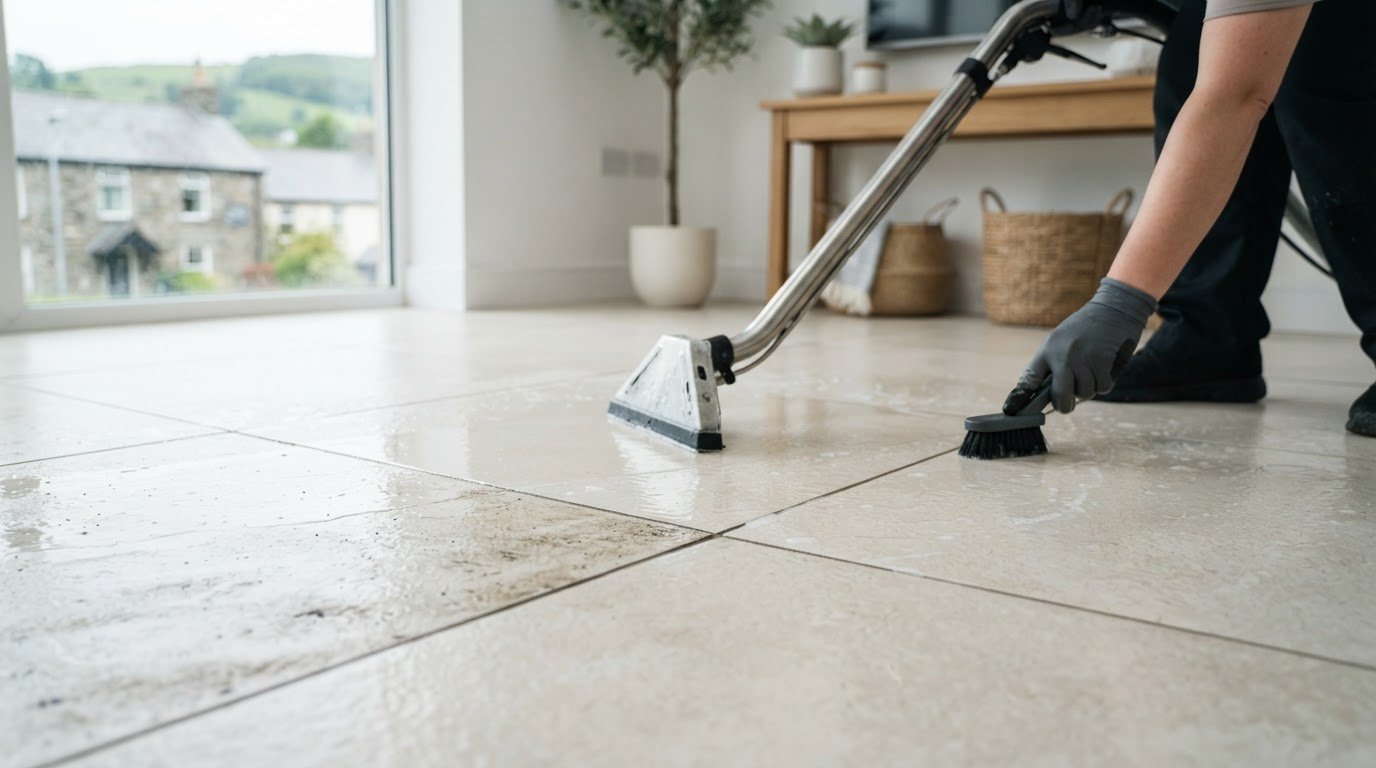
The right tile and grout cleaning method for a home floor depends on the tile, grout and soiling. Suitable cleaning products can loosen soil; mechanical agitation helps lift it, followed by controlled rinsing or extraction. Tile cleaning and restoration in Haverfordwest can include grout restoration and sealing as separate treatments. Cleaning can improve grout darkened by dirt, while cracked or missing grout needs repair. Ask for a proposed scope that distinguishes each task.
Cleaning for kitchens, hallways and bathrooms
Kitchens, hallways and bathrooms collect different kinds of soil, so plan care around how each room is used. In kitchens, cooking residue and spills can settle into grout; hallways collect grit brought in on shoes; bathrooms often need attention around damp-prone edges and fixtures. Identify the busiest spots first, then include them in regular sweeping and suitable routine cleaning.
Tile material matters in every room. Ceramic surfaces and terrazzo shouldn’t automatically receive the same treatment, and a cleaning product suitable for one floor may not suit another. Before a deeper clean, identify the tile type, grout condition and any existing coating. This gives a specialist a clearer basis for choosing suitable products and avoiding an unsuitable treatment.
Professional tile and grout cleaning can combine suitable products with mechanical agitation to loosen soil, followed by controlled rinsing or extraction. In a kitchen, this can target grease and ground-in dirt; in a hallway, it can address soil caught in textured surfaces. Bathrooms may need focused cleaning along grout lines. The process should suit the floor, rather than applying one method throughout the property.
For residential or commercial floors, note which rooms need attention and describe the visible problem. For example, say whether kitchen grout looks dark, hallway tiles feel gritty, or bathroom surfaces retain marks after routine cleaning. Clear observations help distinguish removable soil from worn finishes or damaged grout, which cleaning alone won’t repair.
After professional cleaning, keep loose grit off the floor and wipe up spills promptly with a method suited to the material. These simple steps help limit soil build-up between deeper cleans. If the finish still looks dull, describe the rooms and surfaces that concern you, so an assessment can focus on the cause rather than repeat routine mopping.
For a tailored approach to tiled floors, arrange tiled floor restoration and cleaning for the rooms that need specialist attention.
Restore-A-Floor: Wood Floor Sanding & Refinishing
Restore-A-Floor provides Tiled Floor Restoration & Cleaning when routine care no longer restores the appearance of your tiled floor. The approach is suited to the surface and its condition, whether the issue is persistent grime or a tired finish. Cleaning can improve grout darkened by dirt, but cracked or missing grout and damaged tiles need repair, not cleaning alone.
If an assessment points to a different flooring need, Restore-A-Floor also offers wood floor sanding and refinishing, concrete floor polishing, and parquet floor supply and installation. The right next step depends on the floor material and the work required, so describe the rooms and visible concerns clearly.
Contact Restore-A-Floor to discuss tiled floor restoration and cleaning, or visit restore-a-floor.co.uk.
Take the next step towards a floor that feels cared for
A floor’s appearance can influence how a kitchen, hallway or bathroom feels day to day. For residential tile floor cleaning in Haverfordwest, note which surfaces concern you most and what you want to improve, whether the grout’s appearance or a tired overall finish. Clear details make it easier to discuss an approach suited to your home.
Restore-A-Floor can help you choose the right approach for tiled floors, with restoration and cleaning tailored to the surface and its condition. If you’re also planning work on another floor type, the team offers wood floor sanding and refinishing, concrete floor polishing, and parquet floor supply and installation.
Contact Restore-A-Floor today to discuss your flooring needs and take a considered step towards a cleaner, more refined home.
Frequently Asked Questions
Can you clean natural stone like slate or travertine?
Yes, Restore-A-Floor offers tile restoration and cleaning for natural stone, including slate and travertine floors. Stone types differ in porosity, texture and finish, so share the stone name and any care history when describing your floor. A photograph of a stained or worn area can help explain the concern and distinguish general soiling from visible surface damage.
Can you remove mould from the grout lines?
Grout cleaning can remove dirt and residue, but it shouldn’t be treated as a guaranteed mould-removal treatment. Mould-like marks may persist if moisture remains or grout is damaged. Note whether the marks return after cleaning, and address leaks, ventilation or persistent dampness separately. This helps distinguish surface staining from an ongoing moisture issue before deciding on the next step.
Do you apply grout sealant after cleaning?
No, grout sealant isn’t automatically applied after every clean. Whether sealing is suitable depends on the tile and grout, existing finish and how the room is used. A frequently used kitchen and a rarely used cloakroom have different demands. Make clear whether sealing is part of the work you’re requesting, rather than assuming it follows every cleaning appointment.
Will your method harm my tiles or grout?
The cleaning approach should match the tile material and grout condition; one method won’t suit every floor. Textured porcelain and natural stone, for example, need different considerations. Point out loose grout, chips, old coatings and areas that have changed colour before work begins. These details help shape a suitable scope and distinguish known damage from ordinary dirt.
Tile floor cleaning companies near Haverfordwest with reviews
Look for reviews that specifically describe tile, grout and stone work. Reviews mentioning a similar floor, such as marble or textured porcelain, are more relevant than general cleaning comments.
Comments