

Residential floor installation in Bristol, with UK costs and wood flooring options
The flooring material is only one part of the installation cost. For residential floor installation services in Bristol, the total depends on the area, the condition of the existing floor and the preparation required. Wooden flooring costs vary by project, so Restore-A-Floor provides a quotation based on the work requested.
It’s understandable to want a clear budget before choosing a floor. Wood offers a distinctive finish, but the right flooring and careful preparation both affect how the finished floor looks and performs.
This guide explains what influences flooring costs, how the existing floor and subfloor preparation affect installation, and what to expect when fitting or refinishing wood flooring in Bristol. It also covers practical points to weigh when choosing between wood options, helping you plan the decisions involved.
Table of Contents
How much does it cost to install flooring in the UK?
For wooden flooring, the price depends on the project and is provided after a quotation request. Room area, timber choice, laying pattern, subfloor condition, old-floor removal and finishing all shape the total. A straightforward residential room and a commercial space with complex access or a detailed parquet layout require different preparation and fitting.
Residential and commercial wooden-floor projects may involve removing existing coverings, preparing the base, fitting boards and finishing edges. In commercial premises, access and plans to limit disruption can also affect the work sequence. For landlords, a between-tenancy refresh may include replacing damaged sections, refitting loose planks, or cleaning and sealing tiled areas. Renters should obtain their landlord’s permission before changing flooring.
Commercial carpet tile installation is a separate flooring option, allowing individual tiles to be replaced if a section is damaged. It differs from wooden-floor fitting. For either project, a written quotation should clearly set out materials, preparation, installation and waste handling, so you know what work is planned.
Commercial flooring waste may include lifted boards, underlay, adhesive or carpet tiles. Sorting materials during removal can help identify what may be reused or recycled instead of mixing everything together. Disposal options depend on the material and local arrangements, so include waste handling in the project scope.
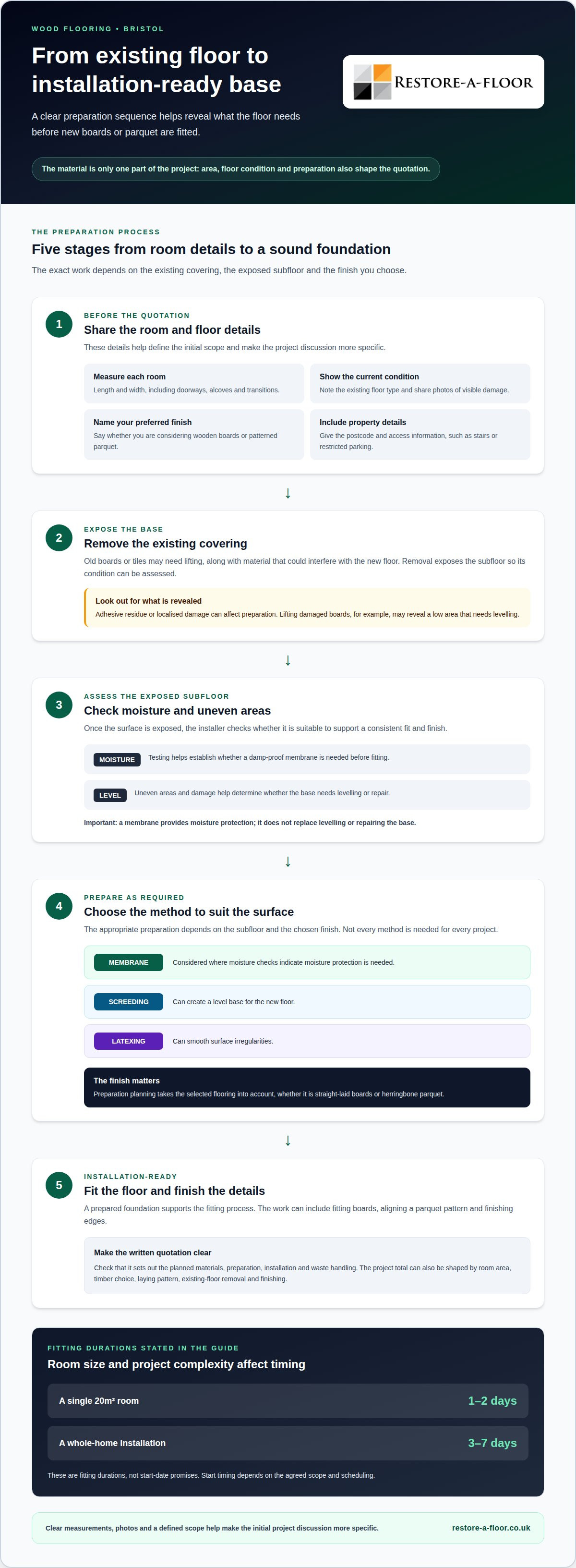
Timing depends on room size and project complexity: fitting a single 20m² room can take 1-2 days, while a whole-home installation can take 3-7 days. These are fitting durations, not start-date promises; start timing depends on the agreed scope and scheduling.
If a change in floor levels is involved, building control approval may be needed. For listed buildings, the proposed alteration and the property’s status are relevant, so treat this as a project-specific planning point. Before work begins, the written agreement should explain warranty coverage, insurance arrangements and aftercare, including floor-care guidance and how installation concerns are handled.
Subfloor preparation and removal of existing flooring
Good floor preparation starts with understanding the room, existing covering and underlying surface. If you’re planning residential floor installation services in Bristol, provide room measurements, the flooring type you’re considering and photos of visible damage to help define the initial quotation.
Subfloor checks and preparation
After assessing the surface, the installer checks for moisture and uneven areas. Moisture testing helps establish whether a damp-proof membrane is needed before fitting the new floor. A membrane provides moisture protection, but it does not replace levelling or repairing the base.
Screeding can create a level base, while latexing can smooth surface irregularities. The appropriate method depends on the subfloor and chosen finish, such as straight-laid boards or herringbone parquet. These checks help determine whether the surface can support a consistent fit and finish.
Removing existing flooring
Removing the old covering exposes the subfloor for assessment. This may involve lifting boards or tiles and clearing material that could interfere with the new floor. Adhesive residue or localised damage can affect the preparation required before installation.
For a quotation for residential floor installation services in Bristol, the existing floor’s condition helps determine the removal sequence. For example, lifting damaged boards may reveal a low area that needs levelling. Setting out removal and preparation as separate tasks also makes clear what the project includes.
Before requesting a quotation, measure each room’s length and width, noting doorways, alcoves and transitions. Share photos, the current floor type and your preferred finish. Mention whether you’re considering wooden flooring or patterned parquet, as these choices inform the preparation plan.
Once the surface is exposed, its condition guides the next steps. Floor preparation steps establish a stable foundation, with moisture protection considered where checks indicate it’s needed. Clear measurements and images make the initial project discussion more specific.
Wood flooring installation in Bristol and surrounding areas
Wood flooring installation depends on the property, the chosen material and the finish you want. For a project in Bristol, the address and room details help define the work and plan the fitting process.
Bristol service areas
For Bristol, local flooring coverage includes nearby towns within a 10-mile radius. Restore-A-Floor also targets Swansea, Cardiff, Pembrokeshire, Haverfordwest and Cardiganshire, so include the property’s full address when discussing a project.
For an initial discussion, note the postcode, room dimensions and access details, such as stairs or restricted parking. This information helps plan material delivery and organise the work efficiently. The property address also helps establish whether the project is in the relevant service area.
Residential flooring installation services
Residential wood flooring options include engineered wood, solid wood and parquet. Engineered boards have a real-wood top layer and a stable core, making them better suited than solid wood to kitchens, underfloor heating and changing temperatures. Solid wood can warp if exposed to water.
Parquet creates a patterned finish, including herringbone, while straight-laid boards offer a different look. The room’s use, moisture exposure and subfloor condition help inform the choice. For underfloor heating, check compatibility information from both the flooring and heating system manufacturers.
A Bristol installation plan can cover the process from subfloor preparation to fitting and finishing details. Parquet’s repeated pattern needs careful alignment, while board direction affects how a room looks. Trims and transitions between rooms also contribute to the finished appearance.
These market figures are not a project quote: room size, material, laying pattern and preparation affect the final cost. A single 20m² room can take 1-2 days to fit, while whole-home work can take 3-7 days, depending on complexity. Defining the rooms and finish at the outset helps set a lasting, practical scope.
Wood flooring installation and refinishing
Installation and refinishing address different needs. New boards change a room’s surface; sanding and refinishing renew existing wood when the boards remain suitable. Start by deciding whether the floor needs replacement or restoration, based on its condition, appearance and intended use.
For installation, the sequence includes confirming the layout, preparing the base, fitting boards and completing edges and transitions. Wood should acclimatise in the room for 48-72 hours before fitting, allowing it to adjust to humidity and temperature. Glue-down or nail-down installations need at least 24 hours for adhesives to set before walking on the floor.
Engineered wood combines a real-wood top layer with a stable core. It can suit rooms with changing temperatures, including kitchens, better than solid wood, which may warp if exposed to water. Luxury vinyl is a different flooring option, not a wood product; choose according to the material and finish you want for each room.
Refinishing starts with assessing the boards for damage, loose sections and previous coatings. Sanding removes the worn surface, while filling suitable gaps can create a more even appearance before applying a new finish. For example, a scuffed living-room floor may need sanding and recoating, while badly damaged boards may require a different plan.
An excellent result depends on matching the method to the floor, rather than sanding every surface in the same way. Years of experience can assist with recognising how timber condition, board construction and the chosen finish affect the work. A clear assessment also helps distinguish cosmetic wear from problems requiring repair before refinishing.
Choose restoration when the existing wood can be renewed and its character is worth preserving; choose new installation when the boards or layout no longer suit the room. For a considered assessment of wood flooring and refinishing options, arrange a flooring discussion.
Restore-A-Floor: Parquet Floor Supply & Installation
Restore-A-Floor provides parquet floor supply and installation for projects where a patterned wood floor suits the room. The work covers preparation through to the final finish, bringing the installation together as a considered whole.
For existing timber that has become worn, Wood Floor Sanding & Refinishing can renew its appearance. Concrete Floor Polishing and Tiled Floor Restoration & Cleaning address different surfaces, so the right next step depends on the floor material and the result you want.
Before choosing an approach, consider the room’s use, the condition of the existing floor and whether you want new parquet or to refresh timber already in place. This helps focus the discussion on the relevant service and finish.
To discuss parquet installation or wood floor refinishing, contact Restore-A-Floor.
Choose the right next step for your floor
If you’re considering residential floor installation services in Bristol, decide whether you want a new design or to restore existing materials. Think about the character you want in the room and how the floor needs to function day to day. This gives you a practical starting point for choosing an approach.
Restore-A-Floor offers Parquet Floor Supply & Installation for a patterned timber finish, alongside Wood Floor Sanding & Refinishing for suitable existing wooden floors. Concrete Floor Polishing is another option for concrete surfaces. Each service suits a different material and project aim, so start with the floor you have and the result you want.
Share your flooring plans and discuss which approach fits your home. Contact Restore-A-Floor about your flooring and take the next step towards a considered finish for your space.
Frequently Asked Questions
What does a flooring fitter do exactly?
A flooring fitter assesses the room and base, prepares the surface, then installs and finishes the chosen flooring. Work can include removing existing material, fitting underlay where required, cutting boards or tiles to fit edges, and completing transitions between rooms. For parquet, accurate layout and alignment are especially important. The specific tasks depend on the flooring material and agreed project scope.
How much does floor installation cost in Bristol per square metre, including materials and labour?
There isn’t one reliable per-square-metre figure for every Bristol installation, including materials and labour. The total depends on the floor area, selected material, subfloor condition, removal requirements and finishing details. A project quotation should clearly set out the requested work and its inclusions. Restore-A-Floor provides a project-specific price after a quotation request, based on the scope and preparation needed.
What is the average cost to install laminate, vinyl, engineered wood, carpet, or tile flooring in Bristol?
Costs for laminate, engineered wood, carpet and tile depend on the material, room size and preparation required, so one average would not describe every installation. A quotation should separate material supply, fitting and any necessary floor preparation.
What are the risks of installing flooring over damp or uneven subfloors, and how can they be checked?
Damp or uneven subfloors can affect how securely flooring sits and may contribute to movement, gaps or an uneven finish. Moisture checks help identify damp concerns, while a level assessment reveals dips and raised areas. For example, a concrete base may need levelling before boards are installed. Depending on the findings, preparation may include a damp-proof membrane, screeding or latexing.
What warranties, insurance, and aftercare should I expect from a residential flooring installer?
Your written agreement should explain warranty coverage, insurance arrangements, floor-care guidance and how installation concerns are handled.

Comments