

Quarry tile restoration in Cardiganshire: examples of sealing after cleaning
A freshly cleaned quarry-tile floor isn’t ready for sealing until it has dried. In Cardiff, one kitchen floor was sealed after 24 hours, while an external pathway was allowed a couple of days before its moisture was checked, then a dry spell of a week or two before sealing. These examples show why Quarry tile restoration in Cardiganshire needs a drying approach suited to the floor and its setting.
It’s natural to focus on the difference cleaning makes, especially when dirt or old treatments have dulled quarry tiles. But the finish depends on more than scrubbing: moisture, tile condition and sealer choice all matter. Sealing damp outdoor tiles can trap moisture, which may freeze, expand and disrupt the sealer.
This guide explains how quarry tiles are cleaned and prepared for sealing, with examples from homes and heritage settings, alongside wider considerations for natural stone restoration. Follow the process from removing ingrained dirt and old coatings to letting the tiles dry before applying a protective finish.
Table of Contents
Sealing quarry tiles after cleaning
In a Cardiff kitchen, quarry tiles measuring 150 x 150 mm had been laid in 2000. After cleaning, the floor was left to dry for 24 hours before sealing. This sequence matters: a sealer applied to damp tiles may not form an even finish, so dryness is part of preparation, not an optional pause.
An outdoor pathway in Cardiff needed a different approach. The tiles dried for a couple of days before their moisture was checked, then the floor was left through a dry spell of a week or two before sealing. Trapped moisture can freeze in winter, expand and disrupt the sealer. This example shows why outdoor floors need particular attention to weather and moisture.
How can you tell whether quarry tiles have been sealed or treated before? Look for a visible coating, an uneven sheen or water that beads instead of soaking into the tile. These are clues, not proof: cleaning residue and wear can affect the appearance. Inspect several tiles and grout joints before deciding whether old treatment needs removing.
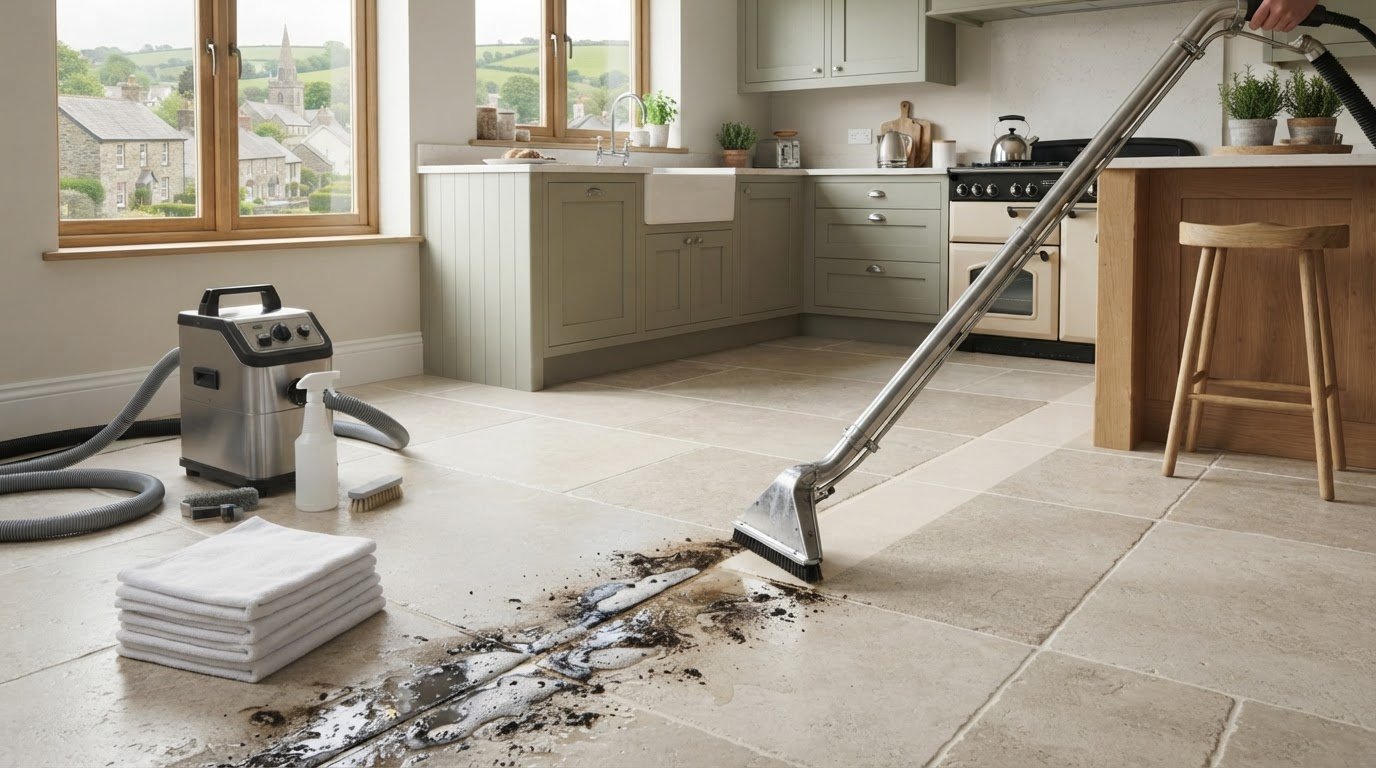
Deep cleaning should address the tile surface and grout together. Work in manageable areas: loosen ingrained soil, then remove the residue without leaving cleaner in the joints. Avoid acids unless you know the tile and grout can tolerate them, as unsuitable acidic cleaners may damage surfaces or weaken grout. Pressure washing can force water into joints and disturb grout, particularly on older floors.
How long does restoration take, and when can you use the floor? Cleaning, drying, sealing and curing are separate stages, so the total time depends on the floor’s condition and drying conditions. The Cardiff pathway was left for a week or two before sealing, while a Treharris quarry floor dried for two days before its moisture was checked again. Keep the floor out of use until the sealer has dried and cured according to its instructions.
Natural stone and tile restoration
Older tiled floors often need more than a surface clean. At a church in Cowbridge, three layers of carpet covered the quarry-tiled area before restoration. The original church dated back to the 11th century, and a small extension was added in the early 19th century. Tiles measured 25mm thick, so careful assessment helped guide the work on this historic floor.
Start by identifying the material, existing coatings and grout condition. Quarry tiles, Travertine and other natural stones don’t all respond in the same way to cleaning products or treatments. A method suited to one surface may mark another, so test a small, inconspicuous area before treating the whole floor. Remove residue thoroughly to avoid deposits on the tiles.
In Cowbridge, the restored church floor was checked for moisture three days after cleaning. This helps establish whether the surface is ready for sealing. Natural stone also needs a suitable protective treatment: specialist sealers used on Travertine floors can last for decades. The appropriate finish and maintenance depend on the stone and how the floor is used.
Can damaged, loose or missing quarry tiles be repaired or replaced? Yes. Loose tiles can be lifted and reset if the underlying surface is sound; damaged or missing tiles can be replaced with suitable matches. Check thickness, colour and dimensions, as well as the surrounding grout, so repairs sit evenly and don’t create a visible mismatch.
For a considered restoration, work in stages: inspect the floor, identify any loose or damaged tiles, remove unsuitable coatings, clean the surface and grout, then allow the floor to dry before applying a compatible sealer. Addressing repairs before final cleaning and sealing avoids finishing over unstable areas. For help with a floor requiring specialist attention, explore stone and tile restoration.
Which specialists restore quarry tiles in Cardiganshire and nearby areas?
Quarry tiles need a floor-restoration specialist familiar with deep cleaning, old coatings, grout and sealing. This is different from routine mopping: ingrained soil and previous treatments can hide the tile’s true condition. In Cardiganshire, the floor’s age, whether it is indoors or outdoors, and any loose or damaged tiles all help determine the restoration sequence.
Examples from nearby Welsh locations show how the work changes with each floor. On a Cardiff pathway, cement that may have been 100 years old covered quarry tiles. The restoration was completed one square metre at a time, allowing the cleaner to be worked in and removed methodically. This case illustrates the care needed when old material adheres strongly.
At a Cowbridge church, three layers of carpet had covered the tiled area. The church dated back to the 11th century, and its quarry tiles were 25mm thick. Restoration brought the concealed floor back into view; moisture was checked three days after cleaning. Historic settings require attention to the existing surface and its drying stage.
Other examples show the range of domestic work. A Penarth property dated back to 1890 and had a quarry-tiled floor described as 100 years old. In Treharris, tiles had been laid when the house was built in 1910. These cases demonstrate why specialists assess each floor’s age, condition and previous coverings before selecting a cleaning method.
For a Cardiganshire floor, the essential sequence is assessment, cleaning, drying and sealing, with repairs considered where tiles are loose or missing. The Cardiff kitchen example used 150 x 150 mm quarry tiles, while the pathway required a longer drying period before sealing. Such differences show why restoration is tailored to the surface and setting, rather than treated as a single standard procedure. Nearby case examples offer practical insight, but each floor has its own requirements.
How do professionals clean, strip, and reseal old quarry tiles?
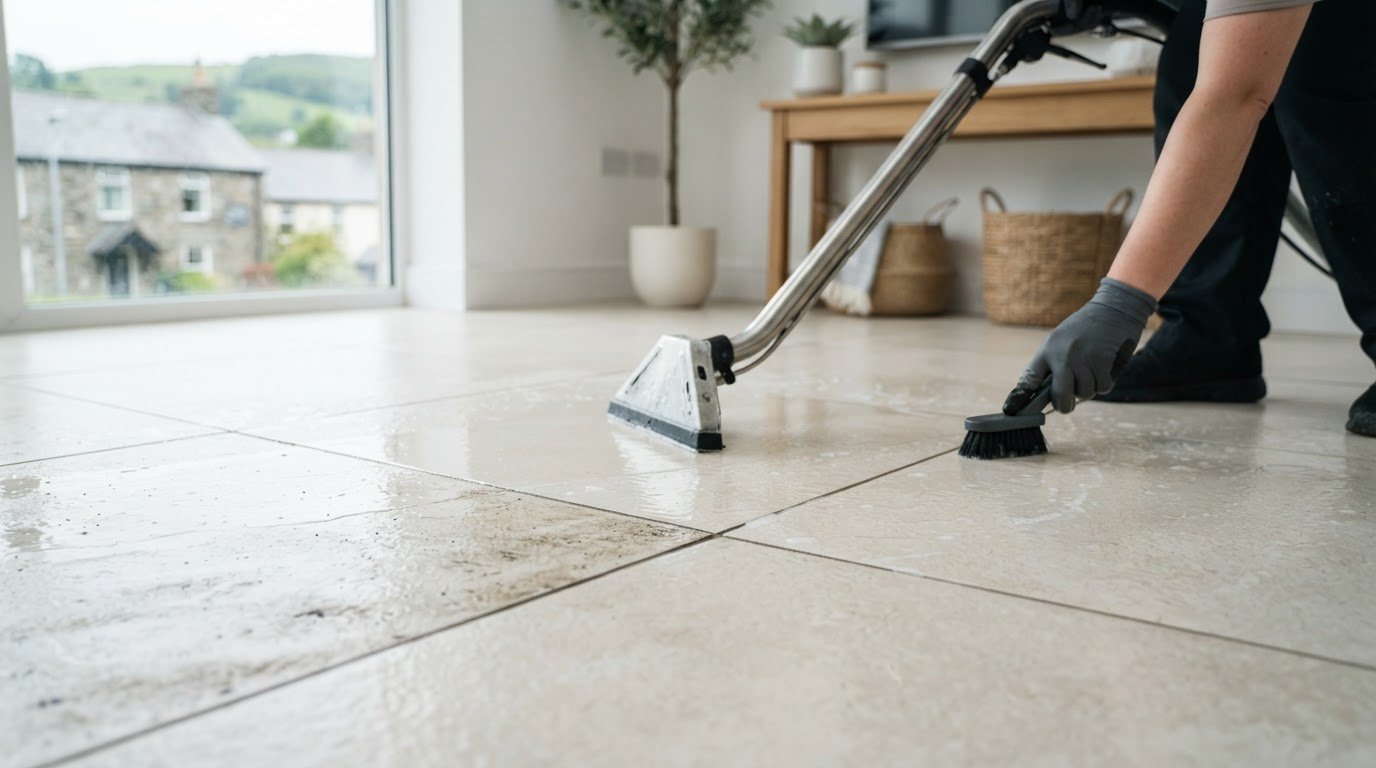
A professional assessment starts with the tiles, grout and previous coatings. This helps identify where old sealer or embedded soil needs attention. The floor is then cleaned in controlled sections: a suitable cleaning solution loosens grime before agitation, and the loosened soil and residue are removed. This prepares the surface for drying and, later, sealing.
A Cardiff quarry-tiled pathway shows why timing and technique matter. Allow the cleaning solution to work into the tiles before agitation. A coarse black pad, cut from a 17-inch pad, was used to agitate the surface. Cleaning one manageable area at a time helps keep the process controlled and residue removal thorough.
Two examples show how dwell time can vary. In Penarth, cleaning products soaked for ten minutes before the quarry tiles were scrubbed. At a Treharris property, the cleaning mixture was left for about an hour. The solution and surface condition affect how long a product needs to work before agitation.
After cleaning, remove the loosened dirt and old treatment rather than letting residue dry on the tiles. Thorough rinsing matters because leftover cleaner can affect the finished floor’s appearance. Let the tiles dry before assessing moisture and applying a compatible sealer. Professional cleaning can remove years of dirt and old sealers, leaving the surface ready for protection.
For an old quarry floor, the sequence is assessment, cleaning, residue removal, drying and resealing. Skipping preparation can leave dirt beneath the new finish; sealing before the tiles are dry can trap moisture. The correct approach depends on the tile, grout and previous treatment. To discuss a restoration project, get help with quarry tile restoration.
Professional cleaning removes years of dirt and old sealers, leaving quarry tiles prepared for sealing and completing the restoration.
Restore-A-Floor: Wood Floor Sanding & Refinishing
Restore-A-Floor offers Tiled Floor Restoration & Cleaning for quarry-tiled floors that need specialist attention. After learning how cleaning, drying and sealing work together, you can turn to this service when ingrained dirt or old treatments need professional removal and the tiles need restoring.
The cleaning method and finish should suit the tile’s condition and setting. This is a practical option for homeowners with tired quarry tiles, whether the floor is in a kitchen or another tiled area. Restore-A-Floor also provides wood floor sanding and refinishing, concrete floor polishing, and parquet floor supply and installation for other flooring projects.
For information about tiled floor restoration and cleaning, visit Restore-A-Floor’s website.
Plan the next step for your tiled floor
Restoration is a chance to make a considered decision about the floor’s future, not just its immediate appearance. Think about how you use the space, the finish you want to maintain and whether adjoining areas need attention. Knowing your priorities makes it easier to discuss a suitable approach for your home.
For quarry tile restoration in Cardiganshire, describe the floor’s condition and the result you want when you arrange the next step. This keeps the discussion practical, whether you want to refresh a well-used room or care for older tiles as part of a wider flooring project. Consider which features matter most, such as retaining the tiles’ character or creating a more consistent appearance across the room.
Restore-A-Floor can discuss your tiled-floor requirements and help you consider the restoration route. Contact Restore-A-Floor about your tiles to begin a focused conversation about your project. A thoughtful plan is a positive first step towards a floor that feels cared for and works well for your home.
Frequently Asked Questions
What is quarry tile restoration and what does the process involve?
Quarry tile restoration renews an existing floor by addressing the surface, grout and any localised damage. Start by noting cracked, hollow-sounding or missing tiles, along with areas that have a different finish. For quarry tile restoration in Cardiganshire, this inspection helps distinguish cleaning from repair needs and gives you a clear way to assess the finished floor against its original character.
What sealers and finishes are suitable for quarry tiles in older Welsh homes?
A suitable sealer depends on the tile’s condition, whether it is indoors or outdoors, existing treatments and your preferred appearance. Older Welsh homes may have varied tile surfaces, so don’t choose a finish by colour or sheen alone. Check that the product is intended for the floor, and test a discreet area first to see how it changes the tile’s colour and appearance.
How should restored quarry tiles be maintained and cleaned?
Use a soft brush or a vacuum suitable for hard floors to remove loose grit before it scratches the surface. For routine washing, choose a cleaner intended for quarry tiles and follow its directions, using only enough liquid to clean the floor. Wipe spills promptly, especially coloured liquids, and avoid dragging rough furniture across the tiles. Regular light care helps prevent dirt from building up again.
Comments