

Porcelain tile cleaning and sealing Cardiff
A stubborn mark doesn’t automatically mean a porcelain tile is damaged. Porcelain tile cleaning and sealing in Cardiff can tackle many tough stains, but the treatment depends on the stain, tile finish and grout; hard floors are typically touch-dry within 30-90 minutes after cleaning. Sealing is considered separately, as the right approach depends on the floor’s surface and condition.
It’s understandable to want a clear idea of what can be restored before arranging work. This guide explains which hard floors can be cleaned, how professionals approach ingrained marks and what affects cleaning and drying times. You’ll also learn what to expect from tiled floor restoration in Cardiff and across South Wales, so you can make a more informed decision about the next step for your floor.
Table of Contents
Cleaning duration and drying times
A cleaning visit includes preparation, cleaning and removal of loosened soil. Time on site depends on the floor’s size, condition and the treatment required.
Cleaning time
Cleaning takes more than passes across the tiles. The floor needs preparation, treatment for soiling, cleaning and a final check. A large hallway takes longer than a small entrance, while ingrained grime around grout may need extra attention. Furniture and access to the floor also affect how efficiently the work can be completed.
Before arranging work, consider which areas need cleaning and the floor’s condition. A kitchen with everyday residue may need a different approach from a hallway with ground-in dirt or isolated marks. Stain treatment can add work because the method must suit both the mark and the tile finish. Clearing movable items beforehand helps keep the process focused.
Ask for an estimate of the time on site based on the floor area and work involved. A useful estimate distinguishes active cleaning from preparation and finishing, rather than treating every room alike. This helps you plan access to kitchens, entrances and other busy spaces. For porcelain tile cleaning and sealing in Cardiff, the surface and its condition also shape the process.
Drying time
Drying time starts after the cleaning stage and describes how long the surface remains damp. Hard floors are typically touch-dry within 30-90 minutes. This is a practical guide for planning light foot traffic, not a promise that every floor will dry at the same pace. Room conditions, moisture left after cleaning and airflow influence the result.
Keep the floor clear while it dries, and avoid walking across damp areas where possible. For example, arrange entrance cleaning so another route through the home remains available. Check the surface before replacing furniture or rugs, which can cover damp patches and restrict airflow. Separating cleaning time from drying time makes it easier to plan the visit.
What types of Hard Floor can you clean?
Hard-floor cleaning can include porcelain and ceramic tiles, natural stone, quarry tiles and terrazzo. The right method depends on the material, surface finish, grout and type of soiling, not appearance alone.
Avoid abrasive powders, scouring pads and strong acidic or alkaline cleaners on porcelain. Choose a product labelled as suitable for the tile, and test it in an inconspicuous spot before treating the whole floor.
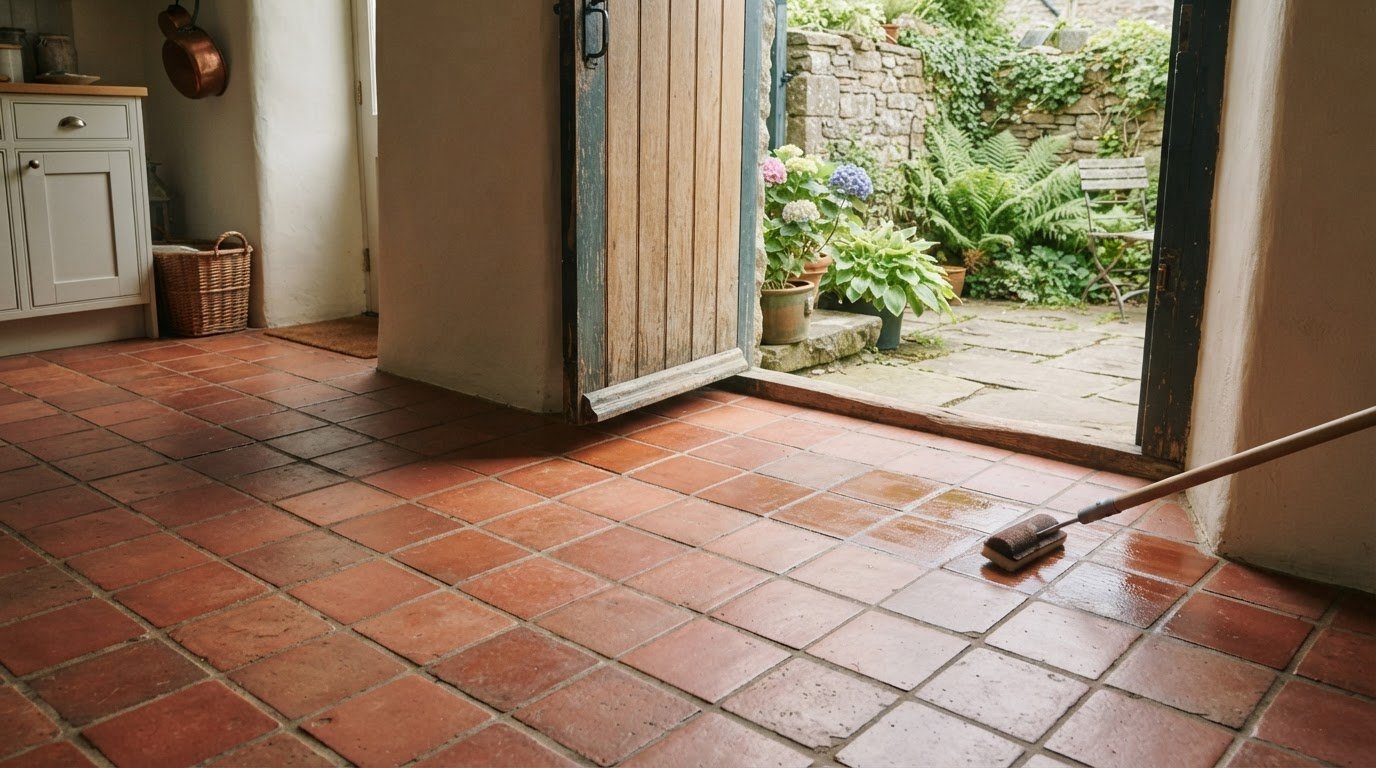
Polished porcelain, matt tiles and textured finishes need different handling. Abrasive tools can mark delicate finishes, while textured tiles may hold soil in their surface. Grout also needs attention: its condition and colour affect the cleaning method. Natural stone and older Victorian tiles require care suited to their specific surfaces, rather than a product chosen for porcelain.
Protect the finish by identifying the floor before cleaning. Look for loose tiles, damaged grout, existing coatings and visible wear. Then match the cleaning solution and agitation to the surface. A test patch can show whether a method changes the appearance before you use it across a larger area.
Professional cleaning frequency depends on use: high-traffic areas are recommended for cleaning every 6 to 12 months, and moderate-traffic areas for deep cleaning every 12 to 18 months. Low-traffic floors can be cleaned every 2 to 3 years, or as needed; homes with pets, young children or allergy sufferers are recommended for deep cleaning every 6 to 12 months.
Sealing doesn’t follow one universal timetable for porcelain tiles and grout. Consider the tile finish, grout condition and any existing treatment when deciding whether sealing is appropriate and needs renewal. Keeping those details in mind helps protect the appearance without applying an unsuitable product. For more surface-specific floor-care information, consider the floor material and finish first.
Hard floor cleaning in Cardiff and South Wales
In Cardiff and South Wales, the right cleaning process begins with the floor itself. A porcelain kitchen, a slate entrance and a Victorian tiled hallway need different assessments. For example, a hallway floor in a Cardiff home built in 1890 may have historic tiles and worn grout. Identifying the material and condition guides the treatment, helping avoid a one-method-fits-all approach.
A practical professional process follows clear stages:
Inspect the floor: identify tile type, finish, grout condition, loose edges and visible stains.
Prepare the area: move accessible furnishings and remove loose dust or grit before wet cleaning.
Select the treatment: match the cleaning solution and tools to the surface, then test an inconspicuous patch.
Clean and recover soil: work across manageable areas, paying particular attention to grout lines and marked sections.
Rinse and review: remove remaining residue, then inspect the tiles under the room’s lighting.
Every stage affects the finish. Grit left on a polished tile, for example, can be dragged across the surface during scrubbing. Textured tiles may need closer attention to their recesses, while stained grout may require targeted treatment rather than aggressive cleaning across every tile. On older Cardiff floors, preserving the surface’s character matters as much as removing soil.
Point out where marks appear and what may have caused them. Cooking residue near a cooker, muddy footprints by an entrance in South Wales and soap deposits in a bathroom each need different attention. Mention previous coatings or household products too, as residue can affect how a new cleaning solution works. Clear access to edges and corners helps the cleaning reach the whole floor, not just its open centre.
Once the surface is dry, assess the result. Remaining discolouration may be a stain, worn finish or damaged grout rather than removable surface dirt. Identifying the difference helps set realistic expectations and guides the next care decision.
Mechanical agitation and truckmount hot-water cleaning
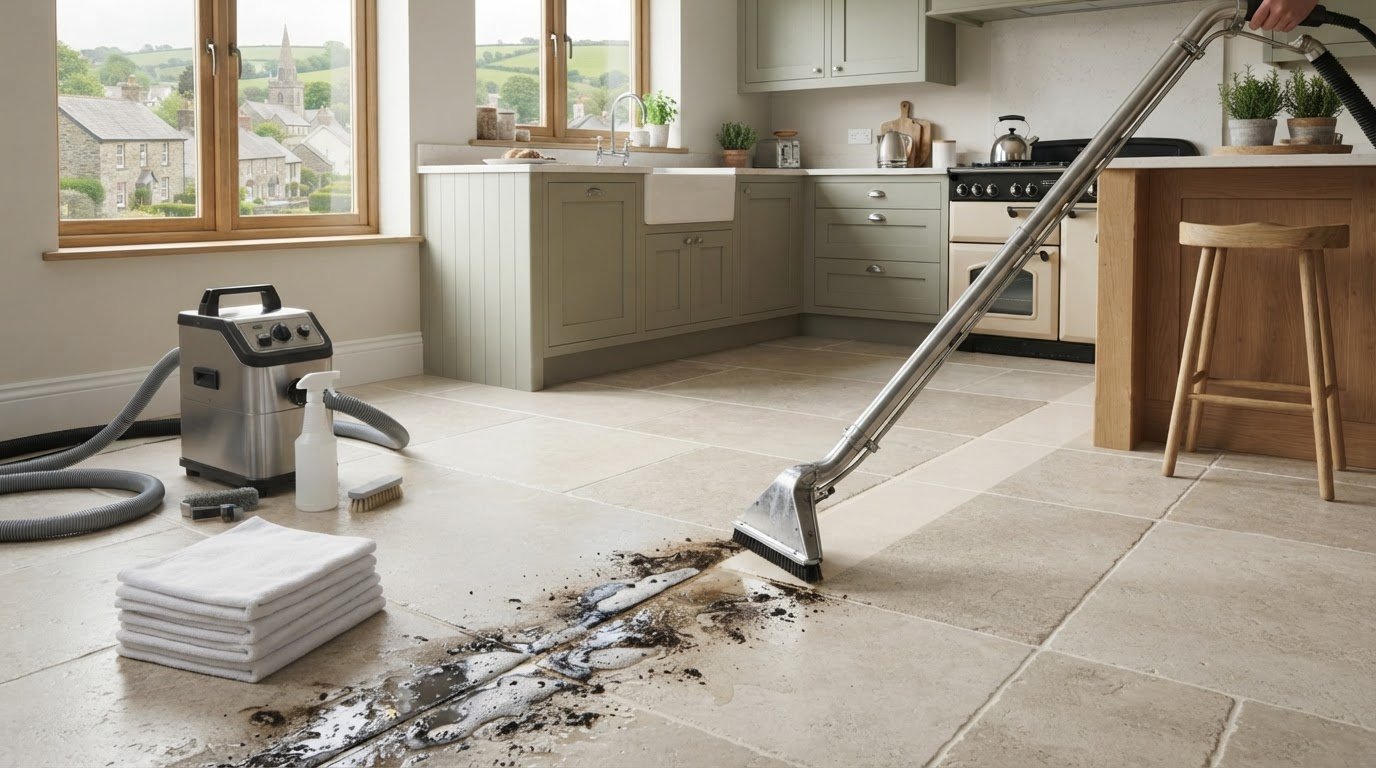
Mechanical agitation and truckmount hot-water cleaning can loosen and remove embedded soil. Their suitability depends on the tile surface, grout condition and type of soiling. These are different methods: agitation works the surface, while hot-water cleaning rinses and extracts loosened residue.
Mechanical agitation uses a machine or hand tool to move a brush or pad across the floor. Controlled brushing can reach soil held in the recesses of textured porcelain. Grout lines may need focused attention, but worn or crumbling grout calls for a gentler approach. Tool choice and pressure should suit the finish, rather than relying on force to tackle every mark.
A truckmount system is positioned outside the property, with hoses brought inside. It delivers heated cleaning solution to the floor and extracts used water and suspended soil. This can help remove residue from larger tiled areas, including kitchens and hallways. The operator still needs to control the water volume and temperature to suit the tiles and grout.
Before cleaning: identify the tile finish and inspect grout, edges and existing coatings.
During agitation: work in manageable sections, concentrating on visible soil without scouring the tile.
During extraction: rinse and recover residue, paying attention to grout joints and corners.
After treatment: inspect the surface for remaining marks and check that cleaning residue has been removed.
A greasy kitchen floor, for example, may need targeted agitation before rinsing, while polished tile calls for careful tool selection. Cleaning can improve the appearance of a tiled floor, but damaged grout or a worn finish may need attention beyond cleaning. Staining that remains after cleaning may point to discolouration within the material, rather than removable surface soil.
For tiled floors that need a considered clean and restoration approach, discuss your tile-cleaning requirements.
Restore-A-Floor: Wood Floor Sanding & Refinishing
Restore-A-Floor provides Tiled Floor Restoration & Cleaning for floors that need more than routine upkeep. If stubborn marks remain, grout looks tired or the surface has lost its appeal, a considered restoration approach can address the floor’s condition and finish. The right work depends on the tile material, existing wear and the result you want.
For other hard-floor projects, Restore-A-Floor also offers Wood Floor Sanding & Refinishing, Concrete Floor Polishing, and Parquet Floor Supply & Installation. Each service suits a different surface, so identify your floor type and describe the issue when discussing your requirements.
Contact Restore-A-Floor to discuss tiled floor restoration and cleaning for your property.
Choose a clear next step for your floor
Before arranging work, note what you want the floor to look and feel like afterwards. Is your priority removing a particular mark, refreshing grout or improving the overall appearance? For porcelain tile cleaning and sealing in Cardiff, these details help shape a practical discussion about the surface, its condition and the finish you have in mind.
It also helps to describe where the floor is and how it is used, such as in a busy kitchen or a quieter entrance. If you know the tile type or have details of previous treatments, include those too. The best approach depends on the material and the result you want, so a clear brief gives the discussion a useful starting point.
Share your flooring project with Restore-A-Floor and take the next step towards a considered plan for your floor.
Frequently Asked Questions
Can you remove tough stains from my Hard Floors?
Many tough marks can be treated, but the method depends on the stain and floor material. Grease near a cooker, rust-coloured marks and dark grout discolouration need different approaches. A specialist assesses the affected area and chooses a treatment suited to the surface. If a mark has altered the tile or grout itself, cleaning may not restore its original colour.
Do porcelain tiles need sealing, and which types are exceptions?
Most glazed porcelain tiles don’t need sealing because their surface is designed to resist moisture and staining. Polished porcelain may be more absorbent than glazed tile, so its finish matters. Unglazed porcelain and grout may need separate consideration. Check the tile manufacturer’s care guidance or identify the finish before applying a sealer, as unnecessary product can leave residue.
How to clean porcelain floor tiles safely without damaging grout or finishes?
Start by vacuuming or sweeping away loose grit, then use a pH-neutral cleaner labelled as suitable for porcelain. Apply it with a soft mop or non-abrasive brush, paying attention to grout joints without scrubbing aggressively. Rinse away residue with clean water and dry the surface. Test unfamiliar products on a discreet tile first, especially on polished or patterned finishes.
Is grout sealing recommended for porcelain tile floors, and what does it cost?
Sealing grout can help limit staining in porous cement-based grout, but it isn’t needed for every floor. The grout type, condition and existing treatment determine whether sealing is suitable. The cost depends on the floor area, grout condition, preparation and treatment required. Restore-A-Floor provides a project-specific quotation after you submit a request.
How to remove stains, limescale and grout haze from porcelain tiles?
First identify the deposit, since limescale, grout haze and food stains need different treatments. Use a porcelain-compatible cleaner suited to the specific mark, follow its directions and test a small area. Don’t scrape deposits with metal tools, which can scratch the finish. For haze across newly grouted tiles, remove residue carefully and selectively to protect both tile faces and grout joints.
What are the risks of sealing polished or unglazed porcelain tiles?
An unsuitable sealer can leave polished porcelain streaky, cloudy or uneven, changing how light reflects across the floor. On unglazed porcelain, a topical coating may sit on the surface instead of penetrating evenly, affecting appearance and everyday cleaning. Sealer trapped in grout or tile texture can also leave visible residue. Identify the finish and test product compatibility before treating the whole floor.
Comments