

Parquet floor sanding and finishing in Pembrokeshire
A worn parquet floor doesn’t always need replacing. Parquet floor sanding and finishing in Pembrokeshire can renew the timber while preserving the character of its pattern. The right finish depends on the floor’s condition and the look you want.
It’s understandable to be concerned about dust and whether sanding will leave the floor ready for an attractive, durable finish. Careful preparation matters: sanding removes old finishes and surface imperfections, while filling gaps and holes can help reduce draughts and dust passing between boards. The timber can then be stained, oiled or lacquered.
This guide explains how restoration works across south and mid Pembrokeshire, what happens during sanding and how the floor is prepared before its finish is applied. You’ll also learn what can affect the result and what to expect when requesting a free quotation, so you can make an informed decision about restoring your parquet.
Table of Contents
Wood floor restoration in south and mid Pembrokeshire
Across south and mid Pembrokeshire, restoration can address worn timber while retaining the floor’s existing character. The right work depends on the boards’ condition, parquet pattern and previous finish.
Specialist qualifications and experience
There is no qualification or accreditation detail to rely on here, so assess relevant experience through completed floor-restoration examples. Look for work involving timber repairs, parquet blocks and finishes similar to yours. A clear assessment should explain which areas need repair, how the existing floor will be treated and what finish is proposed.
Warranty and insurance arrangements vary between contractors. Before work begins, request written details of the warranty’s scope and evidence of relevant insurance, so you understand what each covers.
Parquet block sanding and restoration
Parquet restoration requires attention to the blocks’ direction, pattern and condition. Before sanding, the floor is assessed for loose or damaged blocks. The old surface finish is then removed, and the timber is prepared for staining, oiling or lacquering. These steps help create a consistent appearance while respecting the floor’s original layout.
For parquet floor sanding and finishing in Pembrokeshire, the assessment should account for repairs as well as surface work. Missing, damaged or loose blocks may need attention before sanding can produce an even result.
Wood floor sanding removes old finishes, scratches and other surface imperfections. Where boards are damaged or loose, restoration may also involve securing them or replacing compromised timber with a suitable match. Filling gaps and holes can help limit draughts and dust passing between boards.
A Carew restoration project involved lifting and relaying solid Welsh slate slabs measuring 2-3 inches thick. It illustrates how restoration can involve careful lifting and refitting, although slate is not parquet. For a timber floor, the comparable priority is assessing the existing material and preserving a sound fit.
Reviews of Pembrokeshire contractors can help you judge whether their completed work matches your needs. Look for specific examples of parquet restoration, clear descriptions of preparation and finish, and feedback that addresses workmanship rather than general praise.
Return furniture only when the finish is ready for use. The waiting time depends on the finish and its curing instructions, so follow the guidance for your completed floor rather than assuming it is ready once dry to the touch.
How professionals manage dust during floor sanding
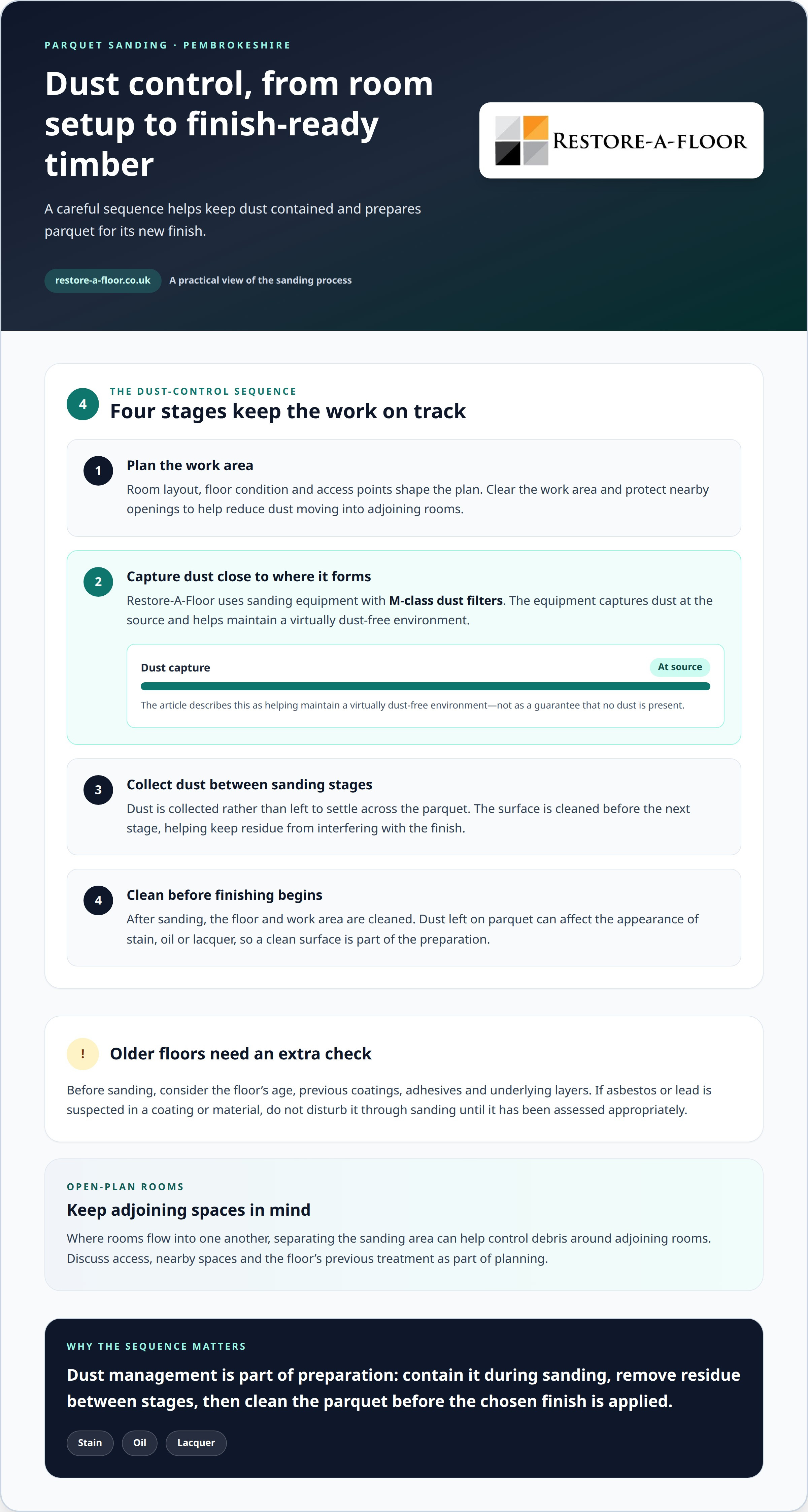
Sanding parquet creates fine timber dust, so dust management starts before work begins. The room layout, floor condition and access points shape the plan. Restore-A-Floor uses sanding equipment with M-class dust filters, capturing dust close to where it forms and helping maintain a virtually dust-free environment.
Preparation is practical. The work area is cleared, and nearby openings can be protected to reduce dust moving into adjoining rooms. The sanding sequence is planned to keep equipment and collected dust within the work zone. In an open-plan space, for example, separating the sanding area helps control debris around adjoining rooms.
Dust control continues between sanding stages. Dust is collected rather than left to settle across the parquet, and the surface is cleaned before the next stage. This matters because fine residue can interfere with the finish. A careful sequence keeps the timber ready for further preparation and coating.
Older floors need an additional assessment. Before sanding, consider the floor’s age, previous coatings, adhesives and underlying layers. If asbestos or lead is suspected in a coating or material, do not disturb it through sanding until it has been assessed appropriately. This helps prevent potentially hazardous dust from being created or spread.
After sanding, the work area and floor are cleaned before finishing begins. Dust left on parquet can affect the appearance of stain, oil or lacquer, so surface cleanliness is part of the preparation, not an optional final touch. Dust management also matters when equipment is removed and the area is cleaned.
For a Pembrokeshire renovation, explore dust-control options for timber floor projects as part of planning the work. Discussing room access, adjoining spaces and the floor’s previous treatment helps shape an appropriate approach before sanding starts.
Professional preparation for staining, varnishing or oiling floors
Preparation affects how evenly a finish sits across parquet. The timber is assessed, old coatings are removed and the surface is prepared before the chosen treatment is applied.
How professionals prepare floors for a chosen finish
The first step is assessing the parquet for scratches, marks, stains and other blemishes. Sanding removes old finishes and surface imperfections, creating a prepared base for staining, varnishing or oiling. The amount of preparation depends on the timber’s condition and its existing coating.
After sanding, the floor is checked for gaps and holes between boards. Filling them can help prevent draughts and dust, while careful cleaning removes residue from the prepared surface. These steps matter before a new finish is applied, as remaining dust or untreated blemishes can affect the result.
When staining is planned, preparation also helps achieve a more consistent colour across the timber. The floor’s condition and the chosen finish guide the process; parquet blocks may absorb stain differently from an existing coated surface. An assessment helps determine how to prepare the floor before applying the selected treatment.
Comparing oil, lacquer and hardwax
There is no single best finish for every parquet floor. Oil, lacquer and hardwax are options to consider, with the choice guided by the appearance you want and the floor’s condition. Discussing those priorities before work starts helps align the preparation and finish.
Oil and lacquer are established options for wood floors: oil gives one finishing route, while lacquer provides another. Hardwax can also be considered, but the right choice depends on the project rather than a universal ranking. The intended look and the finish’s care requirements should inform the decision.
Staining is a separate choice about colour, followed by a protective finish selected for the project. For example, changing the floor’s colour requires stain preparation as well as sanding. The sequence is assessment, sanding, gap filling where needed, cleaning, then application of the agreed finish.
Free quotations
A free quotation helps you understand the proposed parquet work before agreeing to proceed. It should describe the floor, preparation, repairs and finish being considered, rather than treating every room as identical. In south and mid Pembrokeshire, the floor’s condition and the project requirements shape the assessment.
Useful details include the room’s size, parquet layout and visible wear. Mention loose or damaged blocks, gaps, deep scratches and any previous coating. If you’re considering staining, oiling or lacquering, include your preferred finish. These details help build a clearer picture of the work involved.
The quotation should make the work clear. Sanding alone differs from work that also involves securing blocks, filling gaps or addressing damaged timber. The choice of finish may also affect preparation. Clear descriptions help you understand which tasks are included and how they relate to the result you want.
Room dimensions and the parquet pattern
Visible damage, loose blocks or gaps
Existing coatings and surface wear
Your preferred finish and colour
Price depends on the case and is given after a quote request. Factors include floor area, timber condition, repairs, preparation required, access and chosen finish. A room with sound blocks and a worn coating may need a different scope from parquet with missing or compromised sections.
Review the quotation for a clear description of sanding, repairs and finishing. If an item is unclear, ask Restore-A-Floor to explain its scope before accepting. This keeps your decision focused on the actual work, rather than an assumed package that may not suit your floor.
Share the floor details and finish you have in mind to request a free parquet flooring quotation for your Pembrokeshire project.
Restore-A-Floor: Wood Floor Sanding & Refinishing
Restore-A-Floor provides wood floor sanding and refinishing for parquet that needs surface renewal, preparation or a new finish. Its service covers projects in south and mid Pembrokeshire, including floors with worn coatings, scratches or timber requiring careful preparation before finishing.
Where parquet blocks are missing or the floor needs a new layout, parquet floor supply and installation may suit the project better than sanding alone. The appropriate work depends on the floor’s condition and the result you want. A free quotation gives you a clear next step for discussing the floor and proposed work.
When you’re ready to discuss restoring your parquet or planning its installation, contact Restore-A-Floor to discuss your project and request a free quotation.
Take the next step towards a renewed parquet floor
Restoration is also an opportunity to decide how your floor should support the character of the room. Think about the appearance you want, how the space is used and whether the parquet needs repair or replacement as well as refinishing. These priorities can help shape a clear project brief.
For parquet floor sanding and finishing in Pembrokeshire, Restore-A-Floor can discuss the work suited to your floor. Its services include Wood Floor Sanding & Refinishing and Parquet Floor Supply & Installation. Concrete Floor Polishing is also available for a different flooring project.
A free quotation is a practical way to discuss your floor’s condition, preferred finish and proposed work before deciding how to proceed. Share the details that matter to you, then consider the suggested work in light of the result you want.
Contact Restore-A-Floor for a free quote and take a considered first step towards a floor that feels right for your home.
Frequently Asked Questions
What is the parquet floor sanding and refinishing process, and how long does it take?
The work typically moves from inspection and any block repairs to sanding, surface preparation and application of the selected finish. The time required depends on the floor area, its condition, repairs needed and the finish’s drying and curing requirements. For a Pembrokeshire home, the project schedule should account for these stages before furniture returns.
How are loose, damaged or missing parquet blocks repaired before sanding?
First, identify which blocks are loose, damaged or missing, then determine what needs securing or replacing before sanding starts. Replacement blocks should suit the existing parquet’s dimensions and pattern so they sit appropriately within the floor. If a matching block is unavailable, discuss the repair approach as part of the proposed work.
How should I prepare my home for professional parquet floor sanding and finishing?
Clear furniture, rugs and movable ornaments from the room so the floor is accessible. Remove delicate belongings from nearby surfaces, and keep a clear route for equipment and materials. If the room connects to other living spaces, agree how those areas will be managed during the work. Plan where furniture can stay until the new finish is ready.
Parquet floor sanding warranty and insurance requirements in the UK
Warranty and insurance arrangements vary between contractors. Before work begins, request written details of the warranty’s scope and evidence of relevant insurance.
Pembrokeshire parquet floor sanding contractors reviews
When reviewing completed work, look for specific examples of parquet restoration, clear descriptions of preparation and finish, and feedback about workmanship.

Comments