

Hardwood decking installation in Pembrokeshire for lasting boards
The right hardwood and a carefully built subframe can make a deck last for decades. For hardwood decking installation in Pembrokeshire, Yellow Balau and Jatoba boards have an estimated service life of 40-60 years without preservative treatment. Timber decking boards should be installed with 5-6mm expansion gaps, helping accommodate natural movement as conditions change.
It’s understandable to focus on the timber: species and durability strongly influence how long a deck can last. But the structure beneath the boards, the fixings and ongoing care also affect how well the finished surface performs over time.
This guide explains how decking is supplied and installed in Pembrokeshire, how hidden clips can create consistent board spacing, and what affects timber decking’s lifespan and maintenance. You’ll also learn what to consider when planning the project, from selecting suitable boards to preparing the ground and building a stable subframe, so you can make informed choices before installation begins.
Table of Contents
Hidden decking clips and board spacing
Hardwood can offer a longer service life than untreated softwood. Yellow Balau and Jatoba decking have an estimated lifespan of 40-60 years without preservative treatment; untreated softwood decking is estimated at 5-10 years. Composite is another material option, so compare its appearance, maintenance needs and fixing method with timber before choosing.
Hidden clips fasten boards from the sides or underneath, keeping visible screw heads off the finished surface. Their placement helps create consistent spacing, but the clip system must suit the board profile and supporting structure. Follow the system’s fitting sequence, keep each board aligned, and check the gap as installation progresses. Timber decking boards should have 5-6mm expansion gaps to allow for natural movement.
Joist spacing matters just as much as the fixing method. For timber decking with 21mm-thick boards, joists should be no more than 400mm apart. Wider spans can leave boards with less support, increasing movement or deflection underfoot. Set out the joists evenly, check their alignment, then secure each board to the support points required by its fitting system.
Species affects material costs. Yellow Balau, Jatoba, Siberian larch, ThermoWood and pressure-treated pine are distinct options. Board dimensions, profile, quantity and cutting waste also affect the material required. The price depends on the project and is provided after a quotation request; species, board specification, layout and preparation all influence the cost.
For a firmer feel underfoot, consider board thickness, joist spacing and the surface finish together. A ribbed or textured face may provide a different feel from a smooth board, but texture alone doesn’t establish how it performs when wet. Review the intended use and surface finish before selecting boards. A4 stainless steel fixings are recommended for exterior timber decking; compatible clips and fixings help keep the installation secure.
Pembrokeshire and West Wales service area
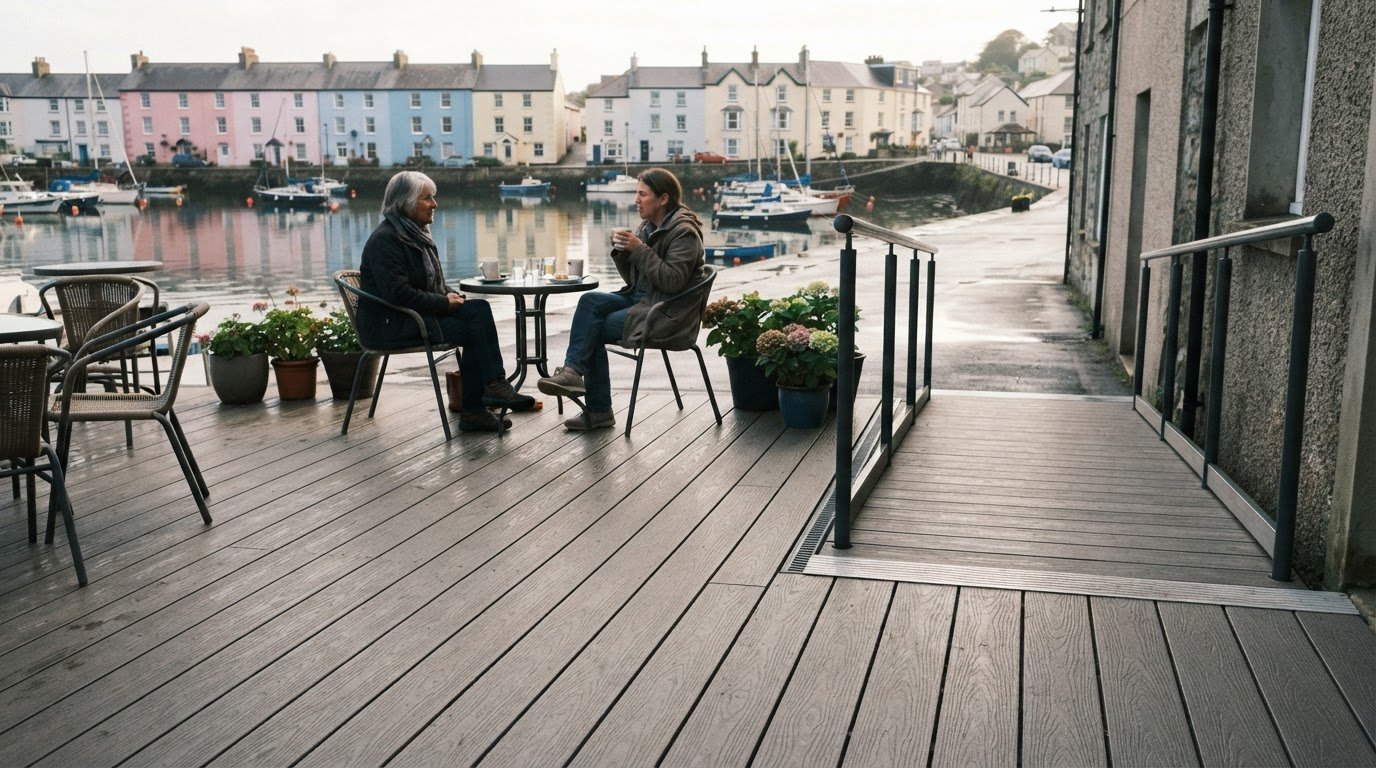
For a Pembrokeshire or West Wales deck, plan around the setting and intended use. A sheltered garden terrace has different exposure and access needs from an open outdoor area. Map the footprint, access route, steps and connection to the house. For a holiday park, include guest routes, seating and maintenance access in the layout. Clear drawings help coordinate board direction, boundaries and changes in level before installation.
Which hardwood decking species offer the best durability and value in the UK? Yellow Balau and Jatoba offer the strongest durability among the hardwoods discussed here. Value also depends on board cost, maintenance and the deck’s intended use. Siberian larch has an estimated service life of 20-30 years without preservative treatment; ThermoWood is described as having a 25-40-year service life. Pressure-treated pine is estimated at 10-15 years with consistent annual oiling.
What planning permission or building regulations apply to decking in Wales? It depends on the proposed design and the property’s circumstances, so assess the site and dimensions before work begins. Record the deck’s height, location, supports and relationship to the building, then establish which planning and building-control requirements apply to the specific proposal.
How can you assess a Pembrokeshire decking contractor’s qualifications, insurance and reviews? Review relevant qualifications and current insurance documents, and look for examples of similar outdoor timber projects in customer reviews. Compare these details with the proposed scope, installation method and written specification. For a holiday park, consider experience with shared-use spaces and access planning, as these details show how the work addresses the site’s practical needs.
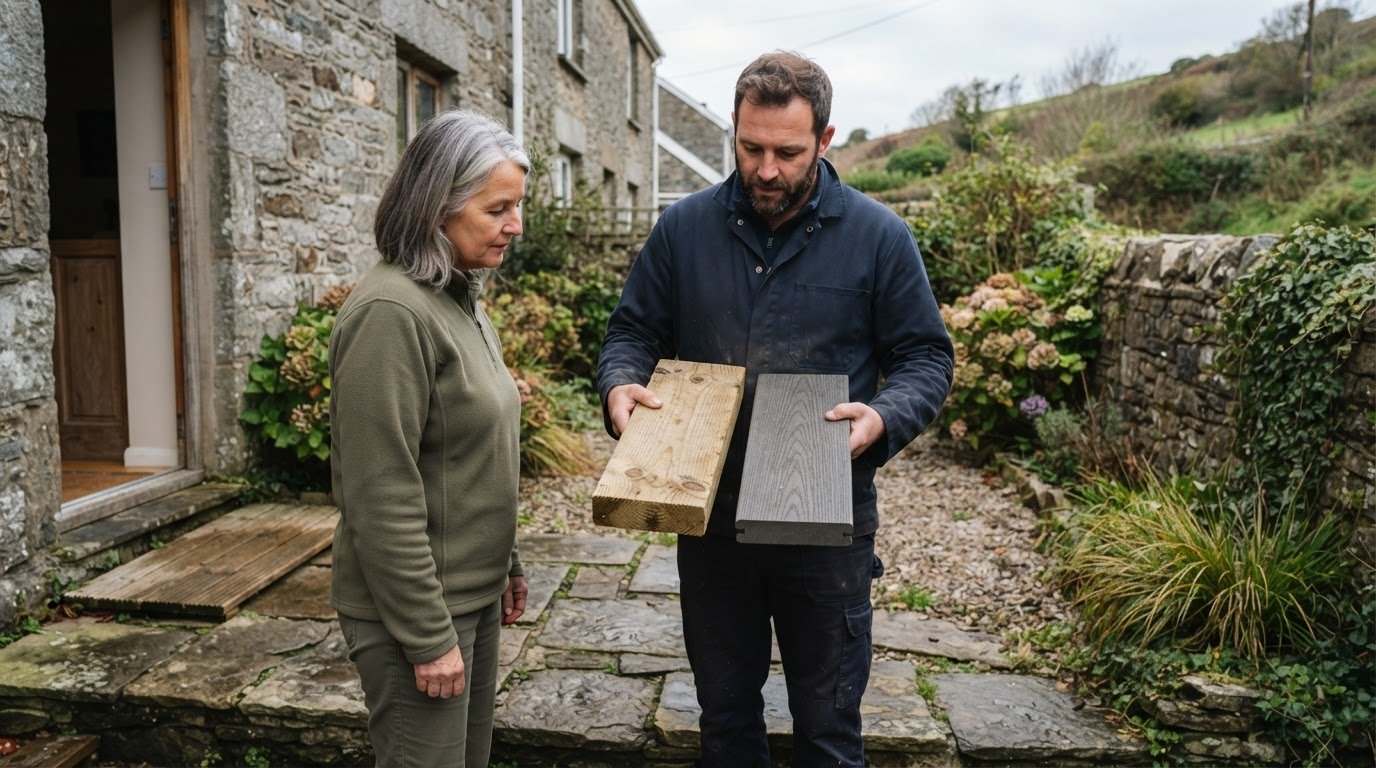
To compare species fairly, consider expected use, exposure and upkeep alongside service life. A holiday park may prioritise straightforward maintenance and clear pedestrian routes, while a private terrace may focus on board appearance and the connection to the house. In either setting, a measured site plan and clear material specification make options easier to assess before installation.
Hardwood durability and maintenance
Species, coastal exposure and routine care all influence how a timber deck ages. For Pembrokeshire sites, weigh durability against how the surface will change colour and the upkeep you can manage.
Hardwood suitability for coastal conditions
Yellow Balau and Jatoba are hardwood options for exposed Pembrokeshire settings, with Durability Class 1 under BS EN 350. Their natural density is 870-1,060 kg/m³, so boards are substantial and need suitable support and fixings. Choose between them by considering the intended appearance, board specification and installation details, rather than treating “hardwood” as one uniform material.
Coastal air and frequent wetting make good detailing important. Keep the subframe ventilated, allow water to drain and avoid trapping debris between boards. A timber’s durability class describes its resistance to biological decay, not the performance of the whole deck. Fixings, ground clearance and maintenance also affect the installed structure.
Durability and ongoing care
Yellow Balau and Jatoba have an estimated service life of 40-60 years without preservative treatment. Their Durability Class 1 rating contrasts with Siberian larch at Class 3 and ThermoWood at Class 2. These classifications help compare natural durability, but they don’t remove the need for sound installation and routine inspection.
To care for hardwood, sweep away leaves and grit before they hold moisture against the boards. Clean the surface with a suitable decking cleaner and soft brush, following the cleaner’s directions. Check board ends, joints and visible fixings for movement or damage. Keep drainage paths clear, especially after wet or windy coastal weather.
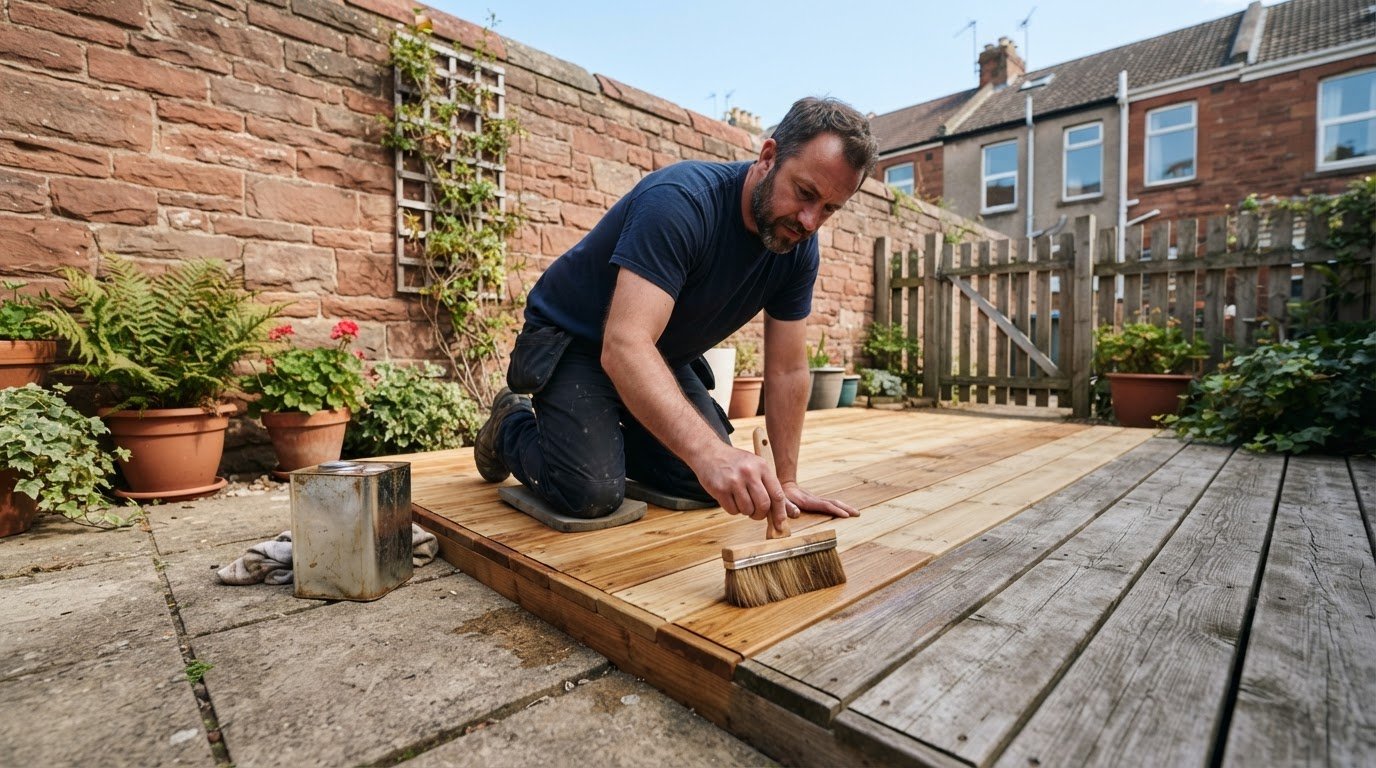
Uncoated hardwood gradually changes colour outdoors, often taking on a more muted, weathered appearance. A suitable decking oil can help maintain a richer timber tone, but it needs repeat application according to its instructions. Decide whether you prefer the original colour or natural weathering, then follow a consistent care routine.
Decking supply and installation in Pembrokeshire
Hardwood decking installation in Pembrokeshire starts with a clear project scope. Set out the intended use, board choice and site conditions before agreeing the work.
Installation quote inclusions
A useful quote describes the timber supply, board specification and installation area. It should also detail subframe work, fixings, ground preparation and finishing, so you can see what the proposed work covers. For example, a sloping garden may need different preparation from an existing level patio.
The price depends on the project and is provided after a quotation request. Key cost factors include the selected species, deck dimensions, access, ground conditions and subframe preparation. Check that the quote identifies exclusions, such as removing an existing surface, and explains how changes to the agreed scope will be handled.
Lead times and warranties
Lead times depend on board supply, the preparation required and the installation schedule. Site access and weather in Pembrokeshire can also affect when work proceeds. Ask for the expected start date and work sequence, including when materials will arrive and when the ground and subframe will be prepared. A written schedule helps you plan garden access.
Warranty terms depend on the agreement, so read the written coverage carefully. Check what is covered, how long cover lasts, any exclusions and maintenance conditions. Keep the specification and care instructions with the agreement. Clarify whether coverage applies to the timber, installation workmanship or both, rather than assuming they are treated alike.
Before approving a supply-and-installation quote, compare its scope, materials and schedule side by side. A measured plan showing boundaries, levels and steps can make the proposed layout clearer. Discuss a tailored decking plan for your Pembrokeshire project.
Restore-A-Floor: Wood Floor Sanding & Refinishing
If your decking project also prompts plans to refresh indoor floors, Restore-A-Floor’s Wood Floor Sanding & Refinishing service can restore timber flooring whose surface is worn or has lost its finish. This can help create a considered transition between indoor and outdoor spaces.
For other surfaces, Restore-A-Floor also offers Concrete Floor Polishing, Parquet Floor Supply & Installation, and Tiled Floor Restoration & Cleaning. These services can complement a wider renovation, such as refreshing a tiled entrance or improving a concrete floor’s finish.
Contact Restore-A-Floor to discuss your flooring project, or visit restore-a-floor.co.uk.
Shape your outdoor space with confidence
A well-planned hardwood decking installation in Pembrokeshire begins with a clear picture of how you want to use the finished space. Consider where seating will go, how people will move between the house and garden, and how the deck should meet existing paths or thresholds. These decisions turn a material choice into a practical layout.
It’s also useful to decide how much time you want to spend caring for the surface and which appearance you prefer as the timber weathers. Bring those priorities into the project discussion alongside your site plan, so the proposed design reflects both everyday use and the setting.
Restore-A-Floor offers decking design and build for projects that need a considered plan as well as installation. Share your ideas and discuss the next step with the team: start planning your Pembrokeshire decking project. A clear brief is a strong foundation for creating an outdoor space that feels purposeful and well resolved.
Frequently Asked Questions
How long does timber decking last in the UK?
Timber decking lifespan varies by species, installation and upkeep. Yellow Balau and Jatoba are estimated at 40-60 years, while untreated softwood is estimated at 5-10 years. Siberian larch and ThermoWood sit between those ranges. These are service-life estimates, not guarantees: drainage, ventilation, exposure and consistent maintenance all affect how well boards perform over time.
Looking for Affordable Decking Near You?
To manage the cost of a local decking project, compare materials alongside the preparation and structure each design needs. A simple rectangular layout may involve fewer cuts than one with curves, steps or changes in level. Include board waste, subframe work, access and finishing in your comparison, so you assess the full proposed scope rather than choosing solely by the timber’s initial cost.
Which hardwood decking installers serve Pembrokeshire?
Restore-A-Floor serves Pembrokeshire and offers decking design and build, including timber decking. For a local project, share the site location, intended use and preferred layout, then discuss the proposed scope and materials. A clear brief helps shape a design suited to the garden, access route and connection to the property, while aligning supply and installation requirements from the outset.
What preparation and installation steps are needed for hardwood decking?
Start by measuring the footprint and checking levels, drainage and access. Prepare a stable, well-drained base, then set out and align the supporting frame before fixing boards. For example, 21mm timber boards call for joists no more than 400mm apart, with 5-6mm gaps between boards. Finish by checking alignment, fixings and clear drainage paths across the completed deck.
How should hardwood decking be maintained to prevent rot, algae and slipping?
Sweep away leaves and dirt regularly, as trapped debris can hold moisture and encourage algae. Keep drainage routes open, and inspect board ends, joints and the underside for persistent dampness or signs of decay. Clean slippery growth with a suitable decking cleaner, following its instructions. Avoid leaving planters or outdoor furniture in one position for long periods, as blocked airflow can slow drying.
What planning permission or building regulations apply to decking in Wales?
Requirements depend on the proposed design and the property’s circumstances. Record the deck’s height, location, supports and relationship to the building, then establish which planning and building-control requirements apply to that proposal.
Comments