

Grout cleaning and sealing in Cardiff, including mould removal
Mould on grout doesn’t automatically mean it can’t be cleaned. Suitable cleaning can remove mould or mildew, although deep staining or worn grout may need more than cleaning alone. Grout cleaning and sealing in Cardiff should suit the tile type, and the floor must dry before sealing.
It’s natural to want to know whether dark grout can be restored without damaging the tiles. The right treatment depends on the tile surface, grout condition and any existing coatings, so assessment helps determine the approach. This article explains how mould removal works, how cleaning methods vary by tile, what affects a quote and why the floor must be dry before sealing. Sealing clean, suitable grout can help reduce absorption and make routine care easier.
Table of Contents
Is the grout cleaning process safe for all tile types?
Cardiff and surrounding South Wales locations are where professional tile and grout restoration is most relevant. The cleaning method should always suit the specific tile material, grout condition and any existing surface coating applied to your floors.
Professional Tile and Grout Cleaning Methods
Professional cleaning typically combines a targeted solution, machine agitation and controlled extraction. Agitation loosens ingrained soil from textured tiles and porous grout; extraction removes the loosened dirt and cleaning residue. This reaches deep-seated soil that regular mopping leaves behind. Grout lines, edges and corners need particular attention, as dirt and grime often collect there.
Cleaning can effectively remove surface mould, mildew and everyday soil, though deep staining may occasionally remain. A thorough assessment helps distinguish removable grime from grout that is worn or permanently stained. Across Cardiff, the floor’s material and condition should guide the chosen cleaning method, rather than applying a generic treatment to every surface.
Ceramic and Porcelain Tile Care
Ceramic and porcelain tiles can be cleaned alongside their grout, but the specific tile finish matters. Textured surfaces can trap soil in their recesses, so machine agitation helps loosen it prior to controlled extraction. Removing cleaning residue is equally important, as leftover product can dull the tiles or make routine cleaning much harder.
Natural stone requires stone-safe cleaning products and may occasionally need specialist honing, polishing or sealing. Acid may remove mineral haze from acid-resistant surfaces, but it can etch natural stone, so testing the surface first is vital. Removing old sealant, wax or product build-up also depends on the coating and the material underneath. A small test area can clearly show how the surface responds.
Tile and stone restoration can cover ceramic, porcelain and natural stone, with the treatment carefully matched to the material. For routine grout care, mild, pH-neutral cleaners are always preferable. Harsh bleach or acidic products can weaken grout and fade its colour over time. Steam and strong shop-bought chemicals are not universal solutions. Always check the tile type, grout condition, surface wear and any previous coating before deciding on a treatment method.
Penetrating sealer and colour-seal options
After deep cleaning, choose a sealer that suits the grout, tile and desired finish.
Sealer Suitability for Grout and Tile
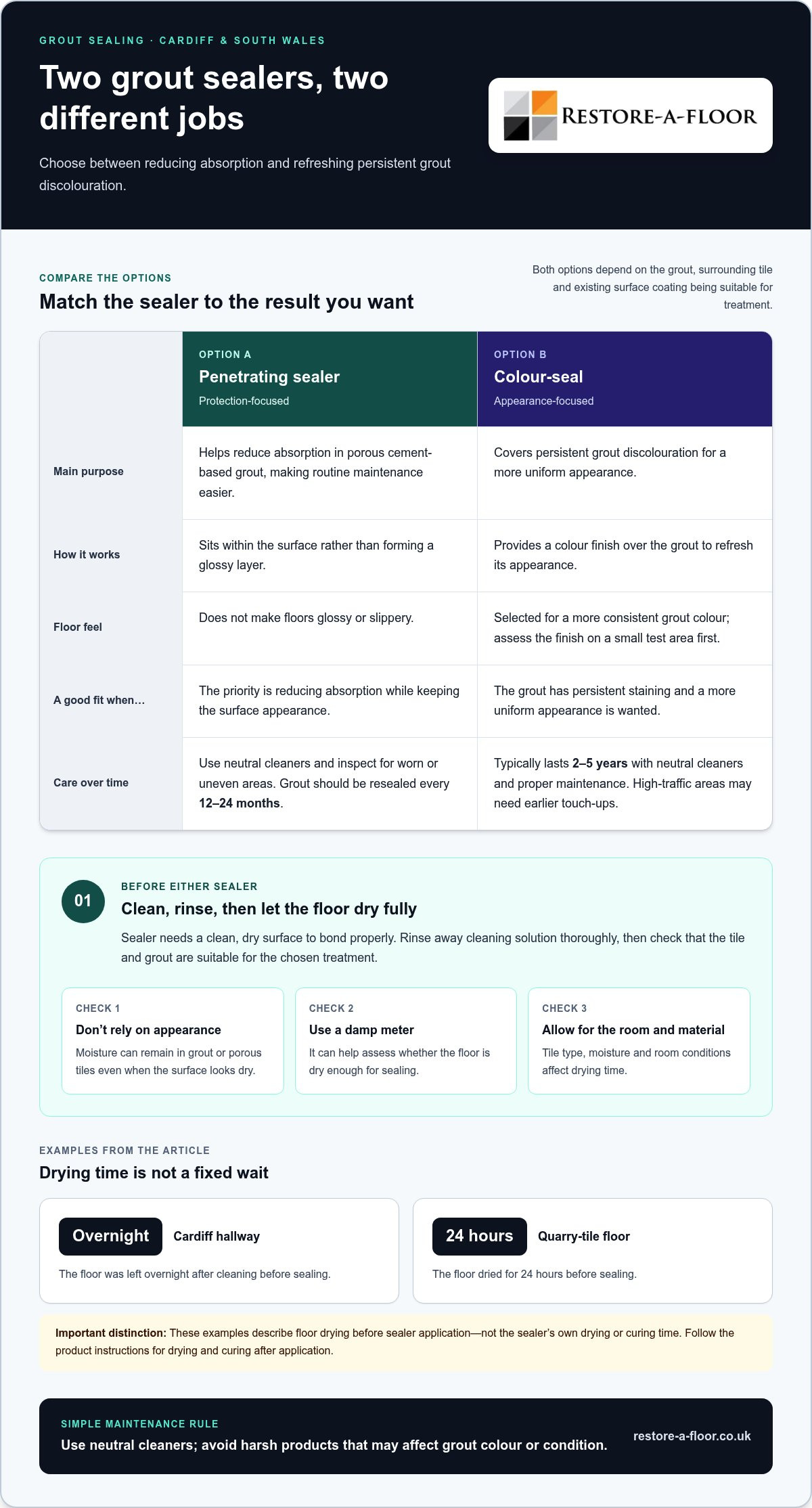
A suitable sealer can help reduce absorption in porous cement-based grout and make maintenance easier. Encaustic cement tiles can also be sealed to help prevent dirt becoming ingrained. The grout and surrounding tile must both be suitable for treatment, so assess their condition and any existing coating first.
A penetrating sealer sits within the surface rather than forming a glossy layer, and it doesn’t make floors slippery. Colour-seal is a different option that covers persistent grout discolouration for a more uniform appearance. In South Wales, choose according to whether the priority is reducing absorption or changing the grout’s appearance.
Sealed Grout Maintenance and Resealing
Use neutral cleaners to maintain sealed grout, and avoid harsh products that may affect its colour or condition. Colour-seal typically lasts 2-5 years with neutral cleaners and proper maintenance, although high-traffic areas may need earlier touch-ups. Grout should be resealed every 12-24 months.
How often grout needs cleaning and resealing depends on use, foot traffic, spills and the condition of the existing seal. Regular cleaning helps limit soil build-up, while periodic inspection can reveal worn or uneven areas that need attention.
Quarry tiles need a sealer suited to their porosity and existing finish. In one Cardiff kitchen, quarry tiles sealed by the tiler looked grubby soon after. Deep cleaning and selecting a compatible treatment are important before applying more sealer. A satin finish may suit some floors; compare it on a small test area before treating the whole surface.
The price depends on the case and is given after a quote request; tile material, floor area, grout condition, staining, previous coatings and the level of deep cleaning all affect the work involved. For floors needing a broader restoration assessment, tiled floor restoration can be a useful next step.
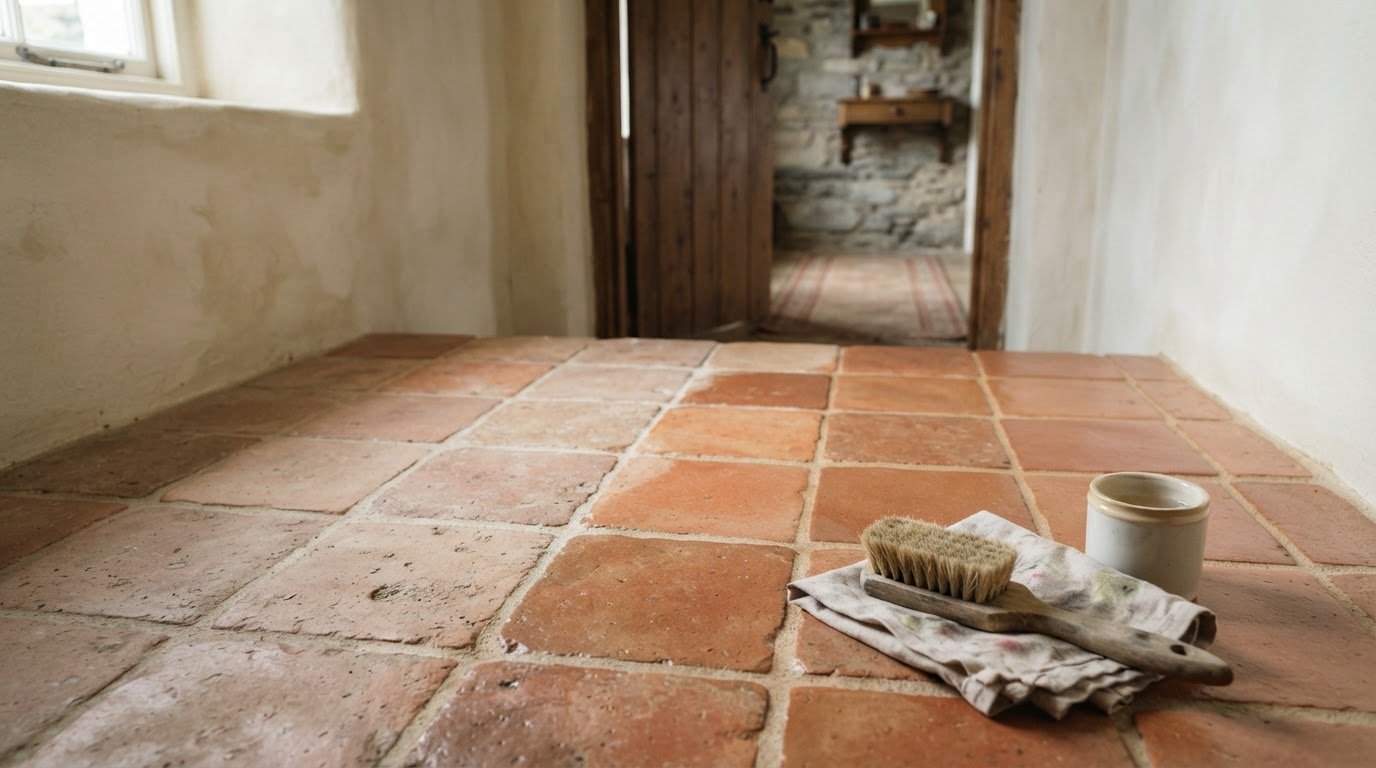
Checking floor dryness before sealing
Sealer needs a clean, dry surface to bond properly, so sealing follows cleaning, rinsing and drying. In Cardiff, a hallway floor was left overnight after cleaning, whilst a quarry-tile floor dried for 24 hours before sealing. These examples show why readiness depends on the floor, not a fixed waiting time.
A damp meter can help determine whether a floor is dry enough for sealer. Appearance alone is less reliable, as moisture can remain in grout or porous tiles after the surface looks dry. A bathroom or quarry floor may also dry differently from a well-ventilated hallway. The material, moisture and room conditions all matter.
How long does grout sealing take to dry and cure? Floor drying happens before application; the sealer’s own drying and curing time depends on its product instructions and the surface. Keep the distinction clear: a floor that dried overnight or for 24 hours was ready for sealing, not necessarily fully cured afterwards.
Before tile cleaning, clear movable furniture, rugs and toiletries from the work area. In a bathroom, remove items around the bath, basin and floor edges to keep grout lines accessible. Keep pets and household traffic away during cleaning, rinsing and drying. This helps prevent fresh dirt or footprints reaching the cleaned floor before sealing.
Rinsing is an essential preparation step. After cleaning, rinse away the solution thoroughly, as residue can interfere with the finish. Once the floor is dry, confirm that the chosen sealer suits the tile and room. A penetrating sealer sits within the surface rather than making the floor glossy or slippery.
After sealing, follow the product’s drying and curing instructions before moving furniture or rugs back or resuming regular foot traffic. Keep water off the floor during that period, particularly in a bathroom where splashes are common. Allowing the sealer to cure helps protect the finish and prepares the tiled floor for everyday care.
Grout sealing after cleaning
Cleaning removes soil; sealing helps limit moisture absorption and new staining. The grout must be clean, fully rinsed and dry before a suitable sealer is applied. Sealing over residue can leave a dull film or compromise the finish, so preparation is an essential part of the job.
Clean, porous grout can be sealed when both the grout and surrounding tile suit the treatment. Professional cleaning should therefore include assessing the surface and existing coatings. In a kitchen, for example, grout near cooking areas may have grease as well as general soil. The cleaning solution and removal method need to address that contamination before sealing.
After cleaning, rinse away the solution and check the grout lines for remaining dirt, residue or uneven colour. Allow the floor to dry, then apply the sealer evenly to suitable grout, following the product directions. Careful application keeps excess product off the tile face, where it could alter the appearance. Finally, check for missed areas and visible residue.
Sealing does not repair every grout problem. Deeply ingrained colour or oil-based staining can permanently dye grout, while wear or damage may need a different solution. Colour-seal can create a more uniform appearance when cleaning alone won’t resolve persistent discolouration. Match the treatment to the grout’s condition rather than applying a clear sealer automatically.
Once sealed, maintain the floor with a neutral cleaner and wipe away spills rather than letting them sit in grout lines. Avoid harsh acidic or bleach-based products, which can affect grout and its colour. In Cardiff, choose a treatment based on the tile, grout and finish you want to preserve. To discuss a suitable approach for your tiled floor, get advice on grout cleaning and sealing.
Restore-A-Floor: Wood Floor Sanding & Refinishing
Restore-A-Floor’s Tiled Floor Restoration & Cleaning service can help when a tiled floor needs more than routine mopping. It addresses ingrained dirt and the condition of tiles and grout through a considered restoration approach. Discuss the floor’s material, existing finish and desired result so the work can be matched to the surface.
Restore-A-Floor also offers Wood Floor Sanding & Refinishing, Concrete Floor Polishing and Parquet Floor Supply & Installation for other flooring needs. These services address different surfaces and do not replace grout treatment on tiled floors.
To discuss your tiled floor, contact Restore-A-Floor or visit restore-a-floor.co.uk.
Plan your next step with confidence
A well-maintained tiled floor starts with a treatment suited to its material and condition. If you’re considering grout cleaning and sealing in Cardiff, note where the staining appears, how the floor is used and what finish you want. These details help shape a practical discussion about the work and desired result.
Restore-A-Floor also handles other flooring projects, including Wood Floor Sanding & Refinishing, Concrete Floor Polishing and Parquet Floor Supply & Installation. Each service suits a different surface, so focus your next step on the floor that needs attention.
Share your flooring requirements with Restore-A-Floor and discuss a suitable way forward. Contact Restore-A-Floor for a quote and take the next step towards a carefully considered finish.
Frequently Asked Questions
Can you remove mould or mildew from grout lines?
Cleaning can remove mould or mildew on grout, though deep staining may remain after surface growth is gone. In a bathroom, recurring dark marks around a shower can reflect moisture and ventilation issues as well as soiling. Keep grout dry after use and clean it with a neutral product. Damaged or persistently discoloured grout may need another treatment.
How long will my grout stay clean after service?
Professional tile and grout cleaning results typically last 6-24 months. The interval varies with foot traffic, spills, cleaning habits and whether porous grout has been sealed. A kitchen floor used daily may need attention sooner than a lightly used hallway. Use a neutral-pH cleaner and remove spills promptly to avoid residue and soil building up between professional cleans.
What areas of the home benefit most from grout cleaning?
Bathrooms, kitchens, entrance halls and utility rooms often benefit from grout cleaning because their tiled floors encounter moisture, food spills, outdoor dirt or frequent foot traffic. Grout beside a cooker can collect cooking residue, while an entrance hall gathers grit from shoes. Start with rooms where grout looks darker than the surrounding tile or routine mopping leaves visible soil in the joints.
Will grout cleaning change the colour of my grout?
Cleaning removes soil, so grout may look lighter or more even once its original colour reappears. It does not recolour grout, and permanent colour or oil-based staining can remain. If you want a colour change or a more uniform appearance, colour-seal is a separate option. Comparing a small cleaned area with an untouched section can show the difference.
What does professional grout cleaning and sealing in Cardiff include?
Grout cleaning and sealing in Cardiff can involve assessing the tiles and grout, deep-cleaning the surface, rinsing away soil and residue, drying the floor and applying a suitable sealer. The method depends on tile material, grout condition and existing coatings. Restore-A-Floor’s Tiled Floor Restoration & Cleaning service covers tiled floors as part of its restoration work.
How much does grout cleaning and sealing cost in Cardiff?
The quote depends on the project. Factors include floor area, tile material, grout condition, staining, previous coatings and whether sealing is suitable. A small, lightly soiled floor needs a different scope from a large, textured floor with ingrained dirt. Describe the rooms and visible issues when requesting a quote so the work can be assessed.
Comments