

Floorboard gap filling in Swansea, with costs and finish explained
A finished or stained floor doesn’t automatically rule out gap filling. Gaps can often be treated, but the right method depends on their size, the floor’s condition and how much the boards move. Floorboard gap filling services in Swansea may use filler or timber strips, with further work on the finish to create a consistent appearance.
It’s understandable to worry that filling could spoil a floor you’ve already restored, or that the gaps will return as the seasons change. The key is to match the repair to the floor, rather than treating every gap alike.
This guide explains why gaps form, whether a finished floor can be filled, how different methods handle seasonal movement and what affects project cost. You’ll also learn when filling may be suitable and when the floor needs a broader restoration, helping you choose the finish you want.
Table of Contents
Causes of gaps between wooden floorboards
Timber responds to moisture and temperature, so gaps may reflect board movement rather than poor fitting. The pattern, flooring material and condition can help distinguish seasonal movement from a repair issue.
Why wooden boards develop gaps
Solid wood can shrink as a room becomes drier and expand when moisture levels rise. Look across the floor for gaps between boards, and note whether the room has significant temperature changes or damp conditions. Solid wood is best suited to stable, dry rooms because moisture affects it. Parquet contains many pieces fitted at different angles, so gaps may appear throughout its intricate pattern.
Parquet can also be damaged by moisture, sunlight, temperature extremes and impacts. Before choosing a filler, check for uneven pieces, loose areas or localised damage. Filling a gap won’t secure a loose plank or address a damp floor base. The existing finish and wood colour also affect how visible the repair may be.
Floating floor movement gaps
A floating floor isn’t fixed directly to the subfloor, so its connected boards move together. It needs space at the room edges to expand and contract. Check whether a gap is at the perimeter or between boards: an edge space may be a required movement gap, not a defect to fill. Rigidly covering it can restrict movement and contribute to joint peaking, when board edges lift.
Laminate also changes size as room conditions shift. Peaking can occur when movement is obstructed, including when an expansion gap is missing or covered. Inspect thresholds and skirting edges, then look for raised joints across the floor. Don’t treat every visible opening as a filling job: first identify whether it’s a designed clearance or a separated joint.
Assessing old or uneven boards
Gap filling may suit old boards if they’re secure, dry and stable. Assess uneven or unsecured boards first, since filler won’t level a floor or secure moving timber. Look for rocking boards, raised edges, signs of moisture and gaps that vary sharply in width. In parquet, the direction and arrangement of each piece also affect how well a repair blends with the existing finish.
To choose a floorboard gap filling service, compare its explanation of the cause, proposed material and finishing steps. Swansea reviews are most useful when they describe comparable timber, parquet or laminate work, rather than simply praising a tidy result. Guarantees and insurance cover depend on the business and agreement; they’re distinct from the choice of filler. Swansea is a targeted service location, while attendance in surrounding areas depends on the job’s location and scheduling.
Gap filler durability and seasonal movement
Filler durability depends on how it responds as timber moves. The material also affects the floor’s surface, appearance and maintenance.
Filler durability through seasonal movement
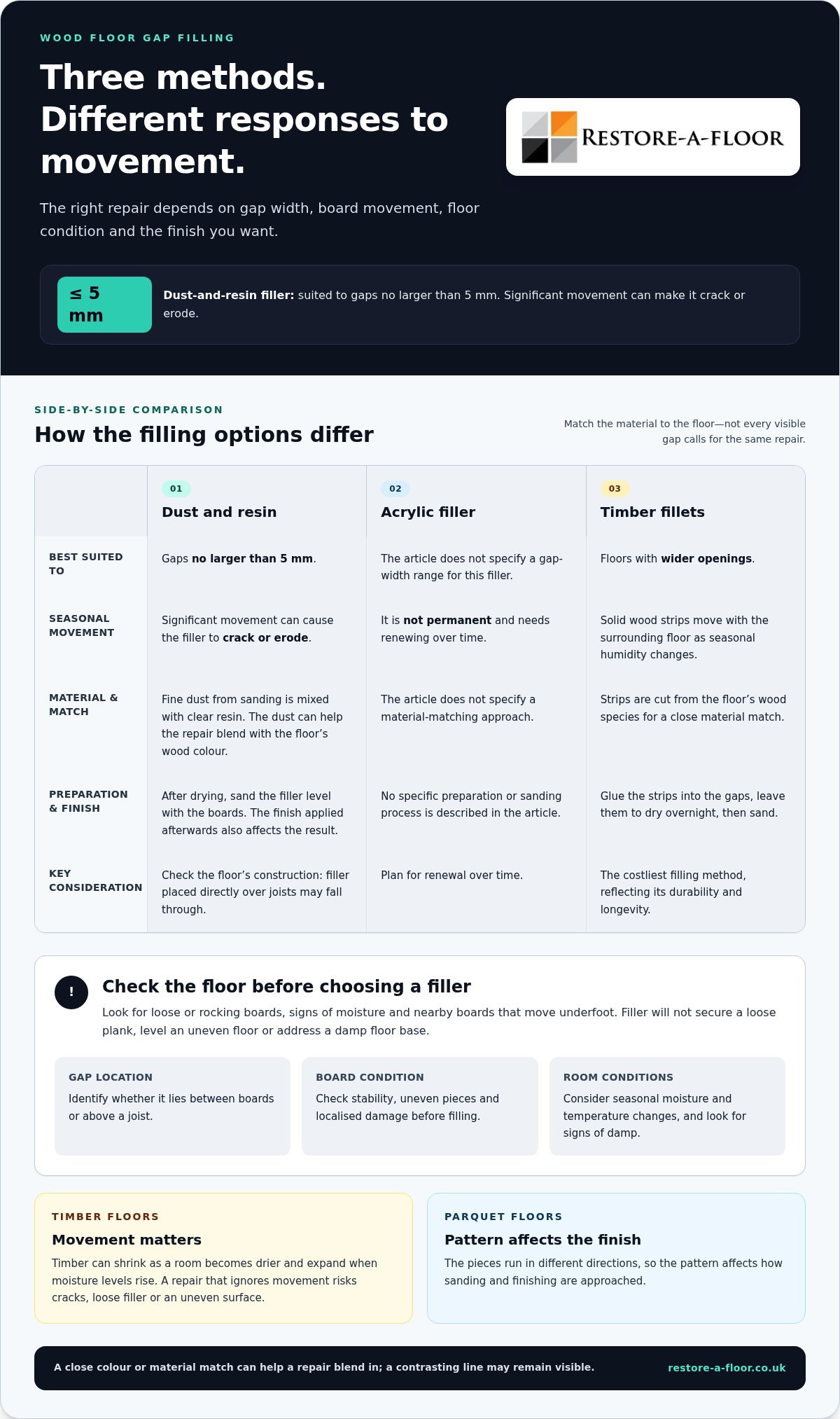
Solid wood fillet strips move with the surrounding floor as seasonal humidity changes. They’re cut from matching wood and fitted into gaps, making them a durable option for floors with wider openings. Dust and resin filler suits gaps no larger than 5 mm, but significant movement can crack or erode it. Acrylic filler isn’t permanent and needs renewing over time.
Risks from movement, draughts and moisture
Filling a gap without accounting for board movement risks cracks, loose filler or an uneven surface. Dust and resin placed directly over joists may fall through, so the floor’s construction matters. Draughts can pass through open gaps, but trapping moisture beneath a floor can also cause problems. Before sealing openings, look for damp patches, musty smells or recurring changes.
Wood flooring has individual grain patterns and tones, so filler colour affects the finished appearance. A close match helps a repair blend in, while a contrasting line may remain visible across the boards. Timber fillets use the same wood species as the floor, giving a consistent material match. They’re the costliest filling method, reflecting their durability and longevity.
Laminate has a different surface construction, with several layers beneath a tough resin coating and protective outer layer. That finish resists scratches, but it doesn’t make the joints immune to movement or damage. Inspect joins for peaking or separation. Deep damage usually calls for replacing the affected board, since laminate can’t be sanded back like wood flooring.
Installation quality affects how well a repair performs. Before filling, identify whether a gap lies between boards or above a joist, and check whether nearby boards move underfoot. These details guide the material choice and preparation. A stable timber floor with narrow gaps, for example, needs a different approach from loose boards with openings over the joists.
For a wood surface that also needs renewed sanding or a consistent finish, consider wood floor sanding and refinishing as part of the restoration plan.
Floor filler and sanding
The filling method determines how the gaps are prepared and whether sanding follows. Before choosing a material, check the gap width, board stability and existing finish.
Filler use and floor sanding
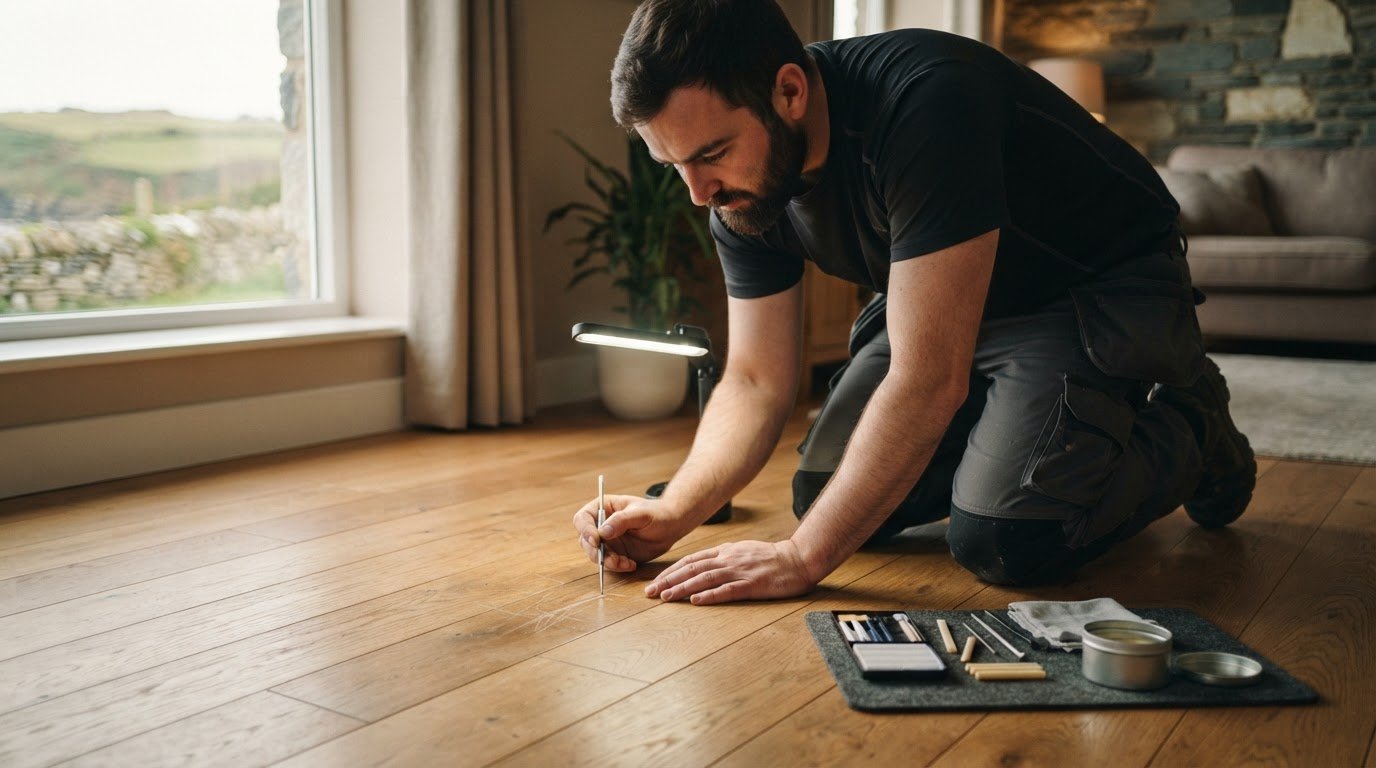
For gaps no larger than 5 mm, dust and resin filler uses fine dust collected during sanding, mixed with clear resin. Once dry, the filler is sanded level with the boards. This can help the repair blend with the floor’s own wood colour, although the finish applied afterwards also affects the result.
Solid wood fillets suit a different type of repair: strips cut from the floor’s wood species are glued into the gaps. They’re left to dry overnight before sanding. This method requires more fitting work, but the timber strip provides a close material match. On parquet, the pattern and changing wood direction affect how to approach sanding.
Parquet sanding requires professional equipment and careful technique because its pieces run in different directions. A sanding pass suited to one section may not suit the next. The boards’ condition and the depth of the existing finish also shape preparation, particularly when previous coatings have worn unevenly.
Preparation and gap filling steps
A practical process starts with checking that the boards are secure and measuring the gaps. Next, select a suitable filler, prepare the openings, apply the material and let it dry before any required sanding. With solid wood fillets, leave the glued strips overnight before levelling them. In short, assess first, fill second and finish last.
Acrylic filler is another option. It dries quickly and doesn’t require sanding, but excess material is cleaned away with a wood filler cleaner. Matching its colour to the floor can be difficult, so consider how visible each filled line may look against the existing finish. This option may suit repairs where sanding the surface isn’t part of the work.
Engineered flooring needs its own assessment. Its real-wood surface sits on a layered core, so sanding must account for the material rather than treating it like solid timber. The same care applies to parquet-patterned boards. Whether in a Bristol or Swansea home, the key details are the gap size, wood type and floor condition.
Where the floor needs a unified finish after repairs, a coordinated wood floor sanding and refinishing approach can address both the filled gaps and the surrounding surface.
Flooring project costs
The cost of filling floorboard gaps depends on the work the floor needs, not just the room size. Timber type, gap width, board condition and surrounding finish all affect the work involved. Narrow gaps between stable real-wood boards call for a different approach from uneven boards that need repair before filling.
The price depends on the project and is provided after a quote request. Key factors include floor area, gap size, timber condition, filling method and any required preparation or finishing. Measuring the room helps establish the area, but doesn’t show whether loose boards, previous coatings or a complex layout will add work.
Method affects labour and materials. Dust and resin filler is recommended for gaps no larger than 5 mm, whilst solid wood fillets require matching timber to be cut and fitted. Fillets are left to dry overnight before sanding. The more involved preparation and fitting can influence the project scope compared with applying a surface filler.
Floor pattern matters, too. Herringbone and parquet take longer to cut and require more boards than a straight-laid floor. That added detail can affect installation and restoration planning, particularly if the filling needs to blend with a patterned surface. A straightforward run of boards and a parquet floor shouldn’t be assessed as identical jobs.
The floor’s condition can affect the work needed before filling begins. Distinguish gaps between sound boards from movement, unevenness or damage that may need attention first. Loose timber, for example, may need stabilising, while damaged parquet pieces may need a different repair. Filling alone won’t correct an unstable floor or resolve a damp base.
Existing finishes also influence preparation. If sanding is needed to level filler or create a consistent appearance, the floor’s coating and surface condition affect the process. Acrylic filler dries quickly and doesn’t require sanding, but finding a colour match can be difficult. The choice may involve balancing preparation, visual blend and how the repair fits the surrounding real wood.
Before comparing project scopes, note the room dimensions, flooring material, approximate gap widths and visible defects. Include whether the floor is laminate, solid timber or parquet, and identify any areas where boards move. These details help distinguish gap filling from wider restoration and clarify the relevant preparation.
Carpet removal is relevant when laying new flooring, rather than as a standard gap-filling cost. Likewise, a sound, flat hard floor may sometimes remain beneath new flooring, depending on the fitting method and added floor height. Keeping these decisions separate helps you understand what a flooring estimate covers.
Benefits and purpose of gap filling
Gap filling improves the continuity of a timber floor’s surface and can make open joints less noticeable. It’s a targeted repair, not a way to correct every floor defect. Filling may suit stable boards with narrow openings, for example, while loose boards or moisture damage need attention before choosing a filler.
A well-matched repair can help preserve the appearance of existing real wood. Filler colour, the grain around each joint and the final finish all affect how visible the work remains. On a worn floor, sanding and refinishing may help bring the repaired areas and surrounding boards to a more consistent finish.
There’s a practical purpose, too. Open gaps can collect dust and crumbs, making routine cleaning harder, and may let draughts through from below. Filling suitable gaps can reduce these pathways, but won’t resolve damp or correct a poorly supported floor. Check for moisture and movement before sealing joints, particularly if openings keep changing.
The chosen material should suit the gap and the way the floor behaves. Dust and resin filler is recommended for wooden gaps no larger than 5 mm; a solid wood fillet may suit wider openings. Matching the wood species and finish helps maintain a coherent appearance. For parquet, the pattern means the repair must work with several grain directions.
Prioritise repairs by condition, not appearance alone. First note which boards move, where gaps occur and whether the floor feels uneven. Then distinguish cosmetic openings from defects that affect stability. Filling a gap beside a loose board without addressing the movement, for instance, can leave the repair vulnerable to cracking or coming away.
Across Swansea, a clear assessment helps identify whether gap filling is part of a wider restoration. When describing the work, share the flooring material, gap locations and any visible moisture damage. These details help establish the necessary preparation and finish, rather than treating every room as the same repair.
Gap filling can refresh sound boards, but it isn’t always the right solution for damaged or unstable flooring. If the floor also needs its surface renewed, arrange a wood floor restoration to consider how repairs and finishing can work together.
Restore-A-Floor: Wood Floor Sanding & Refinishing
Restore-A-Floor is a natural next step when floorboard gaps need attention alongside the condition or finish of the wider timber floor. Its Wood Floor Sanding & Refinishing service addresses worn surfaces and helps bring the floor’s appearance together after restoration. For parquet, the pattern and grain direction need careful consideration as part of the overall finish.
Choose this service when boards look tired, the existing coating is worn, or filling alone won’t achieve the finish you want. If your floor is stable and needs only a small local repair, a full sanding and refinishing project may not be necessary. The right scope depends on the floor’s condition and the result you’re seeking.
For a considered next step, contact Restore-A-Floor to discuss your flooring project.
Plan the finish you want
Decide what you want the floor to look and feel like, then consider whether the work should address only the gaps or the wider surface too. For floorboard gap filling services in Swansea, a clear idea of the desired finish helps shape a practical project scope.
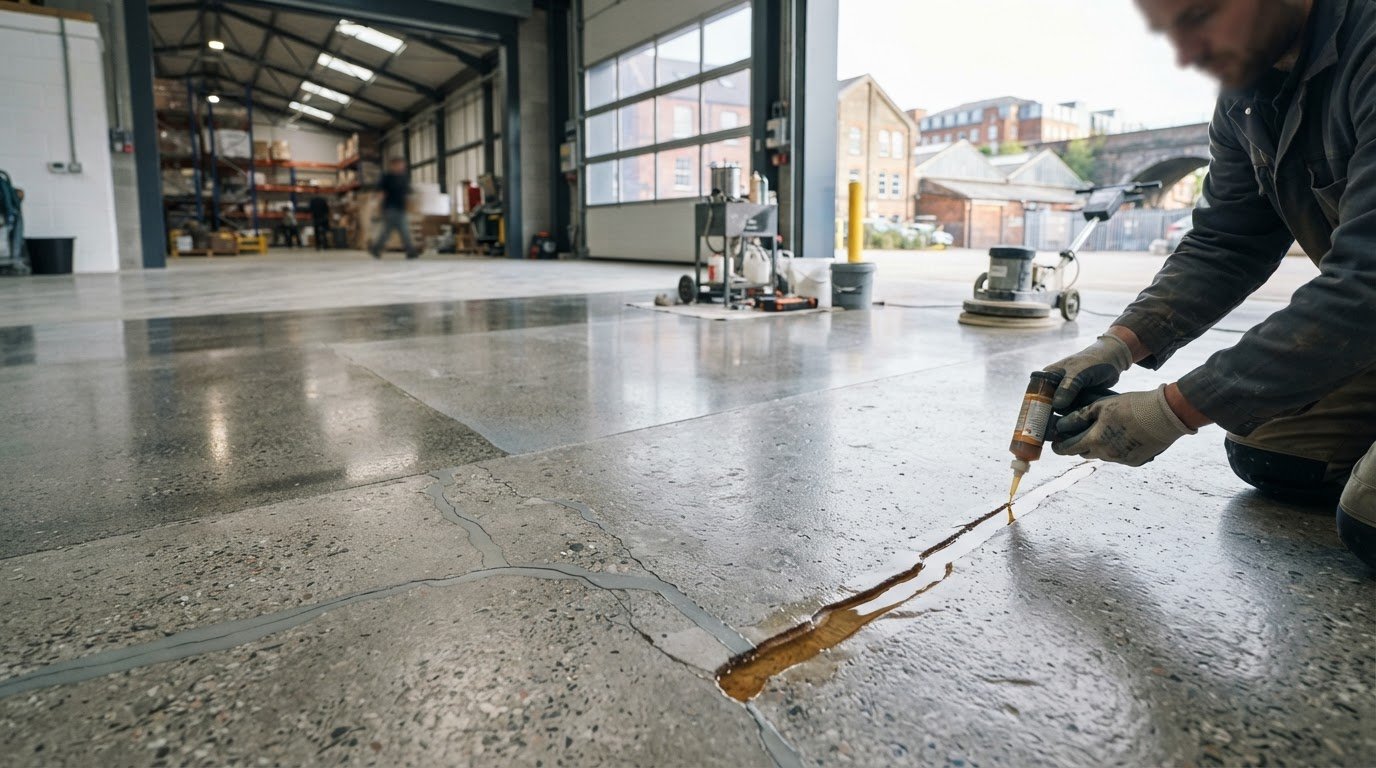
Restore-A-Floor offers Wood Floor Sanding & Refinishing, Concrete Floor Polishing, and Parquet Floor Supply & Installation. These services suit plans that extend beyond a local repair, such as refreshing a timber floor or considering parquet for another room. The right choice depends on the floor and the result you have in mind.
Share your flooring goals and discuss the next step with Restore-A-Floor. A considered plan can help you move towards a finish that suits your home and your priorities.
Frequently Asked Questions
Can gap filling be done on a floor that has already been finished or stained?
Yes, but the filling method determines whether the existing finish needs work. Acrylic filler can be applied without sanding, although matching its colour to stained timber can be difficult. Dust and resin filler is sanded level after drying, disturbing the surface finish around the repair. If the floor has an even, intact coating, consider how visible the filled lines may be before choosing a method.
Does gap filling improve insulation?
Filling open joints can reduce draughts passing through the floor and may make a room feel less exposed to cold air. It doesn’t replace insulation beneath the boards or correct gaps around pipes, skirting or external doors. If a draught remains after floor repairs, trace its route separately: sealing one visible opening won’t necessarily stop air entering elsewhere.
How long does the gap-filling process take?
The time required depends on the method and preparation. Acrylic filler dries quickly and doesn’t require sanding, while dust and resin filler needs to dry before levelling. Solid wood fillets are left to dry overnight before sanding. The number and width of gaps, access around furniture and floor condition also affect the work involved.
How long will the flooring work take?
The overall schedule depends on the area being treated and whether the work includes repairs, sanding or a new finish. Filling a few gaps between stable boards is a narrower task than restoring a whole room or working across parquet. Drying time also affects when the floor can be used or receive another finish. Ask for the work stages and access requirements to be set out in the project plan.
Is gap filling a permanent solution?
No filler is permanent in every floor. Acrylic filler needs renewing over time, while dust and resin filler can crack or erode if boards move substantially. Solid wood fillets can move with the floor as humidity changes and are known for durability. Floor movement, support and moisture conditions all influence how a repair performs over time.
What do floorboard gap filling services in Swansea involve?
Floorboard gap filling services in Swansea should start by identifying the flooring material, the cause of the gaps and whether the boards are stable. The work can then be matched to the floor, followed by preparation and any necessary sanding or finishing. A narrow opening in sound timber, for example, needs a different approach from loose parquet pieces or gaps above joists.
How much does floorboard gap filling cost in Swansea?
The price depends on the floor and is provided after a quote request. Main cost factors include the area, gap size, timber condition, filling method and any required repairs, preparation or finishing. Parquet layouts can take longer to work around than straight-laid boards. For a useful quotation, describe the room dimensions and flooring type, and include photographs showing the gaps and surrounding surface.
Which floorboard gap filling methods and materials are used in the UK?
Common options include dust and resin filler, acrylic filler and solid wood fillets. Dust and resin filler is recommended for wooden gaps no larger than 5 mm; it uses fine sanding dust mixed with clear resin, then gets sanded level once dry. Acrylic filler dries quickly without sanding. Fillets are cut from the same wood species and glued into gaps, providing a timber-based alternative.

Comments