

Domestic concrete floor polishing in Pembrokeshire
A concrete slab can become the finished floor, rather than sitting beneath another layer of flooring. Domestic concrete floor polishing in Pembrokeshire involves mechanically grinding, hardening and polishing the concrete to create a chosen sheen, making it an option for homes where the existing base is suitable. The result is a distinctive, refined surface with the aggregate visible to the degree selected.
Choosing a floor is about more than appearance. Consider how it will work in your home and what care it needs over time. Polished concrete has a contemporary look, but the slab’s condition and your preferred finish both influence the result.
This guide explains why polished concrete may suit a home, how the process works and how to care for the surface. It also outlines potential long-term value, helping you weigh this finish against your priorities before planning a project.
Table of Contents
Cleaning and maintenance
A simple routine that removes grit before it is walked across the floor helps protect polished concrete. Fine particles can act like abrasives underfoot, so regular sweeping or vacuuming with a hard-floor setting helps keep the surface clear. In a Pembrokeshire entrance hall, for example, sweeping away sand and soil after wet-weather walks reduces debris tracked into adjoining rooms.
For everyday cleaning, use a damp mop and clean water. The aim is to lift dust and marks without leaving standing water on the floor. Work in manageable areas, rinse the mop when it gets dirty and change the water when it turns cloudy. This helps prevent loosened soil from being spread back across the surface.
Wipe up spills promptly, especially in kitchens and dining areas. Blot liquid with a soft cloth, then wipe the spot with a damp one. For dried food or mud, let a damp cloth soften the residue before wiping. A hard-edged tool can mark the finish. Follow the sealer’s care instructions when choosing cleaning products.
Remove loose grit: Sweep or vacuum regularly, particularly beside doors and under dining tables.
Mop as needed: Use clean water and a well-wrung mop to lift everyday dirt.
Clean spills: Blot first, then wipe the area rather than scrubbing aggressively.
Protect busy areas: Use suitable entrance mats to catch grit before it reaches the polished surface.
These steps help maintain the finish without a complicated schedule. A weekly sweep may suit a quiet bedroom, while an open-plan kitchen used throughout the day may need more frequent attention. Adjust your routine to visible dirt, foot traffic and seasonal conditions instead of applying the same timetable to every room.
Maintenance also contributes to longevity. A correctly installed and maintained polished concrete floor can perform for 25 to 30 years or more. That is not a reason to neglect routine care: abrasive grit, neglected spills and unsuitable cleaning products can affect the surface and its sealer. Keep the floor clean, and address local marks before they become harder to remove.
Check the finish as part of your usual cleaning routine. Look for dull patches, persistent marks or changes around entrances and frequently used worktops. This can help you distinguish removable dirt from wear in the surface treatment. If sweeping and damp mopping no longer restore the floor’s appearance, consider the finish and sealer before resorting to more vigorous scrubbing.
Why choose concrete floor polishing?
Polishing can turn a concrete slab into a finished surface with a chosen level of aggregate exposure and sheen. The right combination depends on the existing concrete and the look you want in each room.
Concrete finish types and aggregate exposure
Finish types describe how much aggregate is visible in the concrete. A polished cream finish refines the surface, while a salt-and-pepper finish exposes small amounts of aggregate. Full exposure requires grinding away more concrete before polishing, revealing more of the stone within the slab.
The quality of the existing concrete shapes the result, so inspect the surface and note any visible variation before choosing a finish. For example, a residential holiday home in Wales had its existing floor ground to reveal aggregate before polishing. Diamond tooling and specialist machinery are used for this work.
Polished concrete shine levels
Polished concrete can have a very high sheen, semi-sheen or honed finish. These options describe how much light the surface reflects. A high sheen looks more reflective, while a honed finish is less glossy. Consider the room’s natural light and nearby materials when comparing finish samples or examples.
Unlike epoxy flooring, which adds a separate coating, polished concrete refines the concrete itself. Tiles create a floor from individual units and grout lines rather than exposing the slab’s aggregate.
A full-aggregate residential floor has been polished to 3500 grit, illustrating one possible specification rather than a standard requirement. The chosen sheen and aggregate exposure are separate decisions: a floor can reveal more stone without requiring the glossiest finish.
Factors shaping the final finish
The slab’s condition, aggregate distribution and required grinding depth all influence the finished appearance. Existing cracks, patches or colour differences may remain visible or become more noticeable as grinding exposes the concrete. A salt-and-pepper finish reveals small amounts of aggregate, while full exposure reveals more.
In Wales, choosing a polished finish is a decision about the floor’s surface, while planning or building-control considerations relate to the wider work involved. Structural alterations or changes to the floor build-up are separate from choosing a sheen or aggregate exposure.
Polishing a residential concrete floor requires suitable machinery and diamond tooling. For a Pembrokeshire home, first distinguish between polishing an existing slab and preparing a purpose-laid surface, as each project starts with a different concrete base.
What does the installation process look like?
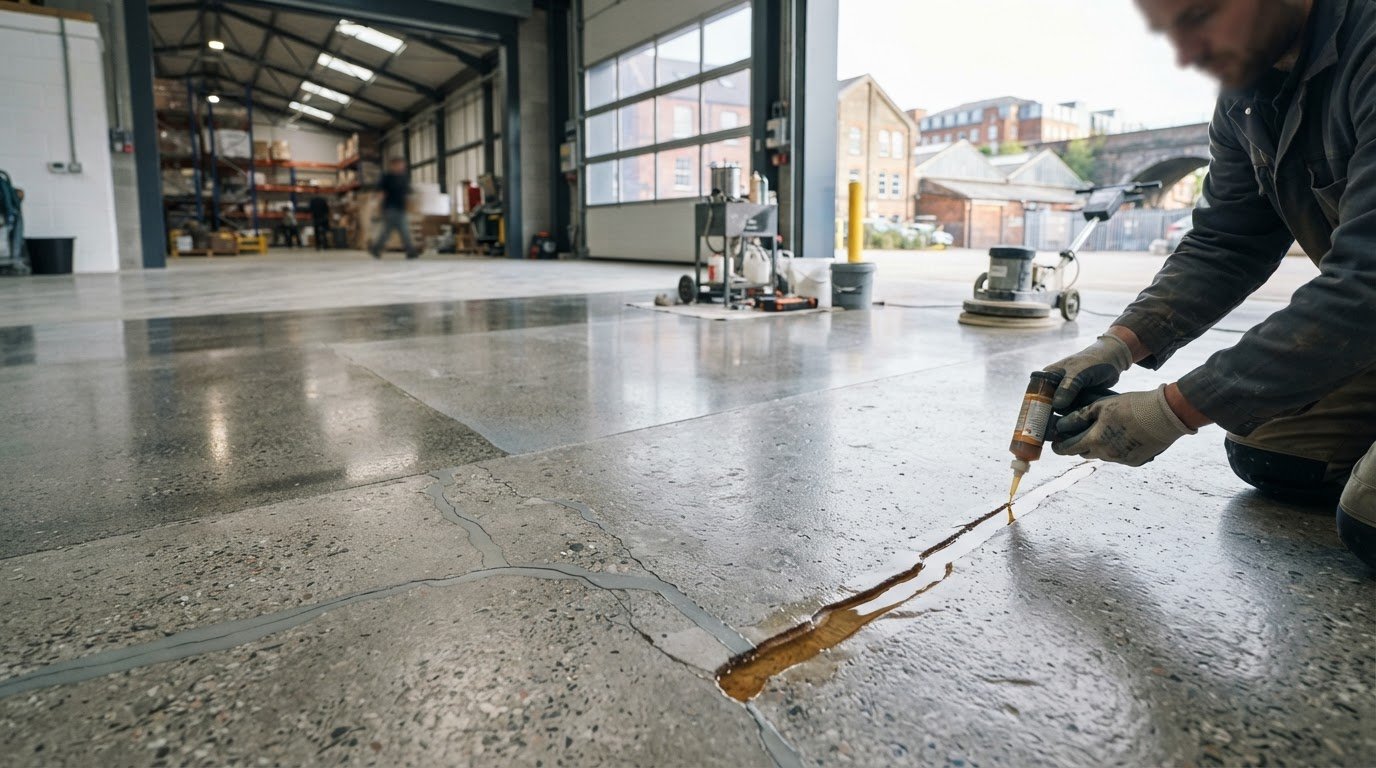
Polishing starts with the concrete base, because its condition influences the preparation and finished floor. The work may involve an existing slab or a purpose-laid top coat. After assessing the surface, specialist machinery and diamond tooling grind and refine the concrete using progressively finer abrasives.
A typical sequence moves from preparation to grinding, densifying and sealing. The contractor works through intermediate abrasive stages rather than jumping straight from a coarse grind to a very fine polish. This gradual refinement helps create an even finish. Polishing can take around 4 days, even for a very small floor.
Prepare the slab: Clear the work area and assess the concrete’s level, condition and existing finish.
Grind the surface: Use diamond tooling to remove imperfections and achieve the required aggregate exposure.
Refine the concrete: Progress through finer abrasives to develop the selected sheen.
Densify and seal: Apply the appropriate treatments to harden and finish the polished surface.
Durability depends on sound preparation, the concrete itself and suitable ongoing care. A correctly installed and maintained polished concrete floor can perform for 25 to 30 years or more. Day-to-day upkeep is straightforward: sweep regularly to remove grit, then mop with water as needed.
The main challenges are the preparation involved and the importance of the existing slab’s quality. Polishing reveals the concrete rather than covering it, so patches, variation and imperfections can affect the result. The surface is also hard underfoot, which may feel different from softer flooring in rooms where people stand for long periods.
Concrete is not vulnerable to humidity or moisture damage, making it a practical flooring base where conditions vary. However, spills should still be dealt with promptly. Wipe up liquids and follow the care instructions for the floor’s sealer, especially in kitchens and entrances.
Consider slip resistance in wet areas. A sealer can help improve slip resistance, and a sealed polished floor can be waterproof, anti-slip and stain-resistant. These properties depend on the selected treatment, so choose a finish suited to the room’s use. Wipe up water near sinks or doorways rather than leaving a wet surface underfoot.
For a busy Pembrokeshire kitchen, balance your preferred sheen with daily foot traffic and cleaning habits. Polished concrete offers a durable, maintainable surface, but its appearance and performance depend on the slab and the installation process.

Potential lifecycle cost savings
Compare the floor across its full service life, not just the installation stage. The existing concrete base becomes the finished surface, so a suitable slab can avoid the need for an additional flooring layer.
Long-term value depends on the preparation needed, the chosen finish and ongoing care. A flat, smooth slab, for example, needs less correction than an uneven floor with imperfections. Preparation shapes the work involved, while regular sweeping and mopping help maintain the surface.
Cost per square metre can help you compare estimates, but the figure depends on the work included. Polishing an existing slab is different from creating a new floor that requires a pour. Room size, surface condition, preparation, labour, materials and finishing all affect the estimate. The price depends on the project and is provided after you request a quote.
For domestic concrete floor polishing projects in Pembrokeshire, compare estimates by scope, not just the headline rate. A quote should clarify whether it covers polishing an existing slab or creating a new floor, as well as labour, materials and preparation. It should also state the estimated timescale, whether excavation and structural layers are included, and what sealing or finishing involves. Clear exclusions help you understand the full project.
Before requesting estimates for domestic concrete floor polishing in Pembrokeshire, gather the details that define the job. Note the room’s measured area, whether concrete is already present, any visible unevenness and your preferred finish. Include access details and whether excavation or new structural layers are part of the project. This information makes estimates easier to compare.
Describe the base: Say whether you have an existing slab or need a new pour.
Record the area: Provide room dimensions and identify adjoining spaces.
Explain the finish: Outline your preferred aggregate exposure, sheen and sealing.
Compare the scope: Review preparation, materials, labour, timescale and exclusions.
Lifecycle savings arise when durability reduces the need for replacement flooring. The 25 to 30 years or more performance period offers a useful planning horizon, although maintenance and installation quality remain central. Set it against the replacement cycles another floor may require, plus its cleaning and upkeep needs, before deciding which option may achieve better long-term value.
A useful quote request includes the measured area, slab condition, required preparation and preferred finish. Ask for included work and exclusions to be set out clearly, so you can compare the project scope rather than square-metre figures alone.
Domestic polished concrete floors
In a home, polished concrete can be the finished floor instead of a base hidden beneath another material. It uses the existing concrete, so no additional flooring material is needed for that surface. The key question is whether the slab can deliver the appearance and practical performance you want in the room.
Consider how each space is used. An entrance hall needs to cope with outdoor dirt and regular foot traffic, while an open-plan living area makes the floor a prominent design feature. A residential holiday home in Wales used polished concrete in its entrance hall, showing how the finish can work in a defined domestic area, not just in large commercial interiors.
Concrete polishing can be carried out across areas of any size. You can consider a single room, connecting hallway or larger living space, planning transitions between rooms as part of the overall design. Check where doorways, cupboards and adjoining floor coverings meet, as these details affect how the finished floor looks throughout your home.
Moisture is another consideration for Welsh homes. Polished concrete is not vulnerable to humidity or moisture damage, making it a practical option where indoor conditions fluctuate. Sealing can help protect a polished concrete floor from spills and staining. In a kitchen, this can make everyday splashes easier to manage, although spills should still be wiped up promptly.
Underfloor heating can be suitable beneath polished concrete. If it is part of your home design, consider the heating system alongside the floor build-up and installation sequence. The concrete base and heating system need to work together, so plan both early rather than treating the floor finish as an afterthought.
Surface quality matters to the final effect. A polished floor can be flat and smooth, and preparation can remove imperfections and create an even, level surface. However, polishing exposes the concrete itself, so existing marks, patches and aggregate variation may contribute to the finished character. A sample or reference finish can help you judge the look before settling on a design.
For an entrance: Consider grit, outdoor shoes and how the floor connects with adjacent rooms.
For a kitchen: Think about spills, cleaning routines and the selected sealer.
For an open-plan room: Review how aggregate exposure and sheen will appear across the larger surface.
For heated rooms: Include underfloor heating in the floor planning from the outset.
The clearest takeaway is to assess the actual slab, the room’s daily use and the desired finish together. If you’re planning a polished concrete floor at home, discuss your domestic flooring project as the next step.
Restore-A-Floor: Wood Floor Sanding & Refinishing
Restore-A-Floor provides concrete floor polishing for homeowners considering a finished concrete surface. The service helps you assess an existing slab, choose an aggregate exposure and sheen, and understand the preparation involved before work begins.
Discuss how you use the room, the condition of the concrete and the finish you have in mind. These details help shape an approach suited to your home. For other surfaces, Restore-A-Floor also offers Wood Floor Sanding & Refinishing, Parquet Floor Supply & Installation, and Tiled Floor Restoration & Cleaning.
For a considered next step, contact Restore-A-Floor about your flooring project.
Make your next flooring decision with confidence
Choosing a floor also means deciding how you want your home to feel and function over time. Before proceeding, consider which rooms should share a continuous finish, how the floor will meet adjoining materials and what the concrete’s natural character should contribute to the design. These choices can turn an initial idea into a clear project brief.
If you’re considering domestic concrete floor polishing in Pembrokeshire, Restore-A-Floor can discuss your project alongside its Wood Floor Sanding & Refinishing and Parquet Floor Supply & Installation services. It’s a practical point of contact for flooring decisions involving different materials in your home.
Share your plans and the outcome you’re aiming for. Contact Restore-A-Floor to discuss your floor, and take the next step towards a finish that feels considered and right for your home.
Frequently Asked Questions
How can you maintain the surface for a lasting finish?
Protect the finish by removing grit and wiping up spills before they dry. Place entrance mats where outdoor footwear is used, and lift furniture instead of dragging it across the floor. For a stubborn mark, try a damp cloth before using abrasive pads. Follow the sealer’s care guidance, as products suited to one surface treatment may not suit another.
Where does this type of flooring work best?
Polished concrete suits rooms where a continuous, hard-wearing surface is useful, such as a utility room or open-plan dining space. It can also be considered alongside underfloor heating, as polished concrete can be suitable for that system. Think about the room’s purpose, furniture and adjoining floors. A highly reflective finish, for example, will look different from a honed surface.
What does domestic concrete floor polishing involve?
Domestic concrete floor polishing refines a concrete base with specialist machinery and diamond tooling. The process uses progressively finer abrasives to achieve the chosen appearance, then chemically densifies and seals the surface. Work may start with an existing slab or a purpose-laid top coat. The slab’s condition and desired aggregate exposure determine the preparation needed before the final finish is applied.
How much does concrete floor polishing cost in Pembrokeshire per square metre?
The price depends on the project and is provided after you request a quote. Key cost factors include whether the work involves polishing an existing slab or creating a new floor, the slab’s condition, preparation requirements, room size and desired finish. Excavation or structural layers can also affect the scope. Ask for the estimate to specify included preparation, materials, labour and sealing, along with any exclusions.
What types of concrete floors can be polished in homes?
Polishing can be carried out on an existing concrete slab or a purpose-laid top coat. The concrete’s quality and surface condition influence the finish that can be achieved. A power-floated floor is another possible starting surface, but it needs to be as polished as possible before diamond-pad polishing. First establish whether your home already has a slab or needs a new concrete surface.
How long does residential concrete floor polishing take?
Polishing can take around 4 days, even for a very small floor. The work includes several stages, so the schedule relates to more than the room’s floor area. Preparation, the slab’s condition and the finish required all influence the sequence of work. A new pour also differs from polishing an existing base, because the project begins with a different type of concrete surface.
What preparation is needed before polishing a concrete floor?
Clear the room so the concrete can be assessed and accessed across its full area. Note existing cracks, patches, uneven areas and the positions of doorways or fixed fittings. These details help determine how much grinding and preparation the slab needs. If the project involves a new floor, establish whether excavation or structural layers are included before polishing begins.
What finish options are available for polished concrete floors?
Finish choices include polished cream, salt and pepper, and full aggregate exposure. Cream keeps most aggregate hidden, salt and pepper reveals small amounts, and full exposure shows more stone within the concrete. The final surface can be honed, semi-sheen or very high sheen. Choose aggregate exposure and sheen separately, considering the slab’s character and the look you want in the room.
Comments