

Decking oiling and sealing in Bristol, with advice on oils and care
Non-slip decking protection is available, but the grip-enhancing option described here is a stain, not an oil. For decking oiling and sealing in Bristol, choose a finish to suit the timber and how you use the deck, and apply it only to clean, fully dry boards.
It’s understandable to want a surface that feels safer underfoot without compromising the look or condition of the wood. This guide explains the differences between oils, stains and sealers, how to prepare and treat decking, and what affects a timber deck’s lifespan.
You’ll also find practical guidance on choosing a finish, applying thin coats and allowing the treatment to dry. This can help you plan routine care and recognise when a deck may need more than another coat.
Table of Contents
How Long Does A Timber Deck Last?
A well-built European Redwood deck in the UK can last 15-20 years when oiled once a year. Its lifespan also depends on construction, exposure, timber condition and regular care.
Oiling and Finishing Timber
Timber oiling can enhance colour whilst keeping the natural grain visible. Choose a penetrating finish suited to the timber and its outdoor use. Apply thin coats to clean boards, following the product instructions. Stains contain pigments that help protect timber from harmful UV rays. A sealer focuses on protecting the surface, while a stain also adds colour. Oil-based, water-based and cream-based sealers differ in formulation and drying. Water-based and cream-based sealers can dry within 24 hours. Ronseal and Cuprinol products are examples, so use their labels to guide your choice.
Prepare the deck before applying oil: clean it, then let the timber dry fully. Sand raised grain or mechanically damaged patches before recoating. A 220 bar pressure wash can damage wood, so use a gentle cleaning method. Seal exposed board ends to help reduce moisture ingress and rot risk. Covered sections can dry differently from exposed boards, so judge the timber itself.
Oiling and Sealing Frequency
In Bristol, re-oil or reseal decking every 12-24 months, depending on exposure and use. An annual professional clean helps remove grime and makes it easier to inspect for wear. Prioritise exposed or heavily used boards, and renew the finish only after cleaning and preparation. A sheltered deck may weather differently from open steps, so assess its condition rather than relying on the calendar alone.
After applying oil or sealant, allow 24-48 hours before using the deck, depending on the weather. Some oil sealers can take 72 hours to cure. Water-based and cream-based sealers can dry within 24 hours. Drying and curing are not identical. Follow the product instructions and keep furniture off until the finish is ready.
How to apply decking oils, stains and treatments?
In Bristol’s weather, oil penetrates timber, while a sealer forms a protective surface layer. Choose a finish to suit the wood and the look you want, then apply it to dry boards when the weather is suitable.
Applying Oils, Stains and Treatments
Start by removing dirt and previous loose finish, then let the boards dry fully. Follow the manufacturer’s directions for the chosen oil, stain or treatment, applying several thin layers rather than one thick coat. Dense Sapele decking should weather outdoors for at least 6 weeks before protective oil is applied. For treatment or staining requests, consider the timber’s condition and the finish you want.
Wood brighteners can be part of preparation when the product instructions recommend them. Protect nearby walls, plants and furniture from splashes, and test a small area before treating every board. Composite decking needs cleaning and treatment suitable for its material.
Oiling or Sealing for UK Weather
Oiling and sealing both protect decking, but they suit different priorities. Penetrating oil works into timber, while a sealer provides a surface layer; follow each product’s instructions for application and recoat timing. Plan the work around several days of dry weather so the finish can cure. Before oiling, allow 2 or 3 days and nights of dry, warm weather.
When preparing for winter, don’t apply a finish just before rain or damp weather. Stains are another option if you want to add colour, so consider the appearance alongside the timber’s exposure and use.
Oils and Sealers for the UK Climate
There is no single best oil or sealer for every UK deck. Choose a product labelled for the timber and intended use, and follow its instructions. Owatrol Textrol is a two-coat penetrating deck oil; Textrol HES is a one-coat penetrating oil. These examples show why it’s important to follow the application guidance.
For composite decking, some boards do not need sealing. Use a specialist cleaner and low-pressure rinse, rather than automatically applying timber oil. If the project involves a new or redesigned deck, decking design and build can be a relevant next step.
Can I buy non-slip decking oil?
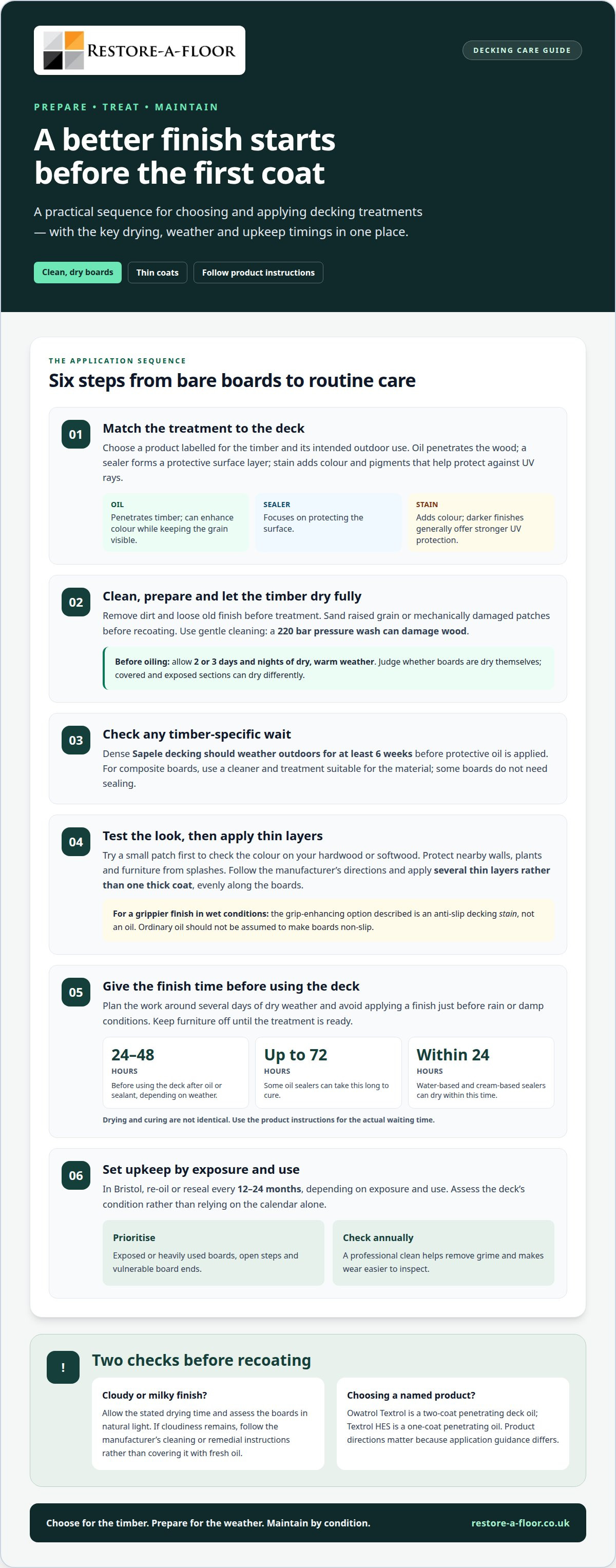
Non-slip decking protection is available, but the grip-enhancing option described here is a stain, not an oil. Cuprinol Anti-slip Deck Stain is designed to provide extra grip on decking in wet conditions. For garden steps or a frequently used route, choose a finish labelled for that purpose. Don’t assume ordinary oil will make boards non-slip.
Colour matters too. Darker decking finishes generally offer better protection from harmful UV rays, but they also change the timber’s appearance. Ronseal Ultimate Decking Oil contains UV filters intended to help maintain decking colour. Cuprinol UV Guard Decking Oil is described as enhancing the wood grain and nourishing the wood. Compare the expected colour with your garden setting before treating the entire deck.
Film-building finishes sit on the timber’s surface rather than simply penetrating it. They usually require two coats, so follow the product instructions for coverage and recoating. Apply the finish evenly along the boards, avoiding heavy pools that can leave an inconsistent appearance. A test patch helps you judge how the colour will look on your hardwood or softwood.
A milky or cloudy oil finish needs attention before you apply another coat. Allow the product’s stated drying time, then assess the boards in natural light. If cloudiness remains, follow the manufacturer’s cleaning or remedial instructions rather than covering it with fresh oil. Cleaning also removes grime and mildew that can obscure the timber’s colour and texture.
Composite decking needs a different approach from timber. Some composite boards do not need sealing, and timber oils may not suit their surface. Yellow Balau’s natural oils and resins help resist algae and can keep it grippier for longer than softwood. A great-looking finish starts with matching the treatment to the material, desired colour and use in wet weather.
Decking oiling and sealing
Decking oiling and sealing in Bristol starts with matching the treatment to the deck’s material and condition. A durable finish depends on careful cleaning, suitable pressure and protection for vulnerable board ends.
Bristol Decking Treatment Services
A thorough treatment process includes inspection, cleaning, preparation and application. First, identify whether the surface is softwood, hardwood or composite, as each needs a suitable approach. Clean timber boards before sanding raised grain or damaged areas. Some composite decks do not need sealing, so don’t apply timber products automatically.
Cleaning pressure matters: 220 bar can damage timber, while around 110 bar is considered safe for pressure washing decking. Clean along the grain on hardwood to help preserve its surface. Check the board ends too, as they are vulnerable to moisture ingress. Sealing exposed ends helps limit water entry and reduce rot risk.
Deck Oil and Seal Applications
For timber, apply the selected product in thin, even coats, following the manufacturer’s instructions. One coat of oil sealer is usually not enough, while film-building finishes generally require two coats. Work methodically along each board to avoid missed strips or heavy overlaps. Allow the timber to dry fully before treatment.
Choose between penetrating oil and surface sealant to suit the timber and desired finish. Stain pigments help protect wood from harmful UV rays, while oil can preserve the visible grain. Ronseal Ultimate Decking Oil contains UV filters intended to help maintain colour. Use the product label to check application and drying requirements and plan the work.
For a new deck or a project requiring a broader design, explore decking design and build as the next step. A considered build and suitable maintenance plan help address drainage, exposed ends and the deck’s intended use from the outset.
Specialist products such as a dedicated joist end grain sealer provide essential protection for vulnerable decking ends. When choosing penetrating oils, homeowners have several trusted options: Osmo offers a high-VOC, microporous two-coat finish, while Textrol is available in a standard two-coat formula alongside the single-coat Textrol HES. For established installations, such as a three-year-old tanalised softwood deck treated with two coats of protector, regular upkeep is key. Implementing an annual routine of gentle pressure washing and re-oiling effectively controls slippery algae and accumulated grime, keeping the timber looking its best.
Restore-A-Floor: Wood Floor Sanding & Refinishing
Restore-A-Floor can help when your flooring project extends beyond outdoor deck care. If timber floors inside your home are worn or their finish needs attention, Wood Floor Sanding & Refinishing can restore their appearance. For other surfaces, the company also provides Concrete Floor Polishing, Parquet Floor Supply & Installation, and Tiled Floor Restoration & Cleaning.
These services meet distinct flooring needs, from refinishing timber to restoring tiled surfaces. They’re relevant when you’re planning wider improvements alongside a garden project, rather than as a substitute for maintaining decking boards. Matching the work to each surface helps keep the scope clear and the finish appropriate.
Contact Restore-A-Floor to discuss your flooring project.
Plan a finish that fits your outdoor space
Consider how you want your garden to function before deciding on your decking project. A dining area, a clear route across the boards and a quiet corner for relaxing each place different demands on the surface. These priorities can guide choices about the deck’s appearance and ongoing care.
For decking oiling and sealing in Bristol, start by assessing the boards and defining a practical scope for the work. Consider whether the deck needs routine maintenance or a broader redesign, and how its finish will complement the rest of your outdoor space. A clear plan helps you make informed decisions without treating every deck alike.
Contact Restore-A-Floor to discuss your decking, and take the next step towards a space that feels considered and ready to enjoy.
Frequently Asked Questions
How Do You Stop Decking Being Slippery?
Remove algae, leaf debris and grime, then use a finish designed to improve grip. Cuprinol Anti-slip Deck Stain is designed to provide extra grip on decking in wet conditions. Brush grooves and board edges where debris gathers, and clear leaves after wet weather. If algae keeps returning, consider whether shade and poor airflow are keeping the surface damp, and adjust nearby planting where practical.
How many coats of decking oil do I need?
Apply the number of coats stated on the oil’s label, as formulations differ. Film-building deck finishes usually require two coats, while Owatrol Textrol HES is described as a one-coat penetrating oil. Spread each layer evenly instead of immediately adding extra product to dull-looking patches. Check the boards after the instructed drying interval, as applying a second coat too soon can affect the finish.
What happens if I use too much deck oil?
Excess oil can sit on the surface rather than absorb, leaving a tacky or uneven finish. It may also attract dust and mark underfoot before it cures. Apply a thin layer, then wipe away surplus as directed on the product label. If a board already feels sticky, don’t simply add another coat; follow the manufacturer’s instructions for removing excess product.

Comments