

Concrete Floor Sealing Services in Bristol: Costs and Coatings
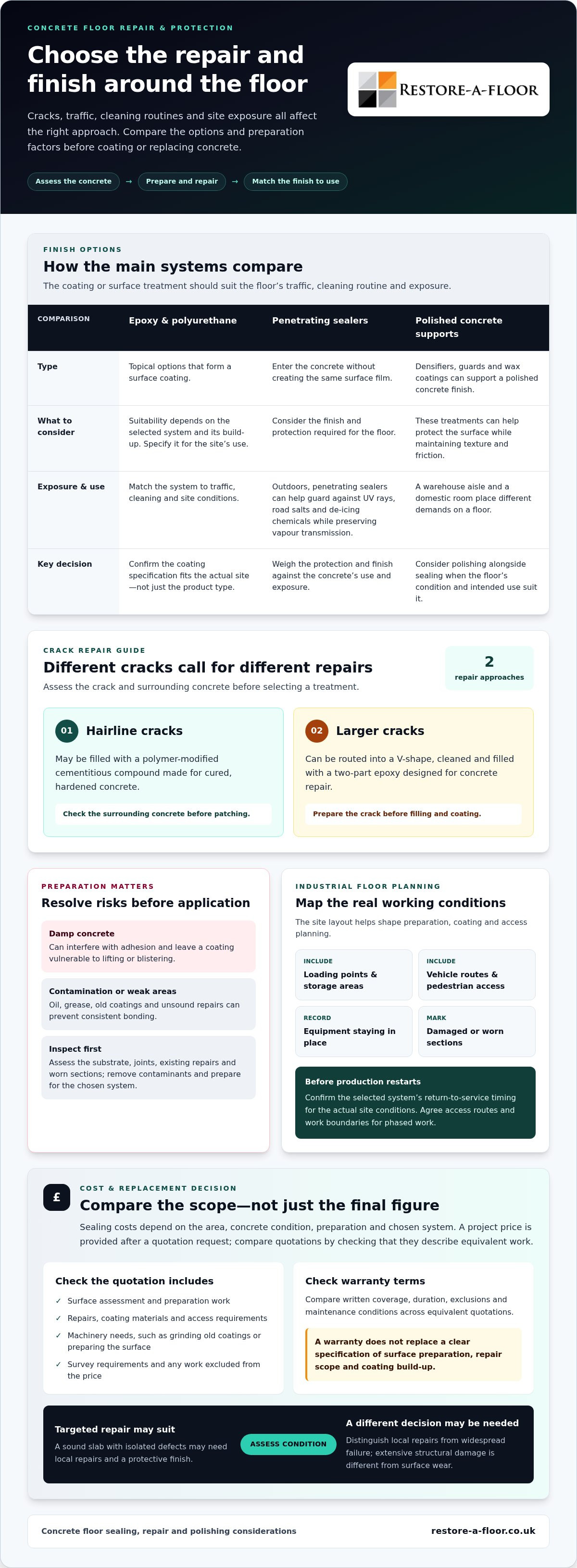
Cracks in polished concrete do not automatically mean the floor needs replacing. Hairline cracks may be filled with a polymer-modified cementitious compound made for hardened concrete, while larger cracks can be routed, cleaned and filled with a two-part epoxy designed for concrete repair. Concrete floor sealing services in Bristol can form part of a broader plan to repair and protect a floor, depending on its condition and use.
It is understandable to worry that visible cracks, worn patches or staining could mean an expensive replacement. This guide explains how crack repairs and protective treatments work, what affects project costs, and when restoration may be a practical alternative to replacement. Traffic, cleaning routines and exposure to chemicals or temperature also help determine the right flooring system, especially when planning work in a home or industrial space.
Table of Contents
Industrial concrete floor sealing and protective coatings
Industrial concrete needs a system suited to its traffic, cleaning routine and exposure. In Bristol, loading points, vehicle routes and pedestrian access help shape the preparation and coating plan.
For application practice, BS EN 1504-10 covers site application, substrate preparation and quality control. It provides a useful reference when planning an industrial project, alongside the needs of the actual floor. The selected epoxy system’s suitability depends on its build-up, so the coating specification must fit the site rather than relying on the product type alone.
Sealer options for homes and businesses
Homes and workplaces can use topical sealers, such as epoxy and polyurethane coatings, or penetrating sealers that enter the concrete. Densifiers, guards and wax coatings can also support polished concrete, helping protect the surface while maintaining texture and friction. Consider the finish, traffic and cleaning regime: a warehouse aisle and a domestic room place different demands on the floor.
Epoxy, polyurethane and penetrating sealers
Epoxy forms a surface coating, but its suitability for an industrial floor depends on the selected system and build-up. Polyurethane is another topical option, specified according to how the site is used. Penetrating sealers protect concrete without creating the same surface film. Outdoors, they can help guard against UV rays, road salts and de-icing chemicals while preserving vapour transmission. Each option involves trade-offs in finish and protection.
Sealing time and floor use
Project duration depends on preparation, repairs, coating layers and site conditions. Some treated concrete floors can be used immediately after treatment, but that does not mean every coating is ready for industrial traffic straight away. Before production restarts, confirm the return-to-service timing for the selected system and actual site conditions. For phased work, agree access routes and boundaries so coating operations fit the site schedule.
Risks from damp, damaged or contaminated concrete
Sealing damp concrete can interfere with adhesion and leave a coating vulnerable to lifting or blistering. Oil, grease, old coatings and unsound repairs can also prevent a new layer from bonding consistently. Before application, assess the substrate, joints, existing repairs and worn sections. Remove contaminants and prepare the surface for the chosen system. This step helps reveal whether cracks need repairing before coating begins.
An industrial floor repair starts with assessing the concrete and existing layers, then identifying damaged areas and joints. Small hairline cracks in polished concrete may be filled with a polymer-modified cementitious patching compound made for cured, hardened concrete. Larger cracks can be routed into a V-shape, cleaned and filled with a two-part epoxy designed for concrete repair. Thorough preparation and quality control are essential before applying protective coatings.
Costs and avoiding replacement flooring
For a Bristol floor, sealing costs depend on the area, concrete condition, preparation and chosen system. The project price is provided after a quotation request. The quotation should identify preparation, repairs, coating materials, access and any survey requirements.
Compare quotations by matching the scope, not just the final figure. A useful quotation explains how the existing surface will be assessed, what preparation is included, and how damaged sections or old coatings will be handled. It should also identify the proposed coating system and any work excluded from the price.
Machinery and preparation affect the work involved. Mechanical grinding may be needed to remove an old coating or create a suitable surface for the new system. Crack, joint or worn-area repairs add separate tasks, while restricted access or equipment left in place can shape the work sequence. Make sure these items are clearly identified in the quotation.
To compare warranties, read the written terms alongside the proposed system. Check what the warranty covers, its duration, exclusions and maintenance conditions, then compare equivalent details across quotations. A warranty does not replace a clear specification: the surface preparation, repair scope and coating build-up still need to be described.
Sealing can help avoid replacement when the concrete remains suitable for repair and protection. Start with a condition assessment: identify cracks, spalling, worn patches, joints, contamination and previous coatings. Then distinguish local repairs from widespread failure. A sound slab with isolated defects may need targeted repairs and a new protective finish, while extensive structural damage calls for a different decision than surface wear.
For an industrial floor, include loading points, storage areas, vehicle routes and pedestrian access in the project details. Note equipment that will remain in place and mark damaged or worn sections. This helps plan preparation, machinery movement and work-area boundaries, rather than pricing an empty floor that does not reflect the actual site.
Before accepting a Bristol quotation, check that it states the included preparation work and any outstanding survey requirements. Confirm that the coating suits the traffic, cleaning and chemical or temperature exposure. Agree access routes, work boundaries and the return-to-service timing for the selected system and site conditions before production restarts.
Where polished concrete suits the floor’s condition and intended use, concrete floor polishing is another finish to consider alongside sealing. Comparing the required repairs, preparation and final surface helps clarify whether protection, polishing or replacement best addresses the floor’s needs.
Durability and resistance to wear
Durability depends on the concrete, finish and use of each area. A warehouse aisle carrying repeated vehicle movements faces different wear from a room used mainly by pedestrians. Sealing can protect a suitable surface, but it cannot fix a weak slab or remove the cause of damage. Assess the floor’s condition alongside its daily use.
Concrete hardens over time, and a suitable treatment can further harden and seal it. That does not make every surface immune to wear. Moving stock, grit beneath footwear and repeated cleaning can affect the finish. Polished areas may also show traffic patterns more clearly where people, trolleys or machinery repeatedly follow the same route.
Match protection to the wear pattern. In a warehouse, examine turning points, loading zones and routes between storage areas. Look for worn patches, surface dusting, cracks or staining in each location. These signs help distinguish local damage from broader deterioration. Treating the whole floor identically may not address a concentrated problem near a doorway or workstation.
Polished concrete has different upkeep needs from a coated floor. Routine maintenance does not require wax or coatings, and a mop with water can be used for cleaning. A guard or densifier may help protect polished concrete while retaining its texture and friction. The choice depends on the desired finish and the floor’s exposure to traffic and cleaning.
Protective treatments also need sensible day-to-day care. Remove grit and dirt before they are dragged across busy areas, and clean spills according to their type. Oil and grease, food and drink, rust, and organic staining each call for different cleaning approaches. Abrasive action or an unsuitable cleaner can alter the surface, so match cleaning to the contaminant and finish.
Outdoor concrete faces different wear pressures from an indoor warehouse floor. Penetrating sealers can protect outdoor polished concrete against UV rays, road salts and de-icing chemicals while preserving vapour transmission. Drainage matters too: an adequate slope helps prevent standing water that could undermine the slab. Consider these conditions when assessing an external surface, rather than treating the coating as the only factor in durability.
Concrete driveways typically last 30-40+ years when properly installed and sealed. This figure applies to driveways, not every sealed concrete floor. Properly installed and sealed driveways resist weeds, staining and heavy vehicle use. Their performance still depends on installation and ongoing care, so use driveway expectations carefully when considering a commercial or industrial interior.
For a practical durability review, record the floor’s busiest routes and compare them with visible wear. Note where staining recurs, where the finish has changed, and whether the surface is polished or coated. Then consider whether cleaning, local repairs or renewed protection will address the cause. This step-by-step assessment helps distinguish routine surface wear from damage that needs more substantial work.
Assessing floor use and traffic
A coating plan starts with the floor’s daily demands, not just its appearance. In a Bristol warehouse, a vehicle route needs a different assessment from a pedestrian aisle. Map loading points, storage, vehicle routes and pedestrian access before choosing a flooring system. This shows where traffic concentrates and where people need uninterrupted access.
Walk the site during normal operations and record how each zone is used. Note equipment that will remain in place, along with worn or damaged sections. A loading point, for example, may face repeated impacts and concentrated movement, while a staff walkway has different traffic. These details help the project team plan preparation around real working conditions.
Include the cleaning regime in the assessment. A floor washed regularly faces different exposure from one cleaned only when spills occur. Record cleaning methods and any chemicals used, along with areas exposed to heat or temperature changes. The chosen system should suit these conditions, rather than relying on a broad description such as “heavy-duty”.
Use a site plan to make the information practical. Mark the key details clearly:
Loading points and storage areas, including the sections with visible wear.
Vehicle routes and turning areas, where repeated movement follows a set path.
Pedestrian access and doorways, including routes needed during the work.
Equipment that stays in place, so preparation and coating boundaries can be planned.
These markings help determine whether a project can be phased. Agree work-area boundaries, access routes and coordination with other trades before work begins. For example, if a loading zone and adjoining walkway are treated separately, the sequence must account for how staff and vehicles move around each area. Clear boundaries also help prevent clashes with other site activities.
Traffic assessment informs the surface specification. A warehouse system must reflect vehicle movement, storage activity, cleaning and exposure to chemicals or temperature. Suitability also depends on the selected system and build-up. A polished finish may suit one area, while another may need a protective coating. Let the expected use guide the decision.
Finally, connect the floor plan to the condition survey. Mark damaged sections alongside traffic routes, joints and areas beneath fixed equipment. This makes it easier to distinguish local wear from a wider issue and plan the work accordingly. Before production restarts, set the return-to-service timing according to the selected system and actual site conditions, so the operating plan reflects the finished floor.
Which companies offer concrete floor sealing services in Bristol?
In Bristol, look for flooring specialists experienced in concrete preparation and protective finishes. The right expertise depends on the floor: a domestic garage, an office and an industrial warehouse have different traffic and cleaning demands. Some projects need a protective coating; others may suit mechanically ground, hardened and polished concrete. Identify the required finish before comparing proposed work.
Start by describing the floor and how it is used. Note whether it serves a home, warehouse, office or garage, then record vehicle routes, pedestrian access and damaged sections. Include existing coatings, repairs and joints. These practical details help a flooring specialist assess the substrate and explain the preparation involved.
For concrete floor sealing services in Bristol, focus on the project scope rather than the company name alone. A clear proposal should identify the surface preparation, repairs, selected system and areas included. It should also explain how the coating suits expected traffic, cleaning routines and exposure to chemicals or temperature. These details help clarify what the work is intended to achieve.
Use these points to compare proposals for the same floor:
Assessment: Does the scope address old coatings, repairs, joints and substrate condition?
Preparation: Does it explain the work and machinery needed before application?
System: Does the proposed build-up suit the site’s traffic and cleaning?
Planning: Are equipment left in place, damaged areas and work boundaries included?
Handover: Will the people responsible for the floor receive cleaning and maintenance guidance?
For an industrial site, add a plan showing loading points, storage, vehicle routes and pedestrian access. Mark worn or damaged sections, along with equipment that will remain in place. A phased project also needs agreed work-area boundaries, access routes and coordination with other trades. These details help align the proposal with how the Bristol site operates.
Compare warranties by reading their written terms, including coverage, exclusions and maintenance conditions. Consider those terms separately from the technical specification: neither replaces a clear description of preparation and repairs. Set return-to-service timing for the chosen system and actual site conditions before production restarts.
A considered assessment can clarify whether coating, repair or a polished finish best suits your concrete. To discuss the floor’s condition and finish, start a conversation about your concrete floor.
Restore-A-Floor offers concrete floor polishing for garages, homes, warehouses and offices. This is another finish to assess against the site’s use and practical requirements.
Restore-A-Floor: Wood Floor Sanding & Refinishing
Restore-A-Floor offers concrete floor polishing for projects involving worn concrete surfaces. The process mechanically grinds, hardens and polishes concrete to the desired shine, providing a distinct finish option when assessing the floor’s condition and intended use. It is suited to domestic and commercial spaces, including garages, homes, warehouses and offices.
If your project involves other floor types, Restore-A-Floor also offers wood floor sanding and refinishing, parquet floor supply and installation, and tiled floor restoration and cleaning. The right next step depends on the material and finish you want, whether that means polishing concrete or restoring another surface.
Contact Restore-A-Floor to discuss your flooring project.
Take the next step towards the right floor finish
Your next decision is how the finished floor should look and perform in its setting. Choosing concrete floor sealing services in Bristol means considering not only the surface today, but also the finish you want in your home or workplace. A practical conversation about the floor’s condition, use and priorities can help clarify whether protection or a different finish is the better option.
Restore-A-Floor offers concrete floor polishing for projects where a polished concrete finish is the goal. For other materials, services include wood floor sanding and refinishing and parquet floor supply and installation. Each option addresses a different flooring need, so start with the material and result you want for your space.
Share the details of your flooring project and explore a considered next step with Contact Restore-A-Floor about your floor. A well-planned finish can give your space a renewed sense of purpose and help you move forward with confidence.
Frequently Asked Questions
How much does concrete floor sealing cost per square metre in Bristol?
There is no single per-square-metre rate for every Bristol floor. The project price is provided after a quotation request. Area, access, concrete condition, repairs and the selected sealing system all affect the work involved. For a useful comparison, request a written scope showing what preparation and application the price covers, rather than comparing figures without knowing what is included.
What factors affect the cost of sealing a concrete floor?
The main cost factors are floor area, condition, access and the work needed before sealing. A clear, open floor may require a different approach from one with difficult access, fixed equipment or several surface finishes. The sealer system also affects the specification. For example, a floor needing repairs and removal of an existing coating calls for different preparation from clean, sound concrete.
How should a concrete floor be prepared before sealing?
First, remove movable items and keep the work area clear. Sweep or vacuum loose dust, then clean away substances that could interfere with adhesion, such as oil or grease. Identify cracks, joints and previous coatings so they can be assessed before application. Preparation methods should suit the concrete and chosen sealer. The floor must be ready for that system before coating begins.
How long do concrete floor sealers last, and when do they need reapplying?
Sealer life depends on the product system, floor use, cleaning routine and exposure to wear. A busy warehouse route may show deterioration sooner than a lightly used room. Inspect for areas where protection has worn, staining has become harder to remove, or the finish has changed. Reapplication should follow the chosen system’s maintenance guidance and the floor’s observed condition, rather than a fixed schedule.
Are there building regulations or safety requirements for concrete floor sealing in the UK?
For industrial projects, BS EN 1504-10 covers site application, substrate preparation and quality control, and is a useful planning reference. The selected system should also suit the floor’s condition and intended use.
Comments