

Concrete floor resurfacing in Cardiganshire for polished finishes
A polished concrete finish doesn’t always mean starting with a new floor. Concrete floor resurfacing in Cardiganshire can involve grinding and refining a sound existing slab, with the depth of grinding determining how much aggregate shows and the sheen chosen separately, from matte to full gloss. If the slab or floor surface isn’t suitable for direct polishing, an overlay such as microcement, typically applied at 2-3 mm thick, can create a renewed surface.
You may picture a smooth, reflective floor, but polished concrete can also have a more understated appearance, depending on the finish and how much aggregate is exposed. This guide explains what polished concrete is, how its appearance is created, how to care for it and when an overlay can resurface an existing floor. You’ll also learn what affects the process and how to consider options for a home or commercial space in Cardiganshire.
Table of Contents
What is polished concrete?
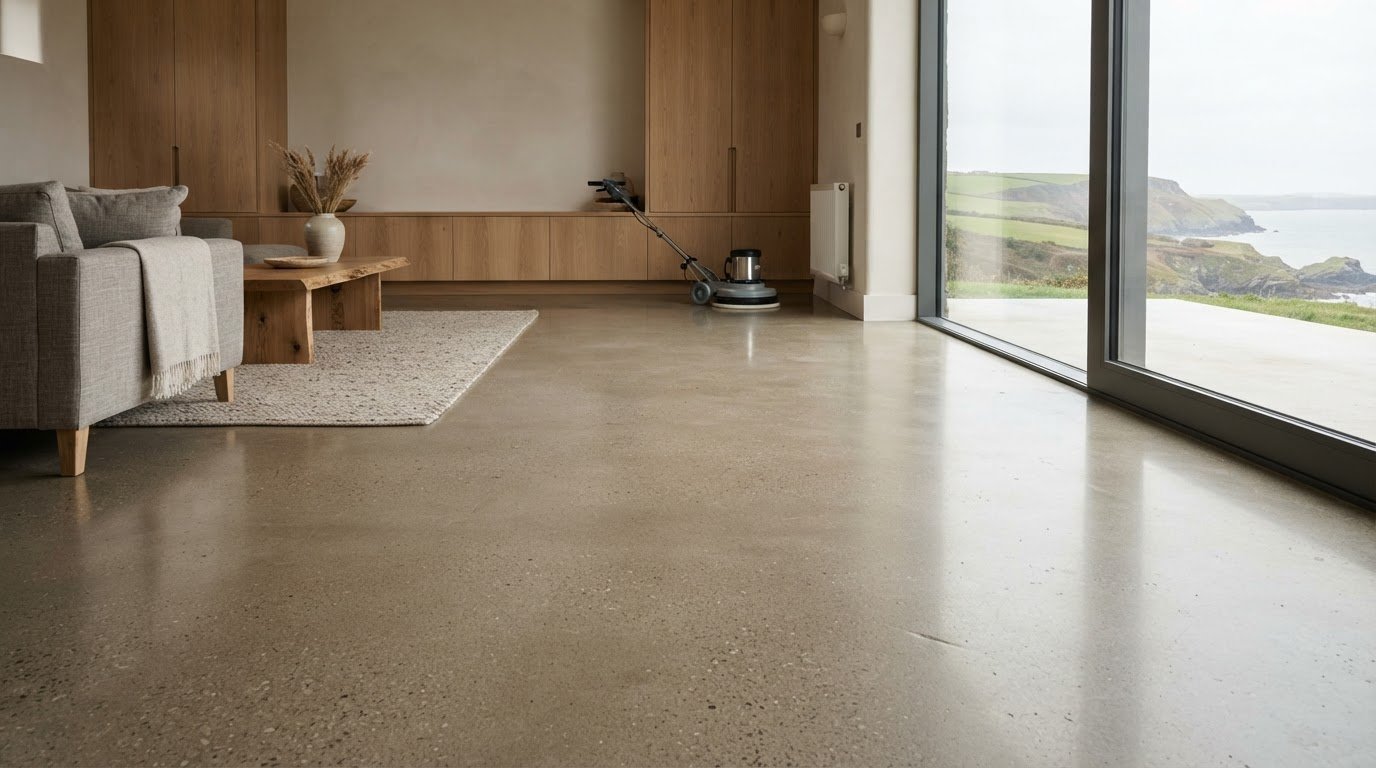
Polished concrete is a concrete surface ground and refined with progressively finer abrasives. The grinding depth determines how much aggregate is exposed, while the chosen finish controls the sheen.
Grinding and finish options
Grinding removes the surface layer in controlled stages, then finer diamond abrasives refine the exposed concrete. Removing 3-5 mm of surface slurry can fully expose aggregate, although the result depends on the slab’s composition. A domestic full-aggregate finish shown in the research is refined to 3500 grit. Look at both exposure and sheen when comparing finishes, since they are separate choices.
Matte, satin and gloss choices
Matte finishes reflect less light and give the floor a restrained appearance; satin sits between matte and gloss. Full gloss creates a more reflective surface, making light and surrounding shapes more noticeable. A sample area helps you compare the three finishes in the room’s actual lighting. View it from different positions, and assess it alongside furnishings and the room’s usual temperature conditions.
Floor colours and finishes
The concrete’s existing colour and aggregate affect the finished appearance, so the same grinding approach can look different on two slabs. Colour can also vary within one floor as the aggregate changes. Assess a trial area against the surrounding surface before choosing a finish. Compare samples in daylight and artificial light, and consider how the chosen sheen affects the concrete’s appearance.
Matching existing concrete means comparing colour, texture and aggregate exposure, not just sheen. Repair finishes can be matched to surrounding concrete, including shutter-board or exposed-aggregate finishes. A trial area makes differences easier to judge before work proceeds across the floor. Check the sample beside repaired sections and untouched concrete, as variations in the slab may remain visible after grinding.
In Wales, GOV.WALES guidance says a ground floor must resist ground moisture and heat loss. A resurfacing build-up should preserve these functions: the polished appearance alone does not describe the floor’s full construction.
A concrete-floor polishing specialist experienced with existing slabs is the relevant type of provider. When comparing local options, look for feedback about preparation, consistency of finish and how completed floors compare with agreed samples. Reviews can help you assess attention to surface detail, rather than judging a result by shine alone.
Benefits and maintenance of polished concrete
A correctly installed and maintained polished concrete floor can perform for 25 to 30 years or more. Its durability comes from refining the concrete itself, rather than relying on a separate decorative layer that can peel away. The dense surface can resist everyday wear, whilst the understated colour and finish suit residential and commercial spaces.
Polished concrete needs little routine maintenance. It doesn’t require wax, and everyday care doesn’t call for hazardous cleaners, adhesives or coatings. Keep cleaning straightforward: remove loose grit, then clean the surface with a suitable floor cleaner and a damp mop. Grit underfoot can act abrasively, especially in busy entrances.
Cleaning and routine care
Use soft cleaning tools and avoid harsh products that could affect the sealed surface. Clean spills promptly, particularly coloured liquids, to reduce the risk of staining. An entrance mat can catch grit before it reaches the floor. Protect furniture feet, and lift rather than drag heavy items to limit scuffs.
Polished concrete is sealed to help protect against stains and make maintenance easier. This initial protection is different from applying routine wax or a surface coating. Resealing may be recommended over time, depending on foot traffic and how the room is used. A busy commercial entrance, for example, experiences different wear from a lightly used domestic room.
Cracks, stains and ongoing durability
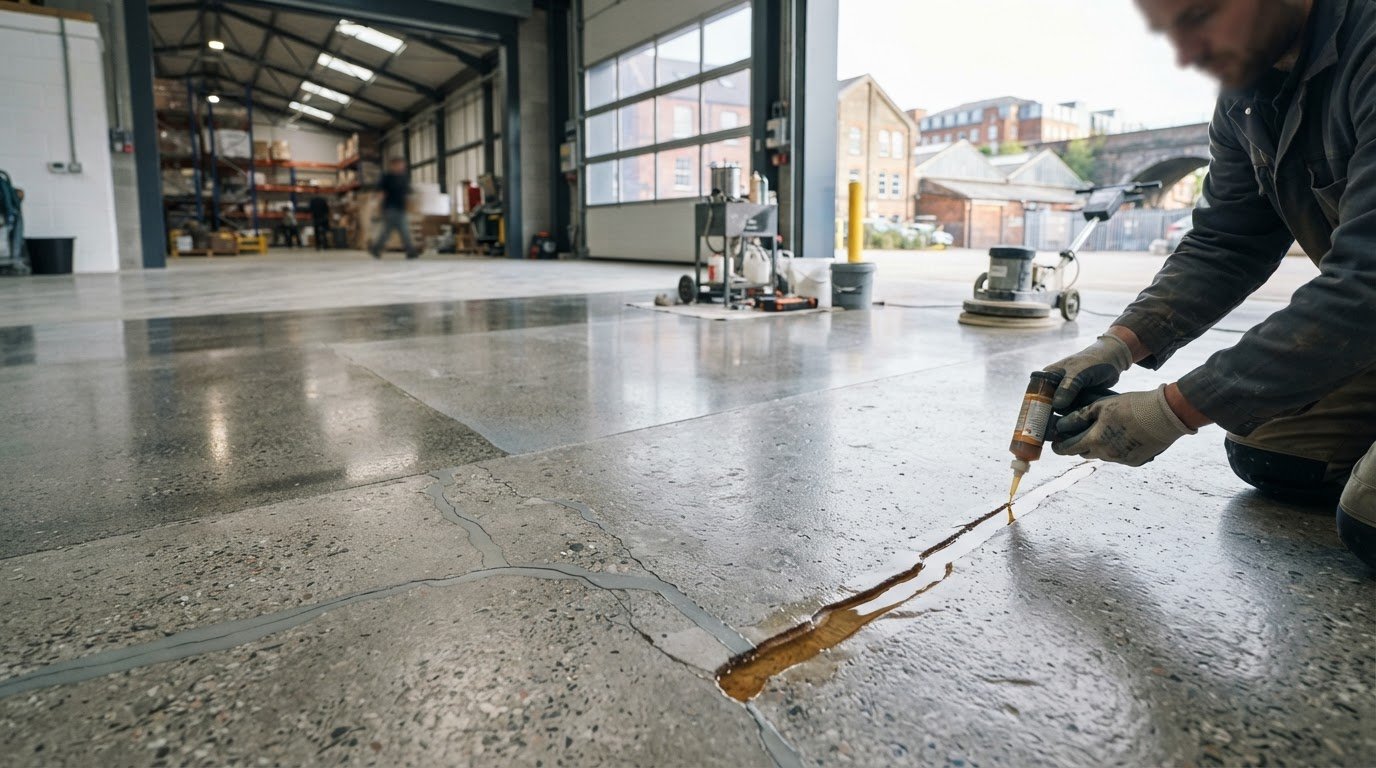
Inspect the floor during regular cleaning. Small hairline cracks can be filled with a polymer-modified cementitious patching compound formulated for cured, hardened concrete. A repair can improve the surface, but won’t necessarily make the crack invisible. De-icing salts can also contribute to delamination by penetrating concrete and weakening the bonds between cement and aggregate, so avoid tracking them indoors on footwear.
Good long-term performance depends on sound preparation, correct installation and care suited to the space. Underfloor heating can improve comfort underfoot, while suitable finishes or area rugs can help the floor feel warmer. Sudden temperature changes caused by misuse of underfloor heating can contribute to cracking, so operate the system steadily and follow its instructions.
The price depends on the project and is provided after a quote request. Main cost factors include the floor’s condition, the preparation required, the area and the chosen finish. These details also shape practical maintenance guidance, including whether resealing is appropriate for the room’s traffic and use.
If you’re weighing up the finish, preparation and care for an existing slab, professional concrete floor polishing can help you plan a surface suited to the space.
Polished concrete flooring
Polishing can refine a sound existing slab directly or finish a separately applied overlay. The right approach depends on the floor’s condition, intended use and the appearance you want.
Grinding and polishing stages
For a sound slab, grinding removes surface material and prepares the concrete for progressively finer diamond abrasives. Each stage smooths the floor and develops its polished appearance. Grinding depth also affects how much aggregate is exposed. In an industrial environment, the required finish and expected use help shape the process, so assess both the floor’s condition and the intended result.
Address stains before they become part of the finished appearance. First, identify the affected area and remove loose material. Blot fresh spills rather than spreading them, then use a cleaner suitable for polished concrete and follow its instructions. Oil, food colouring and other substances can leave different marks. Cleaning may improve the surface, but deep discolouration can remain visible after polishing.
Screeds and overlay options
A polished screed or overlay creates a separate floor build-up when the existing slab cannot provide the required finish. This option can also suit floors that aren’t concrete. Microcement is a polymer-modified cement coating approximately 2-3 mm thick, applied over existing floors, walls and stairs. The surface must be suitable for the chosen system, and preparation affects how well the new layer bonds.
Overlay polishing uses progressively finer diamond abrasives to smooth and refine the applied material. This creates a denser surface that is more resistant to wear and tear. Closing surface pores also increases resistance to staining and discolouration. When comparing overlay finishes, consider the room’s use, desired appearance and cleaning needs. Polished concrete flooring is compatible with underfloor heating, which can improve thermal comfort.
Completion and curing time
Completion and curing depend on the floor area, existing condition, preparation, repair work and whether the project involves direct grinding or an overlay. Direct polishing and installing a new surface have different stages. An overlay must harden according to its system requirements before polishing or normal use. These steps determine the project sequence, rather than one duration applying to every floor.
Before work starts, establish which areas need access and how the work sequence will affect the space. For example, a room receiving an overlay needs time for preparation, application and hardening before its final polishing stages. Cleaning, repairs and the chosen finish also affect the plan. A clear sequence helps coordinate the installation with other work and sets practical expectations for when the floor can return to use.

Aggregate visibility, cracks and surface appearance
Existing concrete can reveal different amounts of aggregate across one floor, so polished concrete rarely looks perfectly uniform. The slab’s original mix, previous repairs and grinding depth all influence the final appearance. A patch, for example, may expose different stones from the surrounding surface. Reviewing a trial area shows how the actual floor responds before the finish is carried across the room.
Aggregate visibility is shaped by how much concrete is removed during grinding. A shallow grind can leave more of the cement-rich surface visible, whilst deeper grinding exposes more stones. Removing 3-5 mm of surface slurry can fully expose aggregate, but the slab’s composition still affects what appears. Diamond abrasives refine the ground surface; they don’t make varied aggregate patterns identical.
Cracks need separate assessment because polishing changes the surface, not the concrete’s underlying movement or history. Repairing a crack doesn’t necessarily make it disappear. A small hairline crack may be filled with a polymer-modified cementitious patching compound formulated for cured, hardened concrete. The repaired line can remain visible, particularly if the patch’s colour or texture differs from the surrounding slab.
Before choosing a finish, note where cracks run, whether their edges are stable and whether nearby concrete is flaking. Delamination occurs when the top layer separates from the rest of the slab. Corroding reinforcing steel can expand, press against the surrounding concrete and cause cracks or flakes to break away. This is different from a fine surface mark, so the affected area needs attention before final grinding.
Repair methods depend on the cause and extent of the damage. A common approach is to remove the delaminated section, clean the area and patch the concrete. Where reinforcing steel is corroded, sandblasting can remove rust from the steel. Epoxy injection fills cracks and voids to bond the surface back to the concrete; carbon-fibre strips can provide additional support. These methods address different conditions and are not interchangeable cosmetic options.
Temperature can also matter. Sudden temperature changes caused by misuse of underfloor heating are identified as a main cause of concrete cracking. Operating the heating steadily helps avoid abrupt changes. Freezing and thawing can contribute to delamination when concrete lacks protection from the elements, while de-icing salts can penetrate concrete and weaken the bonds between cement and aggregate.
For a considered finish, compare the trial area with the whole floor under the room’s usual lighting. Assess aggregate exposure, repaired sections, crack visibility and sheen together. This practical review shows how the existing surface will influence the final appearance before the chosen polished finish extends across the space.
Concrete overlays over existing floors
Concrete floor resurfacing in Cardiganshire can renew a suitable existing floor without automatically replacing the entire slab. The right method depends on the slab’s condition, intended use and the finish you want.
Resurfacing or floor replacement
Resurfacing works with the existing floor: a sound slab may be ground directly, while an overlay adds a new surface over it. Replacement removes the existing floor and builds a new one. Compare the slab’s condition, required finish and intended use. Extensive delamination may require removing damaged material and applying a new overlay, rather than simply polishing the affected surface.
An overlay is a cement-based finish, not a way to conceal every underlying problem. Loose or delaminated concrete needs appropriate preparation before a new layer is applied. Damaged material, for example, may need to be removed, the area cleaned and the surface patched first. If the slab cannot provide the required finish, a polished screed or overlay may be considered as a separate floor build-up, subject to assessment.
Microcement offers a thin resurfacing option: it is a polymer-modified cement coating approximately 2-3 mm thick, applied over existing floors, walls and stairs. Its slim profile can refresh a domestic room without the same build-up as a thicker floor system. Preparation and the condition of the underlying surface remain important to achieving a suitable result.
For a residential kitchen, the desired appearance and cleaning routine can guide the finish. A garage or commercial building may face different traffic, so its surface requirements will differ. Polishing an overlay with progressively finer diamond abrasives smooths it and creates a denser surface. This improves resistance to wear and tear, while closing surface pores helps resist staining and discolouration.
Cardiganshire resurfacing services
Concrete floor resurfacing in Cardiganshire may involve grinding and polishing a sound slab, preparing damaged concrete for an overlay, or applying microcement over a suitable existing floor. A polished screed is another option when the slab cannot deliver the required finish. Each method suits different surface conditions and design aims.
In a domestic room, retaining a suitable slab may avoid replacing the entire floor. In a commercial setting, expected traffic and the required finish help shape the specification. Concrete Floor Polishing refines concrete surfaces, while an overlay offers a renewal option when direct polishing isn’t suitable.
To discuss a polished finish for an existing concrete floor, explore concrete floor polishing as a route to a renewed surface.
Restore-A-Floor: Wood Floor Sanding & Refinishing
Restore-A-Floor offers Concrete Floor Polishing for those considering a refined finish for an existing concrete floor. It’s a suitable next step when the slab can be polished and you want professional attention to preparation and final appearance. The result depends on the concrete’s condition, aggregate and chosen sheen, so considering these factors helps guide your project decisions.
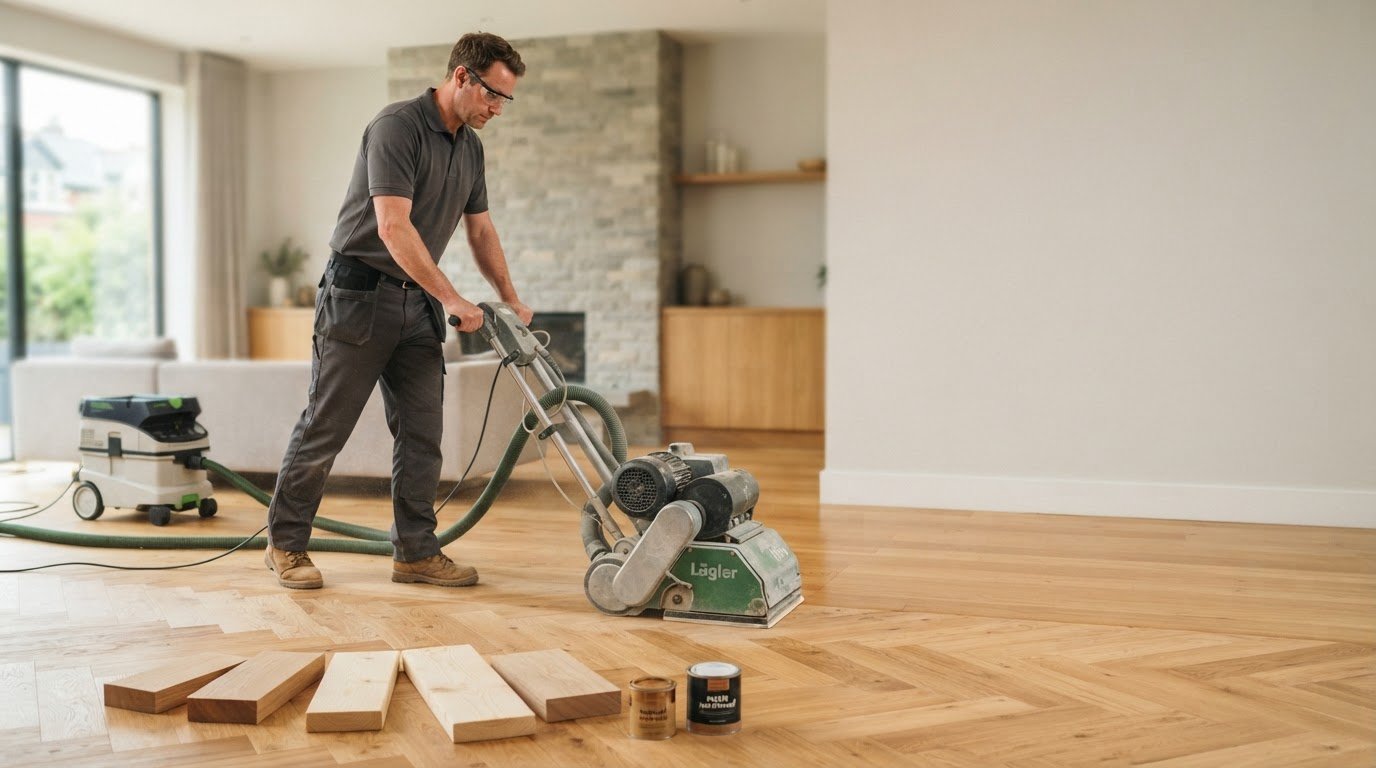
If the floor needs a different treatment, Restore-A-Floor also provides Wood Floor Sanding & Refinishing, Parquet Floor Supply & Installation, and Tiled Floor Restoration & Cleaning. These services suit distinct floor materials and needs; they do not replace concrete polishing or mean every slab can be resurfaced in the same way.
For information about concrete floor polishing, contact Restore-A-Floor or visit restore-a-floor.co.uk.
Plan the finish around your space
Your next step is to turn your preferred look into a clear project brief. Consider how the room is used, how you want the finished surface to look and feel, and which existing features should shape the design. A practical brief helps focus the discussion on the right treatment for your floor, rather than choosing a finish on appearance alone.
For concrete floor resurfacing in Cardiganshire, Restore-A-Floor offers Concrete Floor Polishing. Other relevant services include Wood Floor Sanding & Refinishing and Parquet Floor Supply & Installation, providing options for different floor materials across a property.
Share the floor type, its current condition and the result you have in mind. This provides a useful starting point for discussing how the project could take shape. Contact Restore-A-Floor to discuss your floor and take the next step towards a finish that feels right for your space.
Frequently Asked Questions
Is it easy to repair?
Small, isolated surface defects are generally simpler to repair than widespread or recurring damage. The key is to identify whether the problem is limited to the finish or involves loose concrete, movement or corroding reinforcement. A shallow chip, for example, may need local patching, while an area that sounds hollow or repeatedly flakes needs its cause addressed before resurfacing. A repair can improve the surface without making every mark invisible.
What causes the problem?
Concrete surface damage can develop through several mechanisms. Water and weather exposure, including freezing and thawing, can contribute to surface separation; de-icing salts can penetrate concrete and weaken the bonds around aggregate. Corroding steel reinforcement can expand and press against the surrounding concrete, leading to cracks or flaking. Trowelling and temperature conditions during placement can also contribute to delamination, so damage patterns matter when identifying the cause.
What should be assessed before polishing?
Assess whether the slab is sound, dry enough for the proposed finish and free from contaminants that could interfere with preparation. Map visible cracks, patches, hollow areas and changes in level, then consider how the room will be used. A garage, for example, has different traffic and cleaning demands from a living room. Also account for underfloor heating, thresholds, door clearances and adjoining floor surfaces.
How much does concrete floor resurfacing cost per square metre in Ceredigion?
The price per square metre depends on the floor and work required, and is provided after a quote request. Main cost factors include the area, concrete condition, access, preparation, repairs and whether the specification calls for direct polishing or an overlay. A floor with extensive damage needs a different scope from a sound slab requiring surface refinement, so compare quotations using the same written work description.
What preparation and steps are involved in resurfacing a concrete floor?
Resurfacing generally starts with assessing the slab and agreeing on the intended finish. The work then proceeds through preparation, removal of unsuitable or loose material, repairs where needed, and grinding or overlay application. Polishing follows the relevant surface preparation; sealing or other specified finishing completes the system. Before work begins, clear the room and plan how thresholds, skirting, floor fixtures and adjoining rooms will be protected and finished.
What are the common risks and causes of resurfacing failure, such as damp, cracks and poor adhesion?
Resurfacing can fail if the underlying surface is damp, unstable, contaminated or inadequately prepared. Moisture can interfere with bonding, while untreated cracks or movement may show through a new surface. Dust, grease or weak concrete can also compromise adhesion. Before choosing a finish, identify the source of damp, check for loose areas and include repairs in the preparation plan. Covering active defects without addressing them risks recurring damage.
How can I find a reliable concrete floor resurfacing contractor in Ceredigion and compare quotes?
Compare written quotations by checking that each describes the same preparation, repairs, finish, sealing and aftercare. A clear scope makes differences easier to understand than comparing headline totals alone. For a Cardiganshire floor, share its current condition, intended use and preferred appearance so the proposed work reflects the project. Restore-A-Floor offers Concrete Floor Polishing; project details form the basis of its quotation and advice.
Comments