

Professional Gym Floor Sanding and Sealing: The Ultimate Guide to Sports Surface Restoration
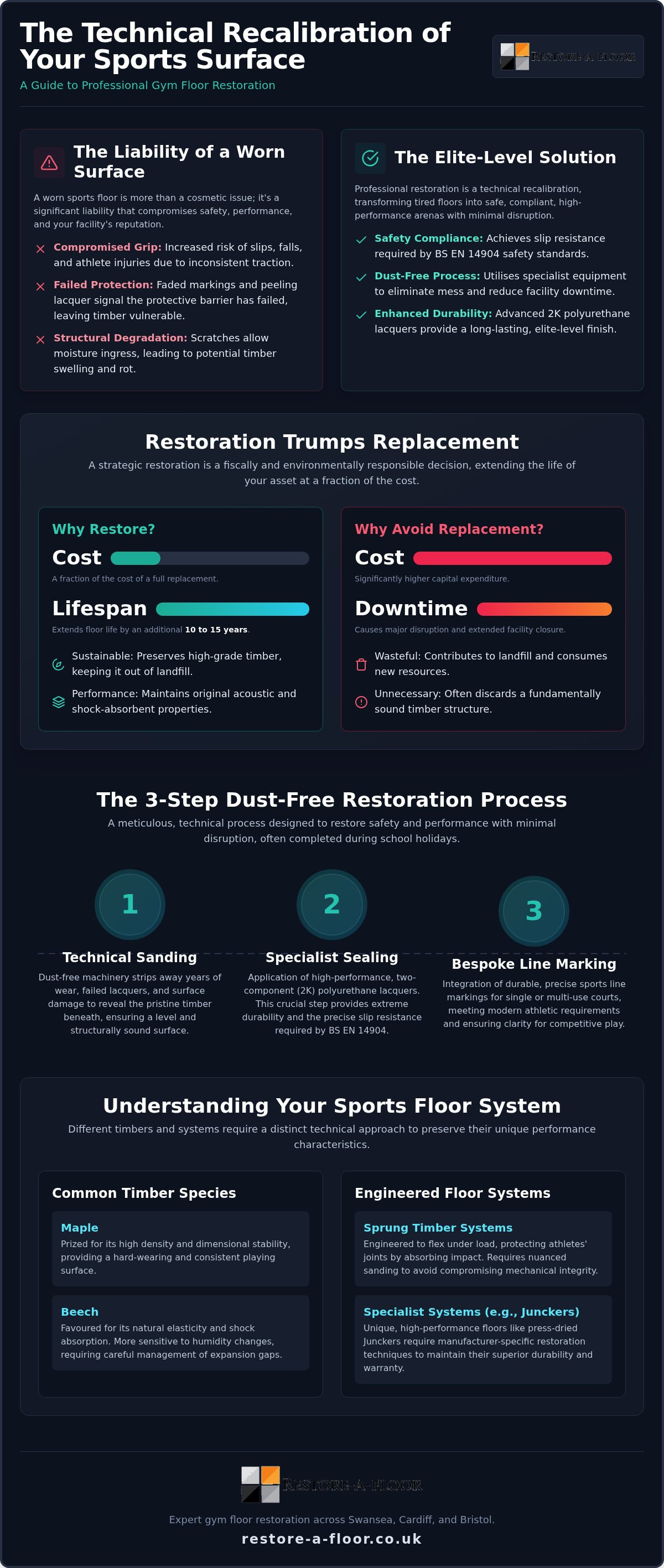
What if your sports surface isn't just a floor, but a precision-engineered safety component that's currently underperforming? A worn hall with faded markings and a compromised grip is more than a cosmetic issue; it's a significant liability that affects both athlete safety and your facility's reputation. You likely recognise that maintaining a high-performance environment is essential, yet the prospect of dust, mess, and extended downtime often leads to delaying necessary maintenance. Professional gym floor sanding and sealing offers a technical recalibration of your timber system, transforming tired surfaces into elite-level arenas that fully comply with BS EN 14904 safety standards.
In this ultimate guide, you'll discover how specialist dust-free equipment and advanced polyurethane lacquers can revitalise your sports hall without the expected disruption. We'll detail the meticulous process of restoring grip, applying bespoke line markings, and extending the lifespan of your investment. Drawing on over twenty years of experience across Swansea, Cardiff, and Bristol, we provide the technical insight required to navigate the complexities of sprung timber systems. You'll learn how a strategic restoration project can eliminate slippery hazards and unsightly scuffs, ensuring your facility remains a safe, high-performance centre for years to come.
Table of Contents
The Importance of Professional Gym Floor Sanding and Sealing
Professional gym floor sanding and sealing serves as a technical intervention designed to restore the safety and functional integrity of a sports surface. It isn't merely a cosmetic upgrade; it's a deep-tissue restoration that removes accumulated surface damage, ingrained contaminants, and failed lacquers. While many facility managers view this through the lens of school maintenance, high-end boutique gyms and private leisure centres equally depend on this process to uphold their premium standards and member safety. By stripping the timber back to its raw state, we remove the microscopic imperfections that compromise performance.
Standard wood finishes are fundamentally ill-equipped for the relentless friction and impact of competitive sports. A domestic seal will quickly delaminate or become dangerously slick under athletic use, failing to provide the necessary durability. Professional restoration focuses on 'recalibrating' the floor, ensuring the surface meets specific grip requirements whilst protecting the underlying timber from structural degradation. This process ensures that the floor performs exactly as the manufacturer intended, providing consistent ball bounce and predictable foot traction.
Recognising the Signs of a Failing Sports Surface
Identifying when a floor has reached its limit is crucial for effective risk management. You'll often notice 'dead spots' where the seal has thinned, leading to unpredictable traction that can cause player injury. Scuff marks and deep scratches aren't just unsightly; they act as entry points for moisture and dirt, which can cause the timber to swell or rot over time. If your line markings are peeling or faded, the floor no longer facilitates competitive play, signalling that the protective barrier has failed and the timber is vulnerable to permanent damage.
Why Restoration Trumps Replacement
Opting for a full restoration is a strategic decision that balances fiscal responsibility with environmental stewardship. The fundamental floor sanding process allows us to strip away years of wear to reveal the high-quality hardwood beneath, often at a fraction of the cost of a complete replacement. Preserving original Beech, Maple, or Oak boards keeps high-grade timber out of landfill and maintains the unique acoustic and shock-absorbent properties of the existing installation. When executed by specialists with over 20 years of experience, a technical reseal can extend the operational life of your sports floor by an additional 10 to 15 years, securing your investment for the next generation of athletes across Swansea, Cardiff, and Bristol.
Understanding Sports Floor Systems: From Junckers to Sprung Timber
Maple and Beech are the primary timber species found in UK sports halls, each demanding a distinct technical approach during restoration. Maple is prized for its density and dimensional stability, whilst Beech is favoured for its natural elasticity and shock-absorbent qualities. However, Beech is significantly more hygroscopic, meaning it reacts more aggressively to moisture. In the maritime climates of Swansea, Cardiff, and Bristol, where humidity levels fluctuate, this timber movement is a constant variable. We must account for expansion gaps at the perimeter, ensuring they aren't blocked by debris, as this would lead to "tenting" when the humidity rises. The efficacy of gym floor sanding and sealing depends heavily on a preliminary sub-floor assessment to identify structural fatigue or moisture ingress before any work commences.
Sanding a sprung system requires a nuanced understanding of mechanical deflection. These floors are engineered to flex under load to protect athletes' joints, a performance metric detailed in the ASTM F2772-24 standard. Aggressive, amateur sanding can thin the wear layer unevenly, which compromises the mechanical integrity of the spring system and leads to inconsistent ball bounce. Our process ensures the timber remains level and structurally sound, preserving the floor's ability to absorb impact whilst providing a uniform surface for competitive play.
Specialist Systems: Junckers and Granwood
Junckers floors are unique because the timber is press-dried, a process that provides superior durability and stability. Restoring these systems requires specific knowledge of their clip or batten mechanisms to avoid over-sanding the tongue-and-groove joints, which could weaken the entire assembly. Granwood, whilst not a traditional timber, is a wood-block composite that demands a specific sequence of abrasive grits to achieve a bondable surface. We ensure that modern, non-toxic seals are perfectly compatible with these specialist materials, providing a finish that is both hard-wearing and environmentally responsible. If you're unsure which system your hall utilises, our team can provide a detailed technical assessment to guide your restoration strategy.
The Role of Dust-Free Sanding Technology
The professional wood floor sanding in Swansea and Cardiff we undertake relies on HEPA-filtered extraction systems. This technology prevents fine wood dust from infiltrating sensitive gym equipment, electronic scoreboards, or ventilation ducts. A sterile environment is essential for the final sealing phase; even a single microscopic particle can cause a "nib" in the lacquer, creating a point of failure in the protective barrier. The technical success of gym floor sanding and sealing is dictated by this cleanliness, ensuring the final coats of polyurethane bond perfectly to the wood for a mirror-smooth, high-performance finish.
Selecting the Right Seal: Durability, Grip, and Compliance
Choosing the correct finish is the final, most critical step in the gym floor sanding and sealing process. Whilst traditional oils might suit a domestic setting, they lack the chemical cross-linking required to withstand the high-impact environment of a sports hall. We exclusively recommend two-component (2K) water-based polyurethane seals. These finishes provide a superior wear layer that resists the friction generated by rapid directional changes and heavy footfall. According to the Maple Flooring Manufacturers Association, the application of a high-quality seal is paramount to maintaining the wood's structural integrity and aesthetic appeal over time.
The visual environment is equally important for athlete performance. High-gloss finishes, though visually striking, often create significant glare from overhead lighting; this can distract players and obscure line markings. We typically advise a satin or matt sheen as these finishes diffuse light more effectively, providing a consistent visual surface that enhances player focus. For school and community centre environments, we prioritise non-toxic, low-VOC (Volatile Organic Compound) lacquers. These modern formulations ensure the hall can be returned to use quickly without the lingering chemical odours associated with older, solvent-based products.
Anti-Slip Performance and HSE Compliance
Compliance with BS EN 14904 is non-negotiable for public-use sports surfaces. This standard dictates the slip resistance requirements, ensuring the floor provides enough traction for safety without being so 'sticky' that it causes ankle or knee injuries. We verify performance using the Pendulum Test Value (PTV), aiming for a range that satisfies both HSE guidelines and public liability insurance requirements. For high-speed sports like basketball and netball, the seal must provide a predictable response underfoot. The friction coefficient of a sports floor is the numerical value representing the ratio between the force of friction and the normal force acting between an athlete's footwear and the timber surface.
Integrating Line Markings with the Sealing Process
The most durable results are achieved by integrating sports hall floor line marking directly into the sealing sequence. By applying the markings between the second and final coats of polyurethane, we 'sandwich' the paint, protecting it from physical wear and cleaning chemicals. This technical approach prevents the peeling or 'bleeding' often seen when lines are applied onto a fully cured surface. We ensure all paints are chemically compatible with our 2K seals, maintaining crisp colour contrast and regulatory dimensions for multi-sport halls whilst ensuring the entire floor surface remains uniform in its slip resistance.
The Restoration Process: Minimising Disruption
A standard 600m² sports hall restoration usually demands five to seven working days, depending on the complexity of the line markings and the state of the timber. For educational institutions and community hubs, summer holidays and half-term breaks are the preferred windows for work. These periods facilitate the significant logistics required to clear the space of bleacher seating, trampolines, and heavy gymnastics equipment without disrupting the academic curriculum or regular revenue streams. Our approach to gym floor sanding and sealing prioritises these quiet periods to ensure the work is completed without external pressure, allowing for meticulous attention to detail during the final application phases.
The technical efficacy of gym floor sanding and sealing is heavily reliant on the curing period. Although modern water-based lacquers dry quickly, the chemical cross-linking of a 2K polyurethane seal requires time to reach its maximum hardness. We generally stipulate a 24-hour wait for light foot traffic and a full 72-hour window before competitive sports or heavy equipment are reintroduced. This discipline prevents premature scuffing and ensures the long-term integrity of the new surface. Rushing this final stage can compromise the bond between the seal and the timber, leading to a shorter lifespan for the restoration.
Step-by-Step: From Survey to Handover
Every project starts with a comprehensive assessment to locate structural issues such as loose boards, deep gouges, or moisture damage. Our sanding sequence utilises a series of coarse, medium, and fine abrasives to level the floor and remove all traces of previous treatments. This methodical progression ensures that the raw timber is perfectly prepared to receive the new seal. Our specialist dust-free equipment ensures that the facility remains clean throughout the process, preventing fine particles from settling in equipment or ventilation systems. Following this, the sealing phase involves a primer coat to stabilise the grain, followed by intermediate mechanical abrasion to ensure a smooth finish. We then apply multiple high-performance topcoats, integrating line markings to provide a durable and compliant surface.
Maintenance: Keeping the Floor in Peak Condition
Protecting the new finish requires a disciplined maintenance regime. Daily dry-mopping is essential to remove the fine grit that otherwise acts as an abrasive under the soles of players' shoes. It's vital to use pH-neutral cleaning solutions designed specifically for sports floors; standard commercial cleaners are often too acidic or alkaline, which can dull the finish and reduce slip resistance. We also recommend a "screen and recoat" service every few years. This involves lightly abrading the top layer of seal and applying a fresh coat, which refreshes the grip and delays the requirement for a full sanding project for many years. This proactive maintenance significantly reduces long-term operational costs and keeps the surface in peak athletic condition.
If you're ready to schedule your facility's transformation, you can request a technical survey from our restoration specialists to begin the process.
Expert Gym Floor Restoration in Swansea, Cardiff, and Bristol
Restore-A-Floor has spent over 20 years refining the art of gym floor sanding and sealing, becoming a trusted advisor for facilities across Swansea, Cardiff, Bristol, and Pembrokeshire. Our approach is rooted in the belief that a sports hall is a vital community asset that requires precision care rather than a generic sanding service. By focusing on high-performance finishes and specialist dust-free technology, we ensure that every project meets the rigorous demands of modern athletic use whilst maintaining the highest standards of cleanliness. We take pride in our role as an active partner in project management, guiding facility managers through the technical requirements of their specific timber systems to ensure long-term durability and safety for every user.
We don't view ourselves as a one-off contractor but as a long-term partner in facility management. Our commitment to using high-performance, non-toxic finishes ensures that community centres and schools can provide a safe environment immediately following the curing process. This focus on health and safety is particularly important in multi-use spaces where children and athletes of all levels congregate. By choosing a specialist with deep regional roots, you're securing a level of craftsmanship that understands the specific demands placed on sports surfaces in the South Wales and West of England climate.
Why Local Knowledge Matters for South Wales and the West
Our team's familiarity with the regional building stock in South Wales and the West of England provides a significant advantage for our clients. Whether we're dealing with the intricate sub-floor structures of Victorian schools in Bristol or the mid-century community halls common in Cardiff, we understand how these legacy buildings behave and how their floors respond to restoration. Our local presence in Swansea and Haverfordwest means we can offer rapid response times for site surveys and technical assessments, which is crucial for schools operating on tight holiday schedules. We also maintain strong relationships with regional leisure trusts and local authorities across Cardiganshire and Pembrokeshire, ensuring our work aligns with specific regional safety requirements and environmental standards.
Ready to Restore Your Sports Surface?
We invite you to take the first step towards a safer, more performant facility by booking a comprehensive site survey. This assessment allows us to measure your floor's current coefficient of friction and identify any underlying structural issues before they become costly failures. Our consultative process is designed to provide complete clarity; you'll receive a detailed, fixed-quote breakdown that outlines every stage of the restoration with complete transparency. We don't believe in hidden extras, only in delivering a surface that exceeds your expectations and stands the test of time. Contact Restore-A-Floor for a professional gym floor assessment today.
Securing the Future of Your Sports Facility
Restoring a sports surface is a technical investment that balances athlete safety with long-term asset protection. We've explored how professional gym floor sanding and sealing preserves the mechanical integrity of sprung systems whilst ensuring compliance with BS EN 14904 standards. By utilising Bona-certified dust-free equipment and high-performance 2K polyurethane seals, it's possible to transform a hazardous, worn hall into a precision-engineered arena. This process doesn't just improve aesthetics; it recalibrates the floor's friction levels to protect players from avoidable injuries.
Since 2004, Restore-A-Floor has provided over 20 years of commercial flooring expertise to schools and leisure centres across South Wales and the West of England. Our team understands that minimal disruption is essential. We prioritise clean, efficient processes that respect your operational schedules and holiday windows. Whether you're managing a historic school hall in Bristol or a modern sports hub in Cardiff, the right restoration partner makes all the difference. Request Your Free Gym Floor Restoration Quote today and take the first step towards a safer, more professional sports environment. Your athletes deserve a surface that performs as well as they do.
Frequently Asked Questions
How long does it take to sand and seal a standard school gym floor?
A standard 600m² sports hall restoration typically requires five to seven working days to complete. This timeframe accounts for the initial assessment, the multi-stage sanding process, and the application of multiple seal coats. Larger facilities in Cardiff or Bristol might require additional time if the court line markings are particularly complex. We always provide a specific project timeline during our initial technical survey to help you manage facility downtime effectively.
Is the sanding process really dust-free?
The sanding process is virtually dust-free thanks to our use of advanced HEPA-filtered extraction equipment. These specialist machines connect directly to the sanders, capturing 99.9% of particulate matter before it can settle in your gym's ventilation or electronic equipment. For facilities in Pembrokeshire or Cardiff, this means there's no need for extensive post-restoration cleaning. It also ensures a sterile environment, which is essential for achieving a smooth, professional finish.
How often should a sports hall floor be sanded and resealed?
A full sand back to bare timber is generally required every 10 to 15 years, depending on the level of footfall. However, we recommend a 'screen and recoat' every two to three years for high-traffic halls in Swansea and Bristol. This maintenance procedure refreshes the slip resistance and adds a new protective layer to the seal. Proactive maintenance significantly extends the floor's lifespan and delays the need for a more disruptive full restoration.
Can you re-mark the court lines during the restoration process?
Yes, we specialise in integrated sports floor line marking as part of the restoration sequence. We apply the markings between the second and final seal coats, which 'sandwiches' the paint and protects it from physical wear and cleaning chemicals. This method ensures the lines remain crisp and durable for years. We provide markings for all major sports, ensuring your hall meets the regulatory standards for competitive play in the UK.
What is the difference between a full sand and a 'clean and recoat'?
A full sand involves stripping the timber back to its raw state to remove deep scratches and greyed areas. A 'clean and recoat' is a maintenance step where we lightly abrade the existing seal before applying a fresh topcoat. Use a full sand when the protective barrier has failed or the timber is damaged. Recoating is ideal for floors that are still structurally sound but have become slippery or dull over time.
How soon can we play on the floor after the final seal is applied?
Light foot traffic is usually permitted 24 hours after the final coat is applied, but competitive sports require a longer wait. You should allow 72 hours for the 2K polyurethane seal to reach its full chemical hardness before reintroducing heavy equipment or high-impact activities. Rushing this curing period can lead to premature scuffing or damage to the new finish. We provide clear handover instructions to ensure your investment is fully protected.
Are the floor finishes you use safe for children and athletes?
Absolutely, we exclusively use non-toxic, low-VOC water-based lacquers that meet strict indoor air quality standards. These modern finishes are specifically formulated for sports environments, providing the necessary grip whilst being safe for children and athletes. Community centres in Haverfordwest and schools in Cardiff can return to use without the lingering chemical odours associated with traditional solvent-based products. Our commitment to safety extends to both the performance of the floor and the environment.
Do you work on weekends or during school holidays to avoid disruption?
Yes, we strategically schedule our projects during school holidays, half-terms, and weekends to avoid operational disruption. We understand that educational and leisure facilities across Swansea, Cardiff, and Bristol have strict windows for maintenance. Our team organises the gym floor sanding and sealing process to ensure the hall is ready for use when the new term begins. This flexible scheduling helps facility managers maintain their curriculum and revenue streams without compromise.


Comments